
Table of Contents
Why Use a Coffee Machine Water Filter?
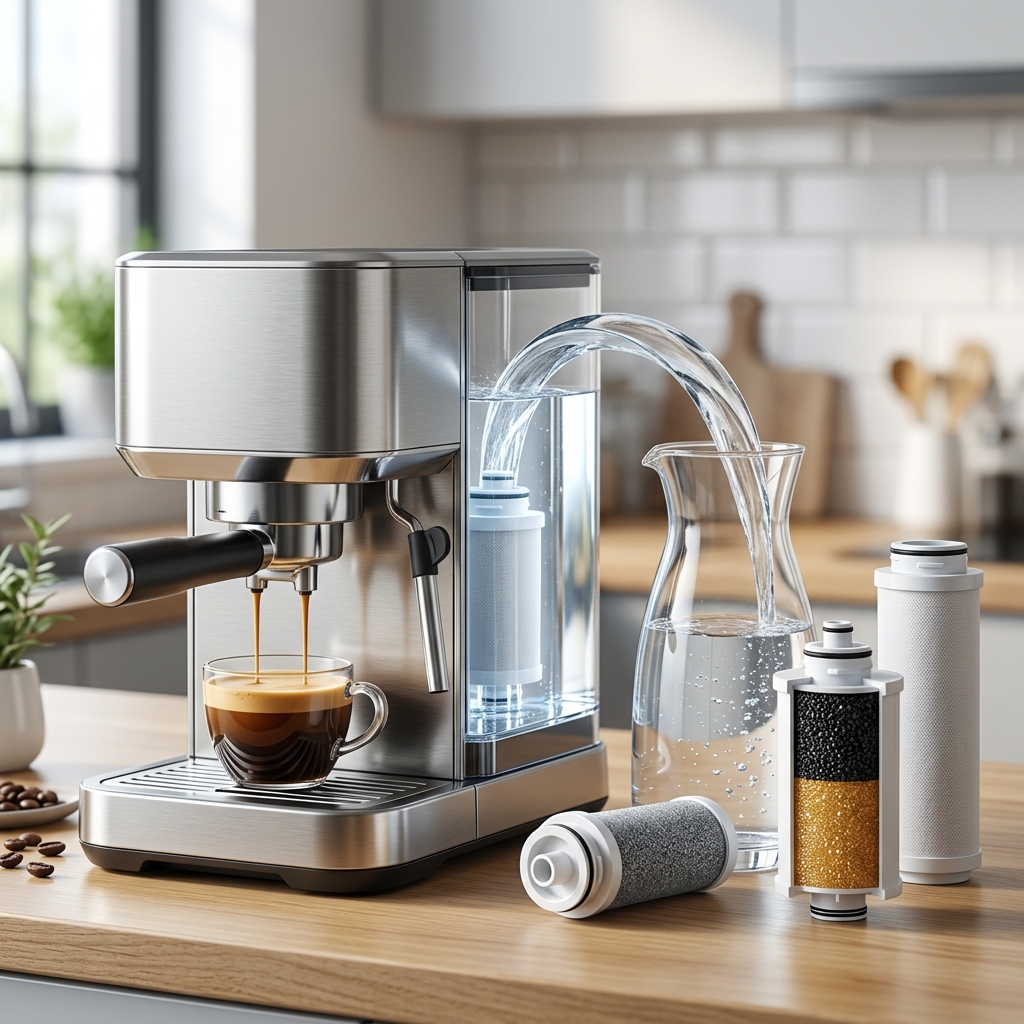
Brewing a perfect cup of coffee isn’t just about the beans; it’s intrinsically linked to the quality of the water you use. Tap water, even if it *looks* clear, often contains minerals, chlorine, and other impurities that can negatively impact the flavour of your coffee. Using a coffee machine water filter offers a multitude of benefits. Firstly, and perhaps most noticeably, it improves the taste of your coffee. Filtering removes chlorine and other chemicals that can impart unpleasant odours and flavours. Secondly, filters significantly reduce limescale buildup within your machine. Limescale isn’t just a performance inhibitor; it’s a potential machine-killer. Finally, regular filter use extends the lifespan of your coffee machine, preventing costly repairs or replacements. The delicate heating elements and internal components of your machine are protected from the damaging effects of mineral deposits. Ultimately, a good water filter ensures optimal coffee extraction, allowing the true flavours of your chosen beans to shine.
The Impact of Limescale & Hard Water
The UK’s water hardness varies significantly by region. Hard water contains high levels of calcium and magnesium, which precipitate out as limescale when heated. In 2026, the South East and East Anglia continue to be the hardest water areas, while the South West and parts of Scotland generally have softer water. (Refer to the British Geological Survey Water Hardness Map (2026) for detailed regional information.)
Limescale accumulation has several detrimental effects on your coffee machine:
- Reduced Performance: Limescale restricts water flow, leading to slower brewing times and inconsistent coffee.
- Altered Taste: Limescale deposits can impart a metallic or bitter taste to your coffee.
- Increased Energy Consumption: Limescale insulates heating elements, forcing the machine to work harder and use more energy.
- Potential Damage: Severe limescale buildup can clog pipes and damage internal components, leading to costly repairs.
- Warranty Voidance: Many coffee machine warranties are voided if limescale damage is detected.
Types of Coffee Machine Water Filters
There are several types of coffee machine water filters available, each with its own set of advantages and disadvantages:
Carbon Filters
Carbon filters are the most common type. They work by adsorbing impurities – like chlorine, sediment, and volatile organic compounds (VOCs) – onto the surface of activated carbon. They’re effective at improving taste and odour, but don’t significantly reduce mineral content.
Resin Filters
Resin filters utilise ion exchange resin to remove calcium and magnesium ions (the cause of hard water) and replace them with less problematic ions. This effectively reduces limescale buildup. However, they don’t typically address taste and odour issues as effectively as carbon filters.
Multi-Stage Filters
These filters combine multiple filtration technologies – typically carbon and resin – for comprehensive water treatment. They offer the best of both worlds: improved taste, reduced limescale, and removal of a wider range of contaminants. They are generally the most expensive option.
Here’s a comparison table:
| Filter Type | Limescale Reduction | Taste & Odour Improvement | Cost | Lifespan |
|---|---|---|---|---|
| Carbon Filter | Low | High | £8 – £20 | 1-2 Months |
| Resin Filter | High | Medium | £12 – £30 | 2-3 Months |
| Multi-Stage Filter | High | High | £20 – £40 | 2-6 Months |
Filter Options by Coffee Machine Brand (2026)
Here’s a rundown of compatible filter options for popular brands. Prices are accurate as of late 2026.
De’Longhi
- Recommended: De’Longhi Water Filter Cartridge (Pack of 2) – £18.99 (Model: DLSC002)
- Alternative: AquaHouse Compatible Water Filter for De’Longhi – £10.99 (Compatible with numerous De’Longhi models)
Jura
- Recommended: Jura Clearyl Blue Water Filter – £32.00 (Specifically designed for Jura machines)
Melitta
- Recommended: Melitta Perfect Filter Aqua Filter Cartridge – £12.50 (Suitable for Melitta Solo & Perfect Milk models)
Nespresso
- Recommended: Nespresso Descale & Filter Kit – £29.99 (Includes descaling solution and a filter for optimal performance)
Sage/Breville
- Recommended: Sage/Breville Water Filter Cartridge – £21.00 (Compatible with Barista Express, Barista Pro, and Duo Temp Pro)
Bosch
- Recommended: Bosch Brita Water Filter Cartridge – £15.75 (Designed for Bosch fully automatic coffee machines incorporating Brita filtration)
How Often Should You Change Your Coffee Machine Filter?
The frequency of filter replacement depends on several factors:
- Water Hardness: Harder water requires more frequent filter changes.
- Coffee Consumption: Higher coffee consumption means the filter works harder and needs replacing sooner.
- Machine Usage: Daily use necessitates more frequent changes than occasional use.
As a general guideline:
- Soft Water Areas: Every 3-6 months
- Medium Hard Water Areas: Every 2-3 months
- Hard Water Areas: Every 1-2 months
Indicators a filter needs replacing:
- Reduced coffee flow rate
- Noticeable change in coffee taste (bitter or metallic)
- Filter replacement indicator light on your machine illuminates
- Increased limescale buildup despite using a filter
Installing & Maintaining Your Coffee Machine Filter
Installation is typically straightforward. Most filters simply slot into a designated compartment within the water reservoir. Consult your coffee machine’s manual for specific instructions. Generally, you’ll need to:
- Remove the old filter (if present).
- Rinse the new filter under cold water for a few minutes to remove any loose carbon particles.
- Insert the filter into the designated compartment.
- Flush the machine by running several brewing cycles with only water (no coffee).
Maintenance Tips:
- Regularly clean the filter housing to prevent contamination.
- Avoid using hot water to rinse filters, as this can damage them.
- Store unused filters in a cool, dry place.
Where to Buy Coffee Machine Water Filters in the UK (2026)
You can find coffee machine water filters at a variety of retailers in the UK:
- Online:
- Amazon UK
- Currys
- Argos
- Direct from manufacturer websites (e.g., De’Longhi, Jura, Nespresso)
- Specialist coffee equipment retailers
- Offline:
- Currys PC World
- Argos
- John Lewis
- Independent electrical appliance stores
Troubleshooting Common Filter Issues
Here are some solutions to common problems:
- Slow Brewing: Replace the filter. A clogged filter is the most likely cause.
- Bitter Coffee: Replace the filter. A saturated filter can release impurities. Also, consider descaling your machine.
- Persistent Limescale: Ensure you’re using the correct type of filter for your water hardness. Consider a multi-stage filter or a resin filter. Regular descaling is also crucial.
- Filter Replacement Indicator Remains On: Ensure the filter is correctly installed and compatible with your machine. Some machines require a reset procedure after filter replacement – consult your manual.
Consider using a pre-filter like the Brita Fill n’ Go Filter Bottle (£24.50) to filter water *before* it goes into the machine for even greater protection.
Puricom Water Filter Cartridge – £17.99 is another alternative that is compatible with a number of machines.
FAQ
Q: Can I use just any water filter in my coffee machine?
A: No. Using an incompatible filter can damage your machine or affect coffee quality. Always check your machine’s manual for recommended filter types and model numbers.
Q: How often should I descale my coffee machine even if I use a filter?
A: Descaling remains important, even with a filter. Filters reduce limescale, but don’t eliminate it entirely. Descale your machine every 3-6 months, depending on water hardness and usage.
Q: Are generic/compatible filters as good as the branded ones?
A: Many compatible filters offer comparable performance to branded ones, often at a lower price. However, quality can vary. Look for reputable brands with good reviews.
Q: What’s the difference between a filter and a descaler?
A: A filter *reduces* limescale buildup, whereas a descaler *removes* existing limescale deposits. They serve different but complementary functions.
Q: Will a water filter make my coffee taste significantly better?
A: Yes, especially if your tap water has noticeable chlorine or other impurities. A filter can dramatically improve the flavour profile of your coffee by removing these unwanted elements.