
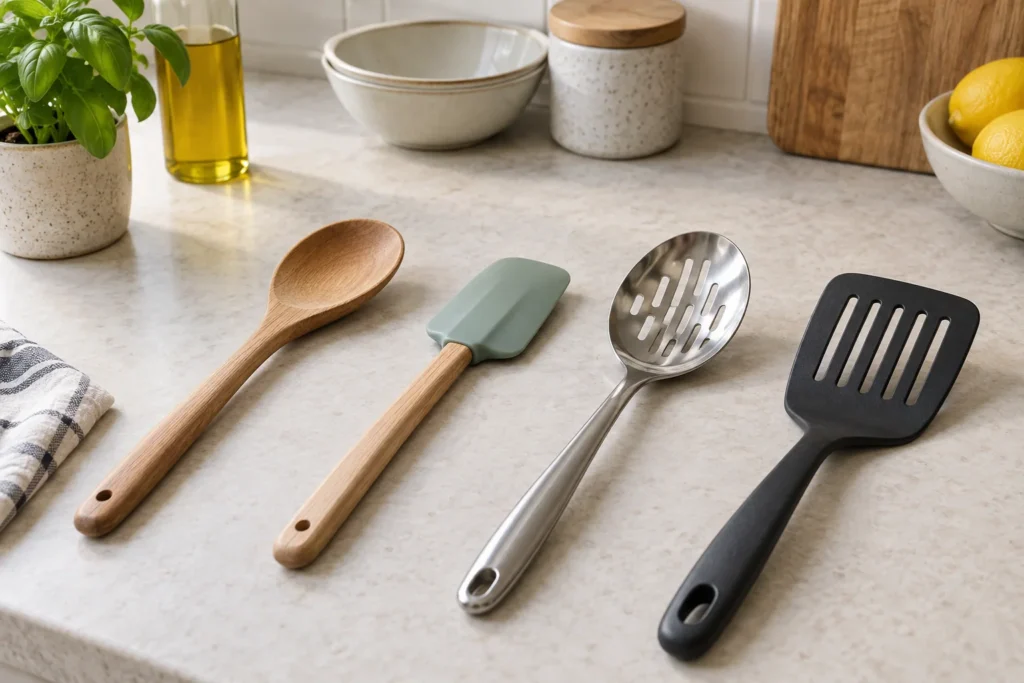
For a first home, choose utensils from a short list of meals you expect to cook in the first fortnight. Translate each meal into actions such as stirring, lifting, draining and serving. Buy tools that cover several of those actions, then leave specialist purchases until a recipe or repeated inconvenience gives them a clear purpose.
Image: AI-generated editorial illustration of generic equipment; not a photograph of a reviewed product.
Table of Contents
Write a meal list before a shopping list
Use meals you already know how to make, rather than an ideal future routine. Someone who regularly cooks soup needs a convenient way to serve liquid; someone preparing salads may have little use for a large ladle at first. This is a planning exercise, not a prescribed menu or a test of how ambitious your kitchen should be.
Include any tools you already own or will receive with other purchases. An appliance might include a suitable accessory, while a relative may have offered a sound spare spoon. Check condition and compatibility before counting these items, but avoid buying duplicates simply because a starter checklist includes them.
Turn meals into actions
The table below is an illustrative shopping worksheet. Replace the examples with your own meals and follow the recipes' actual equipment requirements.
| Meal or activity | Action to cover | Candidate tool |
|---|---|---|
| Soup or a liquid sauce | Stir, then transfer to bowls | Cooking spoon and ladle |
| Food turned in a frying pan | Support and lift from underneath | Suitable turner |
| Pasta with sauce | Stir and lift or serve | Spoon plus a suitable lifting tool |
| A simple cake | Mix and clear the bowl | Spoon or whisk, plus bowl scraper |
| Dressing in a small bowl | Combine a small quantity | Small whisk or an existing suitable fork |
Count actions, not meals. Three meals that need stirring may share one spoon, while preparing two dishes at once can create a genuine need for another tool. Make that distinction before adding a second item to the basket.
Check what “starter set” means
A set's name does not define its contents. OXO three-piece starter kitchen tool set uses a three-piece starter label for a peeler, whisk and can opener. That is a legitimate grouping, but it does not supply a cooking spoon or turner. Read the itemised list instead of assuming every starter set covers the same jobs.
Make three columns in your own list: already covered, needed now and can wait. Put a holder or stand in a separate storage line so it does not make a set appear to contain more working tools. Compare the delivered price of the useful pieces rather than the advertised piece count.
Let the cookware narrow the choices
Read the care instructions for your pans before selecting head materials. Then check each utensil's own heat and washing guidance. A tool that suits your main frying pan but cannot follow your usual cleaning routine may still be worth buying, provided you make that choice deliberately.
Measure the drawer or utensil-storage space. A small first kitchen may benefit from fewer well-chosen shapes, especially if the worktop also has to accommodate chopping and washing up. A countertop stand needs enough clearance to lift the longest tool out without hitting a shelf.
Plan for cooking and cleaning together
Imagine preparing an ordinary meal from start to finish. Where does a used spoon rest? What will you serve with? Which tool is needed again before you have washed it? This short rehearsal can reveal a practical gap that a generic essentials list misses.
It can also prevent overbuying. You may discover that your existing serving spoon handles a task perfectly well, or that washing one whisk between occasional uses is simpler than storing three. The aim is a workable routine, not a drawer that looks complete on moving day.
Review after two weeks
Keep a note when a task feels awkward. Write the action, such as “could not reach the corner of the mixing bowl”, rather than immediately writing a product name. That makes it easier to compare useful shapes and resist a specialised gadget that only partly solves the problem.
Add equipment in response to repeated needs. A compact first collection can develop into a kitchen that suits your actual cooking, with less wasted space and fewer purchases to replace. Keep your original meal-to-tool worksheet: it remains useful when you change pans, start baking or begin cooking for more people.