
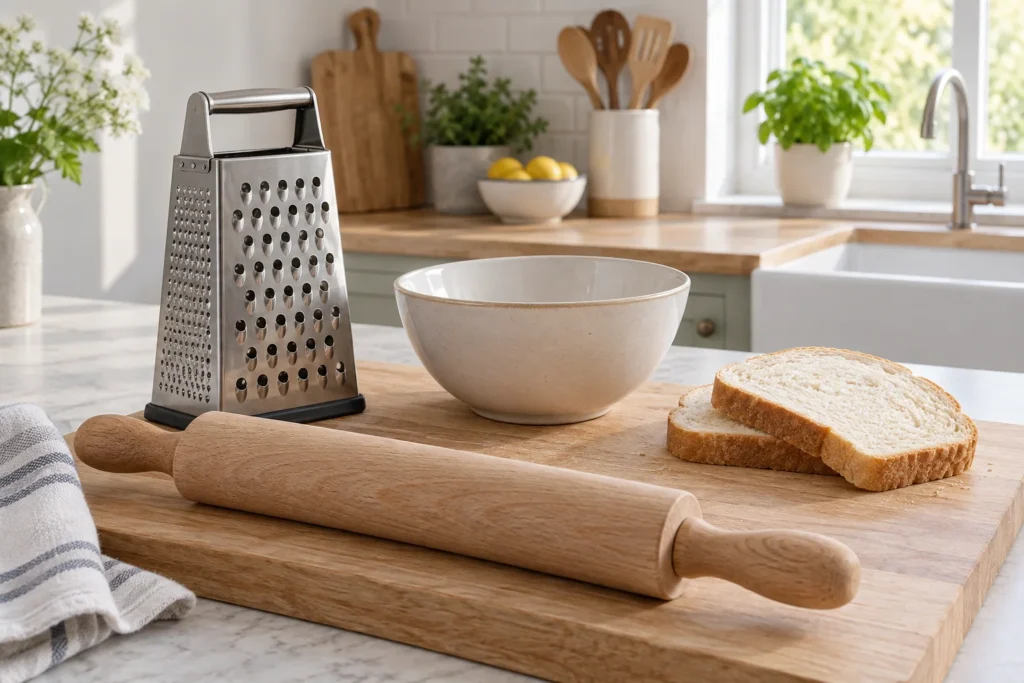
A coarse grater makes fresh breadcrumbs; a rolling pin can crush dried bread into dry crumbs. Choose between them according to the recipe you are cooking. Replacing one with the other simply because both look like small pieces of bread can change a filling or coating considerably.
Image: AI-generated editorial illustration of generic equipment; not a photograph of a reviewed product.
Table of Contents
Read the recipe’s breadcrumb description
Good Food’s breadcrumb guide distinguishes soft fresh crumbs, dried crumbs and the flakier texture of panko. Fresh crumbs absorb liquid and can be used in fillings or binding mixtures; dried crumbs are commonly used for coatings and toppings. Home-crushed bread should not automatically be labelled panko.
Write the requested type beside the quantity before preparing anything. A recipe asking for a weight of fresh crumbs is not asking for that same weight of dried crumbs with extra water guessed afterwards. If the recipe just says breadcrumbs, read its method and accompanying notes for clarification rather than buying a gadget to solve an unclear ingredient.
Prepare a modest amount first
Use bread that is still fit to eat. Staleness is not the same as spoilage: bread with mould or signs of deterioration should not be rescued by toasting or turning it into crumbs. Keep strongly flavoured bread separate unless those flavours belong in the finished dish, and check ingredients when cooking for somebody with allergies.
Set a clean bowl on a stable surface and have the grater or rolling pin ready. A small trial portion tells you how the bread behaves before you commit a whole loaf. Crusts will affect the colour and texture, so decide whether to include them based on the dish. Save a representative piece of the bread nearby if you need to check its original texture while working.
Grate bread for fresh crumbs
The manual fresh-crumb method in Good Food’s guide removes the crusts and uses a coarse grater. Hold a manageable piece and work carefully, stopping while there is still enough bread to grip safely. Collect the crumbs without pressing them into a dense lump.
If the bread compresses rather than grates, pause instead of increasing pressure against the holes. A very soft slice and a firmer section of loaf may behave differently. You can tear awkward leftovers into small pieces for a dish that tolerates a coarse texture, or choose another piece of bread. Keep fingers away from the grater face and never scrape its sharp side by hand to collect the last fragments.
Crush dried bread with a rolling pin
Good Food also describes containing dried bread in a plastic bag and crushing and rolling it with a rolling pin. Use a sound food bag, a stable board underneath and controlled pressure. Open and inspect the bag between passes, then separate larger pieces for another pass.
The bread needs to be dry for this route; soft bread mainly flattens. If drying it yourself, follow a breadcrumb recipe’s oven method and let it cool before bagging. The fact that the outside of a thick piece feels crisp does not prove its centre has dried. Work with small pieces and inspect them, rather than striking a large hard crust with uncontrolled force. Replace a damaged bag and check that no bag fragments have entered the food.
| Crumb you need | Manual tool | How to assess it |
|---|---|---|
| Soft crumbs for a filling | Coarse grater | Look for loose pieces rather than compressed balls of bread. |
| Dry crumbs for a coating | Rolling pin and sound food bag | Separate large fragments that would leave bare patches in the coating. |
| Coarse savoury topping | Either suitable preparation, as the recipe directs | Keep deliberate texture while removing pieces too large for a mouthful. |
Use, label and clean up
Weigh the finished crumbs after preparing them, since crust removal and discarded remnants change the amount available. For the least complicated routine, make the quantity needed and use it in that meal. Follow the bread packaging and the finished recipe’s storage directions; this guide does not assign a cupboard shelf life to homemade crumbs with unknown residual moisture.
Keep crumbs that have touched raw meat separate from clean crumbs, following FSA cross-contamination advice. After preparation, shake loose crumbs from the grater, clean it according to its instructions and dry its corners.