
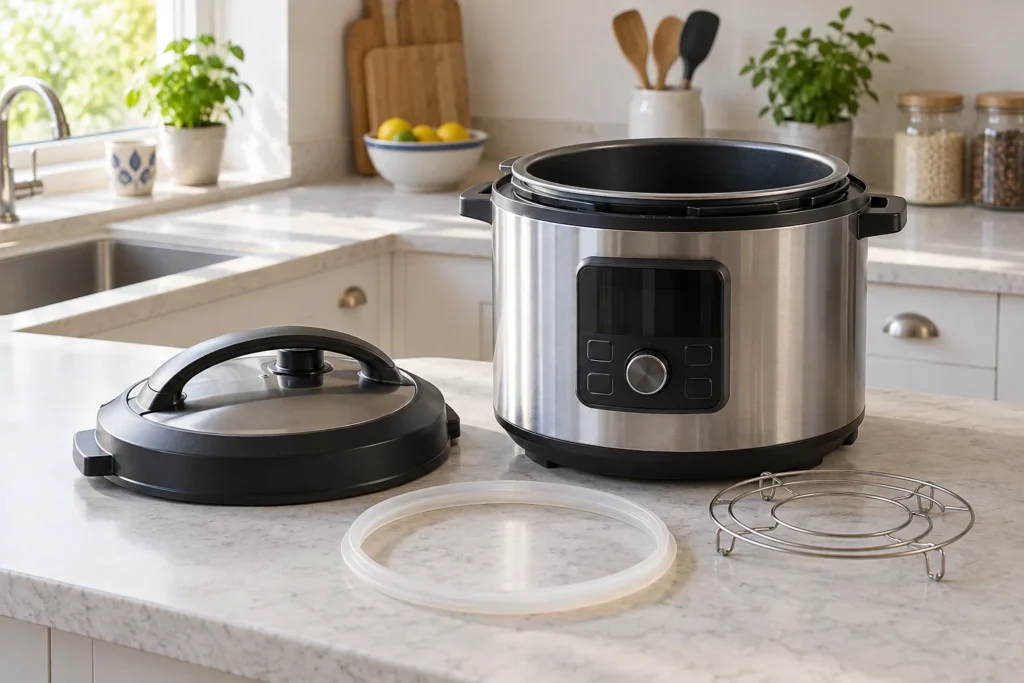
Choose an electric pressure cooker if a countertop programme fits the way you cook; choose a hob model if you prefer managing heat on a compatible hob. Both need correct filling, maintained safety parts and a documented pressure-release routine. Neither removes the need to understand the appliance before the first meal.
Image: AI-generated editorial illustration of generic equipment; not a photograph of a reviewed product.
Table of Contents
Compare the heat-control job
Tefal’s Secure 5 Neo guidance describes reducing the hob heat once the cooker reaches pressure and timing from that stage. Instant Pot’s Duo setup guide describes electronic pressure-cooking programmes. These are two different ways of managing the heat, rather than a simple distinction between an old and a new technology.
Think about the other pans you use for the same meal. A hob cooker occupies a cooking zone; an electric model needs a suitable socket and counter position. If you have only two useful hob zones, moving one task to the counter may help. If counter space is scarce, a hob cooker stored with the pans may be more practical.
Check the complete meal time
A pressure-cooking time does not necessarily include heating up and releasing pressure. Read recipes that identify all three stages, then compare them with your normal evening routine. A five-minute pressure stage is not automatically a meal ready five minutes after loading.
If timing is your main concern, write a simple schedule for one familiar meal: preparation, browning where required, pressurising, cooking, release and serving. A multicooker’s extra sauté mode can reduce the need for another pan, but it may still require batches. Do not count advertised programmes as time saved without considering those steps.
Use working capacity, not the pot’s label
Both formats reserve space for steam and expanding food. Check the model’s pressure maximum, lower limits for foaming or expanding ingredients and minimum liquid. A nominal six-litre pot is not a six-litre finished-food allowance. Different dishes can require different usable amounts in the same cooker.
Compare a recipe you will actually make with the manual’s limits before deciding that a bigger size is necessary. Consider the weight of the complete hot appliance or removable pot too. The larger option can be inconvenient when most meals are small, and it needs room for washing and storage.
| Daily consideration | Electric model | Hob model |
|---|---|---|
| Heat source | Suitable socket and counter position. | Compatible hob and an available cooking zone. |
| Control routine | Programme selection and the model’s release controls. | Heat adjustment, timing and the model’s pressure controls. |
| Cleaning | Separate removable parts from the electrical base. | Follow pot, lid, valve and seal instructions individually. |
| Storage | Measure base, lid and opening clearance. | Measure pot diameter, handle projection and lid storage. |
Read the release method before purchasing
A release switch, regulator or lid layout may be easier for you to see and reach on one model. Check how the pressure indicator is read and how the appliance must be positioned for steam to escape safely. Do not judge the arrangement from a photograph with the lid removed.
The manufacturer’s approved release methods may differ between hob and electric designs. Never transfer a cold-water release technique to an electrical cooker. Make sure anyone else using it can identify when the cooker remains pressurised and understands that the lid must never be forced.
Consider maintenance and parts
Find the correct sealing ring or gasket, valve components and inner pot before comparing long-term ownership. A clear parts list for the exact model is valuable. Check whether you can remove and refit the user-serviceable parts comfortably, and how the lid should be cleaned.
Extra programmes are worthwhile only if they suit real tasks. If rice is your main reason for buying, compare the dedicated format in our rice cooker guide as well. A pressure cooker is a reasonable choice when you want its wider cooking method and are comfortable with its routine. This comparison makes no measured speed or energy-saving claim.