
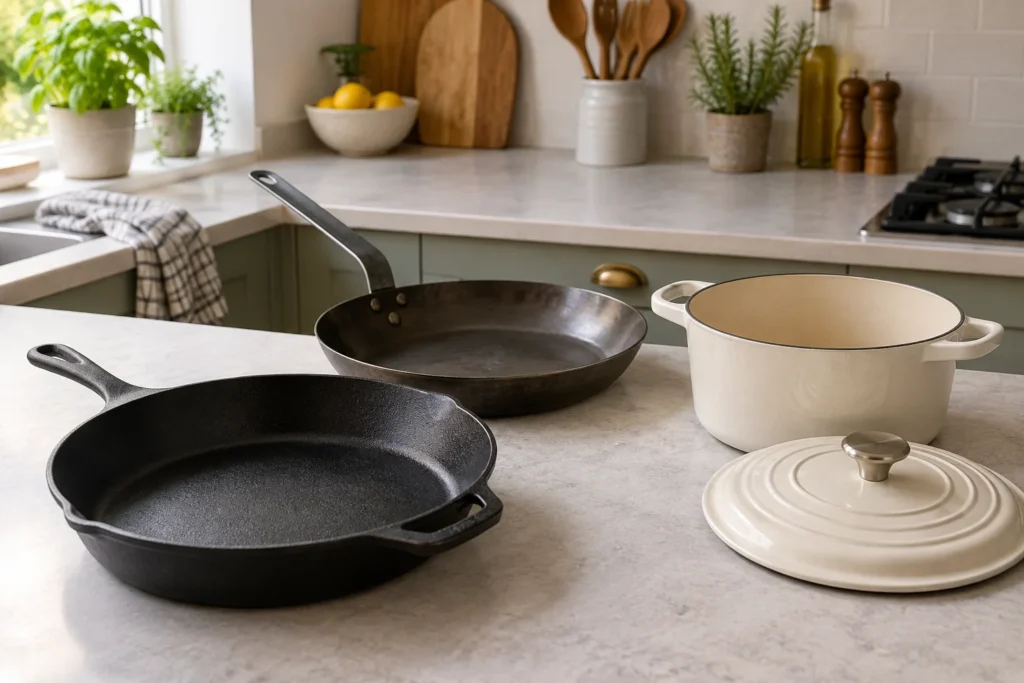
Season a carbon steel pan using the first-use method supplied for that exact model. Begin by identifying whether it is uncoated, pre-seasoned or factory coated, then check the handle and permitted heat source. A method that suits one bare steel pan can be inappropriate for another pan with different fittings or preparation requirements.
Image: AI-generated editorial illustration of generic equipment; not a photograph of a reviewed product.
Table of Contents
Establish what arrived in the box
Read the product description before washing away a finish. Transport protection, factory seasoning and a non-stick coating are not interchangeable. The maker should explain which surface the pan has and what preparation it needs.
For example, de Buyer says its MINERAL B steel range needs first-use seasoning and describes colour changes through subsequent use. That is guidance for its uncoated steel range; it should not be extended to a coated pan merely because the body also contains steel. de Buyer MINERAL B preparation
Keep the model code and instruction sheet together. If a retailer has supplied a generic care leaflet that appears to conflict with the exact product, clarify the discrepancy before applying heat.
Read the complete sequence first
Locate the preparation, oil application, heating, cooling and aftercare stages before starting. Check what the instructions say about the oil, quantity and heat source. Do not combine the washing step from one maker with an oven temperature from another and a repetition count from a video.
Prepare the workspace and all permitted equipment while the pan is cold. Make sure the process can be completed without interrupting it to find somewhere for hot cookware or used oil. Follow the manufacturer’s handling, ventilation and fire-safety guidance throughout.
If the instructions involve an oven, verify that the body and all attached parts are permitted for that exact temperature and duration. A handle that looks metallic may still have a finish or fitting with a separate restriction.
Create a short preparation card
| Question | Answer to copy from your own instructions |
|---|---|
| What finish does the pan have? | Uncoated, pre-seasoned or another specified finish |
| What initial cleaning is required? | Exact preparation for this model |
| Which oil and amount are specified? | Maker’s choice or permitted alternatives |
| Which heat source and sequence apply? | Hob or expressly permitted oven method |
| How does it cool and get stored? | Documented cooling and aftercare |
This card is a way to keep the source instructions together, not a substitute recipe. Leave a field unresolved if the maker has not answered it and ask before improvising that stage.
Do not use colour as the only target
An evenly black pan in a photograph can create unrealistic expectations about a first attempt. De Buyer describes its steel changing colour with seasoning and use, but colour alone cannot confirm that you followed the right process or that the surface is free of excess residue.
Assess any stickiness, flaking or unevenness using the maker’s troubleshooting advice. Do not repeatedly heat an uncertain layer just to make it darker. Take a clear photograph in ordinary light if you need help distinguishing an expected appearance from a problem.
Start cooking within the intended use
After completing the specified preparation, choose a suitable straightforward recipe and follow the pan’s cooking guidance. Seasoning does not make every ingredient or technique identical to cooking on a factory-coated non-stick surface.
Keep a brief note of the first-use method and subsequent cleaning routine. If a problem develops, it will be easier to discuss an actual sequence with support than to reconstruct several videos you watched. Record what was done, not an assumed explanation such as the seasoning failed.
Keep maintenance proportionate
Follow the manufacturer’s normal washing, drying and storage advice after cooking. First-use preparation and full restoration are separate jobs; there is no reason to strip the pan automatically because its colour changes.
If this routine seems burdensome before purchase, consider whether another suitable cooking surface would fit your household better. Carbon steel can be a deliberate equipment choice, but its care should be part of that choice. A clear, repeatable routine based on the actual pan instructions is more useful than collecting increasingly elaborate seasoning rituals.