
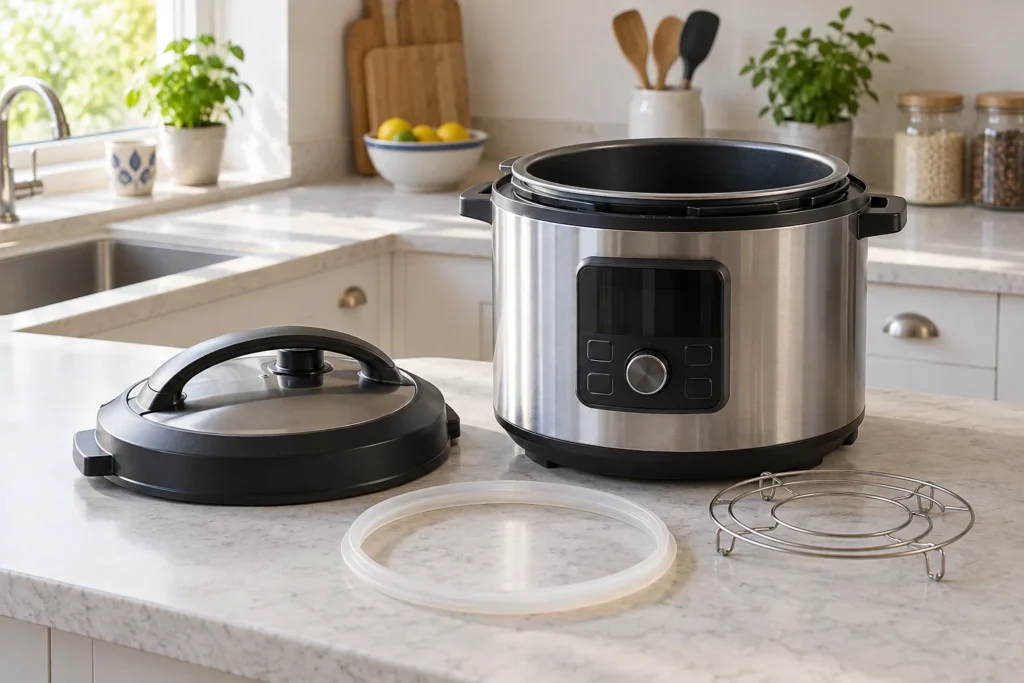
A first-use water test helps you learn an electric pressure cooker’s controls and observe its normal sequence before adding a meal. Use the test written for your exact model and manual revision. The water amount, programme, time and release method are not interchangeable between every cooker.
Image: AI-generated editorial illustration of generic equipment; not a photograph of a reviewed product.
Table of Contents
Read the test before preparing the appliance
Find the initial setup and test-run pages, along with the pressure-release and safe-opening instructions. Read all of them first so the end of the cycle does not come as a surprise. If a new appliance arrived without a manual, obtain the official version for the full model number.
Do not substitute an internet recipe that uses a small amount of water for the manufacturer’s test. A test checks a defined setup; changing its quantity or adding food makes it a different exercise. Keep a note of the manual revision if the control panel on a newer model looks different.
Inspect, clean and position it
With the appliance disconnected, remove packaging from around and underneath the inner pot and inspect for damage. Wash the user-removable food-contact parts as directed and dry the outside of the inner pot. Check that required lid components and any condensation collector are present and installed according to the diagram.
Put the cooker on the specified stable counter surface, clear of external heat and with adequate steam clearance. Do not use the hob as a stand. Arrange the lead so it is not stretched across a walkway or resting against hot cookware, and keep the release area visible.
A specific Duo example
The 2021 Instant Pot Duo UK manual uses 750ml water in the installed inner pot, closes the lid with the release handle set to Sealing, and selects Pressure Cook for five minutes with automatic Keep Warm off. After the programme it specifies the documented quick release, waiting for the float to drop before opening, then protected handling and drying of the hot pot. This example only applies where that manual matches the appliance.
Your model may use a different button name, pressure selection or automatic sealing arrangement. Follow its complete sequence without guessing from the example above. Keep the manual beside you and confirm that the displayed setting matches the instruction before starting.
Observe the stages without interfering
Expect a preparation stage before the programmed cooking countdown. Watch what the display and indicator do from a safe position without leaning over the lid. Do not touch a valve to find out whether it is getting hot, and do not open the lid to check progress.
Record the sequence in plain words: heating display, pressure indication, countdown, completion and release. A variation from an online video’s elapsed time does not necessarily diagnose a fault, because starting water temperature and conditions differ. The model’s troubleshooting criteria matter more than matching a video second for second.
| Before the test | During the test | After the test |
|---|---|---|
| Correct manual and complete parts | Observe indicators from a safe position | Wait for the specified safe-opening condition |
| Specified measured water | Keep steam openings clear | Handle the hot pot with suitable protection |
| Stable clear counter and lead | Follow the programmed sequence | Record errors or abnormal behaviour |
| Clean, correctly seated inner pot | Do not interfere with the lid lock | Clean and dry as instructed |
Know when to stop and seek help
If water leaks abnormally, the appliance shows a fault code or a component behaves differently from the manual’s description, follow its stop procedure and contact support. Do not keep repeating pressure cycles in the hope that a problem will disappear. Never force the lid if pressure status is uncertain.
Provide the model, error code, exact water amount and the stage where the problem occurred. If you can safely take a photograph without operating it again, that may help identify a missing or mismatched part. A fault involving electrical components should not lead to opening the base housing yourself.
Move to a suitable first recipe
A normal water test is preparation for use, not proof that every recipe or accessory is suitable. Start with a recipe intended for your model and size, check the minimum liquid and working fill limit, and read its release instructions before adding food. Keep your short observation note with the manual so another household member can learn the controls from a reliable reference.