
Table of Contents
Introduction: Why Air Fryer Temperature Matters
Air fryers have revolutionised home cooking, offering a healthier and quicker alternative to traditional frying. But achieving that perfect crispy exterior and tender interior isn’t just about pressing a button. Correct temperature settings are absolutely crucial. Air fryers work by rapidly circulating hot air around food, creating a convection effect that cooks it evenly. The temperature dictates the speed of this cooking process and ultimately, the texture and safety of your meal. Too low and you’ll end up with soggy, undercooked food. Too high, and you risk burning it before it’s cooked through. This guide will equip you with the knowledge to master your air fryer and enjoy consistently delicious results.
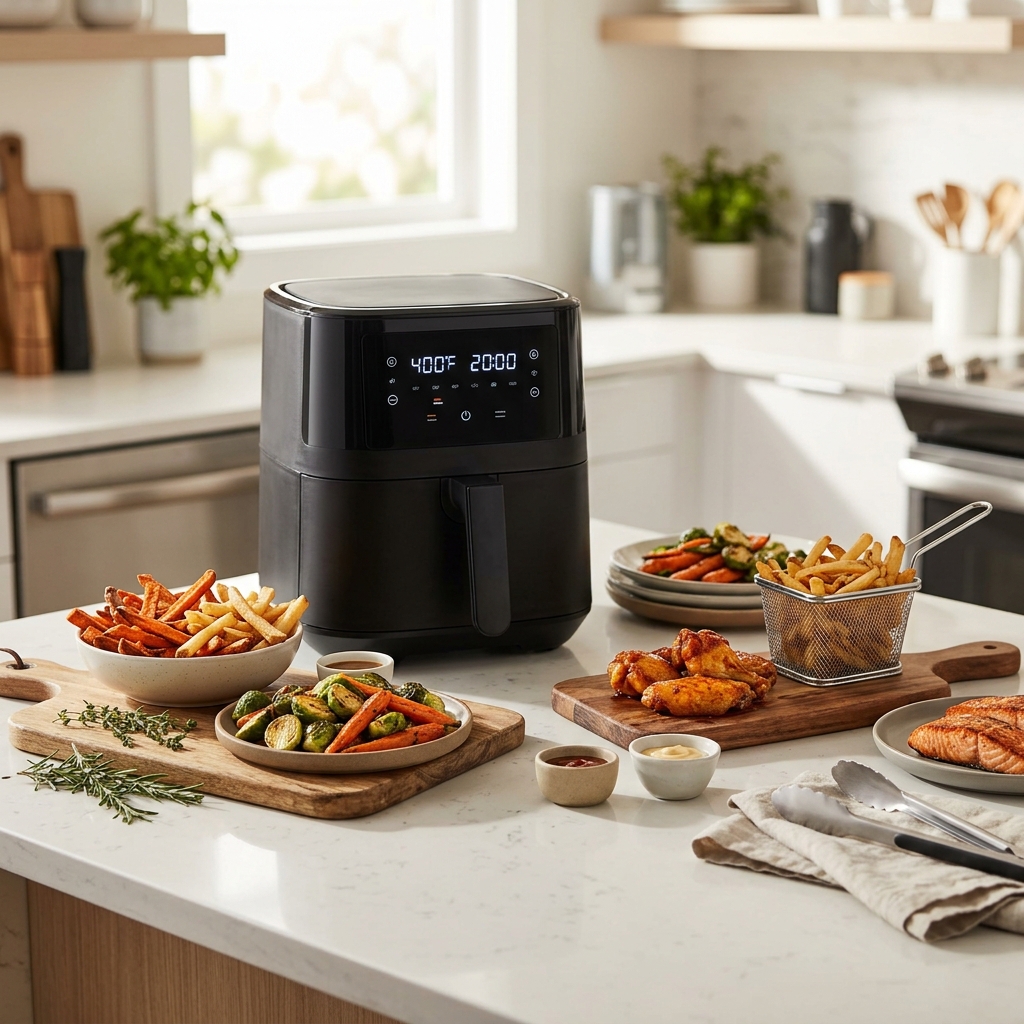
Understanding Your Air Fryer: Models & Settings (2026 Trends)
The air fryer market in 2026 is remarkably diverse. Here’s a look at the common types and the emerging trends:
- Basket Air Fryers: The most common and affordable type. Food sits in a perforated basket. Popular models include the Cosori Air Fryer Max XL (5.8 Quart) – £129.99.
- Oven-Style Air Fryers: Often larger with a door that opens like a conventional oven, allowing for multi-rack cooking. The Ninja Foodi MAX Health Grill & Air Fryer – £249.99 is a prime example.
- Dual-Zone Air Fryers: These feature two independent cooking zones, allowing you to cook two different foods simultaneously at different temperatures and times. Fantastic for families!
2026 Trends:
- Smart Temperature Probes: Increasingly common, these probes allow you to set a precise internal temperature for your food and the air fryer will automatically adjust cooking time.
- App Control: Many models now connect to smartphone apps, offering remote control, recipe suggestions, and even automatic temperature adjustments based on food type.
- Integrated Cameras: Some high-end models include internal cameras for monitoring cooking progress without opening the fryer.
Common Temperature Settings:
- Preheat: Essential for achieving crispy results. Many models have a dedicated preheat function (typically around 200°C).
- Keep Warm: Maintains food at a safe temperature without overcooking.
- Dehydrate: Lower temperatures (around 50-80°C) for making dried fruits and vegetables.
- Reheat: Quickly restores leftovers to a palatable temperature.
General Air Fryer Temperature Guidelines
While every air fryer is slightly different, these guidelines are a good starting point. Always check your air fryer’s manual for specific recommendations.
- Crispy Foods (Fries, Chicken Wings): 180-200°C
- Tender Foods (Roasted Vegetables, Fish): 160-180°C
- Roasting (Chicken, Pork): 180-220°C
Remember to adjust the temperature based on the quantity of food. A full basket will require a slightly longer cooking time and potentially a slightly lower temperature to ensure even cooking. Smaller air fryers generally cook faster than larger ones.
Temperature Guide for Popular Foods (Detailed)
Chicken
- Chicken Breast (Boneless, Skinless): 175°C for 15-20 minutes
- Chicken Thighs (Bone-in, Skin-on): 190°C for 20-25 minutes
- Chicken Wings: 200°C for 20-25 minutes (flip halfway through)
- Whole Chicken (Small, ~1.5kg): 180°C for 50-60 minutes
Fish
- Salmon Fillet: 180°C for 10-12 minutes
- Cod Fillet: 175°C for 12-15 minutes
- Haddock Fillet: 175°C for 12-15 minutes
Vegetables
- Potatoes (Chips/Fries): 200°C for 15-20 minutes (toss halfway through)
- Broccoli Florets: 180°C for 8-10 minutes
- Carrots (Sliced): 190°C for 12-15 minutes
Frozen Foods
- Frozen Fries: 200°C for 10-15 minutes
- Frozen Chicken Nuggets: 180°C for 8-10 minutes
- Frozen Pizza Rolls: 190°C for 6-8 minutes
Beef & Pork
- Steak (Medium Rare): 200°C for 8-10 minutes (depending on thickness)
- Pork Chops: 180°C for 12-15 minutes
Baking
- Cakes (Small, ~200g): 160°C for 20-25 minutes
- Cookies: 170°C for 8-10 minutes
Air Fryer Temperature for Specific Ingredients – Quick Reference Chart
| Ingredient | Temperature (°C) | Cooking Time (Minutes) |
|---|---|---|
| Chicken Breast | 175 | 15-20 |
| Salmon Fillet | 180 | 10-12 |
| Frozen Fries | 200 | 10-15 |
| Broccoli Florets | 180 | 8-10 |
| Steak (Medium Rare) | 200 | 8-10 |
| Cookies | 170 | 8-10 |
Troubleshooting: Common Air Fryer Temperature Issues
- Food is Burning: Reduce the temperature by 10-15°C. Consider shortening the cooking time.
- Food is Undercooked: Increase the temperature by 10-15°C. Extend the cooking time.
- Uneven Cooking: Ensure food is arranged in a single layer. Shake the basket or flip the food halfway through cooking.
Safety Tips for Using Your Air Fryer
- Never Overfill: Allow for adequate air circulation.
- Use Heat-Resistant Utensils: Avoid metal utensils that can damage the non-stick coating.
- Don’t Use Oil Excessively: A light spray is usually sufficient.
- Clean Regularly: Build-up can affect cooking temperatures.
- Use a Food Thermometer: The Digital Kitchen Food Thermometer – £24.99 is a great investment to ensure food reaches a safe internal temperature. (Chicken: 74°C, Pork: 71°C, Fish: 63°C)
Cleaning & Maintenance for Optimal Performance
Regular cleaning is vital for maintaining consistent cooking temperatures. Remove any food debris after each use. Wash the basket and any removable parts with warm, soapy water. Avoid abrasive cleaners. Periodically check the heating element for build-up and clean if necessary (consult your manual).
Conclusion: Mastering Air Fryer Temperatures for Delicious Results
The key to unlocking the full potential of your air fryer lies in understanding and mastering temperature control. Experiment with different settings, use a food thermometer to ensure safety, and don’t be afraid to adjust cooking times based on your specific air fryer and preferences. With a little practice, you’ll be enjoying perfectly cooked, healthy meals every time. The Philips Airfryer XXL Premium Connected – £349.99, with its smart features, can take the guesswork out of cooking, but even with a basic model, these guidelines will set you on the path to air frying success!