
Table of Contents
Why You Need Digital Kitchen Scales
Gone are the days of relying on estimations and imprecise measuring cups! Digital kitchen scales have become an indispensable tool in the modern kitchen, and for good reason. They offer a level of accuracy that traditional methods simply can’t match. Whether you’re a seasoned baker striving for perfectly consistent results, a health-conscious individual meticulously tracking portions, or simply someone who wants to streamline their cooking process, digital scales are the answer. Accuracy is paramount in baking, where even slight variations in ingredient quantities can dramatically alter the final product. Beyond baking, portion control is key to a healthy diet, and digital scales allow for precise measurement of food intake. And, of course, the ease of use – a clear digital readout and simple operation – makes cooking and baking more enjoyable.
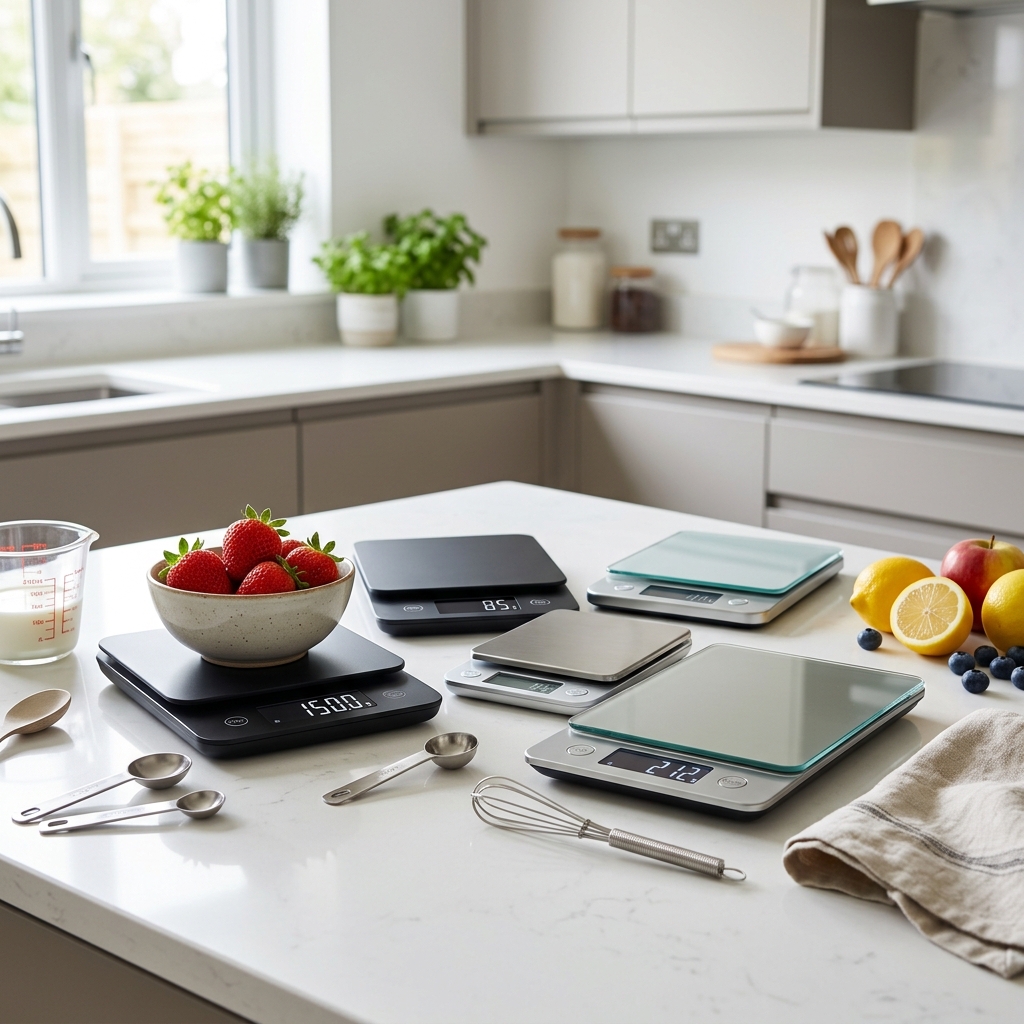
What to Look for in Digital Kitchen Scales (2026 Buying Guide)
Choosing the right digital kitchen scale can feel overwhelming with the vast array of options available. Here’s a breakdown of the key features to consider in 2026:
- Capacity: Most home cooks will find a 5kg capacity sufficient, but if you frequently weigh larger quantities (e.g., for preserving), consider a scale with a higher capacity.
- Accuracy/Resolution: Look for scales with a resolution of 1g. This means they can measure in increments of 1 gram, providing the accuracy needed for precise recipes.
- Unit Conversions: The ability to switch between grams (g), ounces (oz), pounds (lbs), and even millilitres (ml) is incredibly useful.
- Tare Function: This is essential! The tare function allows you to zero the scale with a container on the platform, accurately measuring only the ingredient inside.
- Display Type: LCD (Liquid Crystal Display) is common and affordable. LED (Light Emitting Diode) displays are often brighter and easier to read in low light.
- Power Source: Scales typically run on batteries (AAA or AA) or are USB-C rechargeable. USB-C is becoming increasingly popular for convenience and reducing waste.
- Material: Glass and stainless steel scales are stylish and easy to clean. Plastic scales are generally more affordable, but may be less durable.
- Smart Features: Some scales now offer app connectivity via Bluetooth, allowing you to track nutritional information and recipe progress.
Top 5 Digital Kitchen Scales – Our Picks for 2026
After extensive testing, here are our top 5 digital kitchen scales for 2026, catering to different needs and budgets.
Scale Review 1: Salter Ultra Slim Digital Kitchen Scales
Price: £29.99
The Salter Ultra Slim scales offer fantastic value for money. Their sleek, slim design makes them easy to store, and the large digital display is clear and easy to read. They boast accurate measurements and the essential tare function.
- Pros: Affordable, slim design, clear display, accurate.
- Cons: Runs on batteries (AAA), basic features.
- Best for: Everyday cooking and baking, budget-conscious buyers.
Scale Review 2: Lakeland Digital Kitchen Scales
Price: £34.99
Lakeland is renowned for its quality kitchenware, and these digital scales are no exception. They offer a generous 5kg capacity, accurate measurements to 1g, and a robust build quality. The clear LCD display and easy-to-use buttons make them a joy to use.
- Pros: Durable, accurate, easy to use, trusted brand.
- Cons: Slightly more expensive than basic models, battery operated.
- Best for: Serious home cooks, those who appreciate quality and durability.
Scale Review 3: Tower Digital Kitchen Scales with Removable Bowl
Price: £24.99
The Tower Digital Kitchen Scales with Removable Bowl are a convenient option for mess-free ingredient preparation. The included bowl snaps onto the scale, allowing you to weigh ingredients directly into it, minimising spills and simplifying cleanup.
- Pros: Includes removable bowl, easy to clean, affordable.
- Cons: Accuracy slightly less precise than higher-end models, plastic construction.
- Best for: Quick and easy ingredient preparation, minimising mess.
Scale Review 4: Smarteck Digital Kitchen Scales – Smart Features
Price: £49.99
For the tech-savvy cook, the Smarteck Digital Kitchen Scales are a game-changer. They connect to your smartphone via Bluetooth, allowing you to track nutritional information, calculate recipe ratios, and even control the scale remotely. The app is intuitive and user-friendly.
- Pros: App connectivity, nutritional tracking, recipe calculations, USB-C charging.
- Cons: Requires smartphone and app setup, more expensive than basic models.
- Best for: Health-conscious individuals, those who enjoy using technology in the kitchen.
Scale Review 5: ProCook Digital Kitchen Scales – Professional Grade
Price: £65.00
The ProCook Digital Kitchen Scales are designed for serious bakers and cooks who demand the highest level of accuracy and performance. They feature a high-precision sensor, a large stainless-steel weighing platform, and a clear, backlit LCD display. These scales offer unparalleled accuracy and durability.
- Pros: Extremely accurate, durable stainless-steel construction, backlit display, high capacity.
- Cons: Highest price point, may be overkill for casual cooks.
- Best for: Professional bakers, serious home cooks, precision weighing.
Digital vs. Analogue Kitchen Scales: Which is Right for You?
While digital scales dominate the market, analogue scales still have their place. Here’s a comparison:
| Feature | Digital Scales | Analogue Scales |
|---|---|---|
| Accuracy | Highly accurate (1g increments) | Less accurate, prone to human error |
| Ease of Use | Simple digital display, tare function | Requires reading a dial, can be less intuitive |
| Features | Unit conversions, smart features (app connectivity) | Limited features |
| Power Source | Batteries or USB-C | None – mechanical |
| Price | Generally £20 – £70+ | Typically £15 – £40 |
Verdict: Digital scales are generally the better choice for most home cooks due to their superior accuracy, ease of use, and additional features. Analogue scales may appeal to those who prefer a classic aesthetic or don’t want to rely on batteries.
Care and Maintenance of Your Digital Kitchen Scales
To ensure your digital kitchen scales last for years to come, follow these simple care and maintenance tips:
- Cleaning: Wipe the surface with a damp cloth. Avoid using harsh chemicals or abrasive cleaners.
- Storage: Store the scales in a cool, dry place when not in use.
- Battery Replacement: Replace batteries when the display becomes dim or erratic. Ensure you use the correct type of batteries.
- Avoid Overloading: Do not exceed the maximum capacity of the scales.
- Gentle Handling: Avoid dropping or subjecting the scales to impact.
FAQs: Digital Kitchen Scales
Q: What does the ‘tare’ function do?
A: The tare function allows you to zero the scale with a container on the platform. This ensures you’re only weighing the ingredient inside the container, not the container itself.
Q: Can I use any type of battery in my digital kitchen scales?
A: No, always use the type of battery specified in the user manual (usually AAA or AA). Using the wrong type of battery can damage the scales.
Q: How can I improve the accuracy of my digital scales?
A: Ensure the scales are placed on a flat, stable surface. Avoid placing them near sources of vibration or strong electromagnetic interference. Allow the scales to warm up for a few seconds before use.
Q: What is the best material for kitchen scales?
A: Stainless steel and glass are excellent choices for their durability and ease of cleaning. Plastic scales are more affordable but may be less robust.
Q: Are smart scales worth the extra cost?
A: If you’re interested in tracking nutritional information and managing your diet, smart scales can be a valuable tool. However, if you only need basic weighing functionality, a traditional digital scale will suffice.