
The UK coffee scene continues to boom, and in 2026, the demand for high-quality home espresso has never been greater. This guide provides a comprehensive overview of the best espresso machines available in the UK market, catering to all budgets and skill levels. We’ll cover everything from entry-level options to professional-grade machines, helping you find the perfect fit for your coffee needs. Expect to see more integration with smart home systems and improved automated cleaning cycles in the models of 2026.
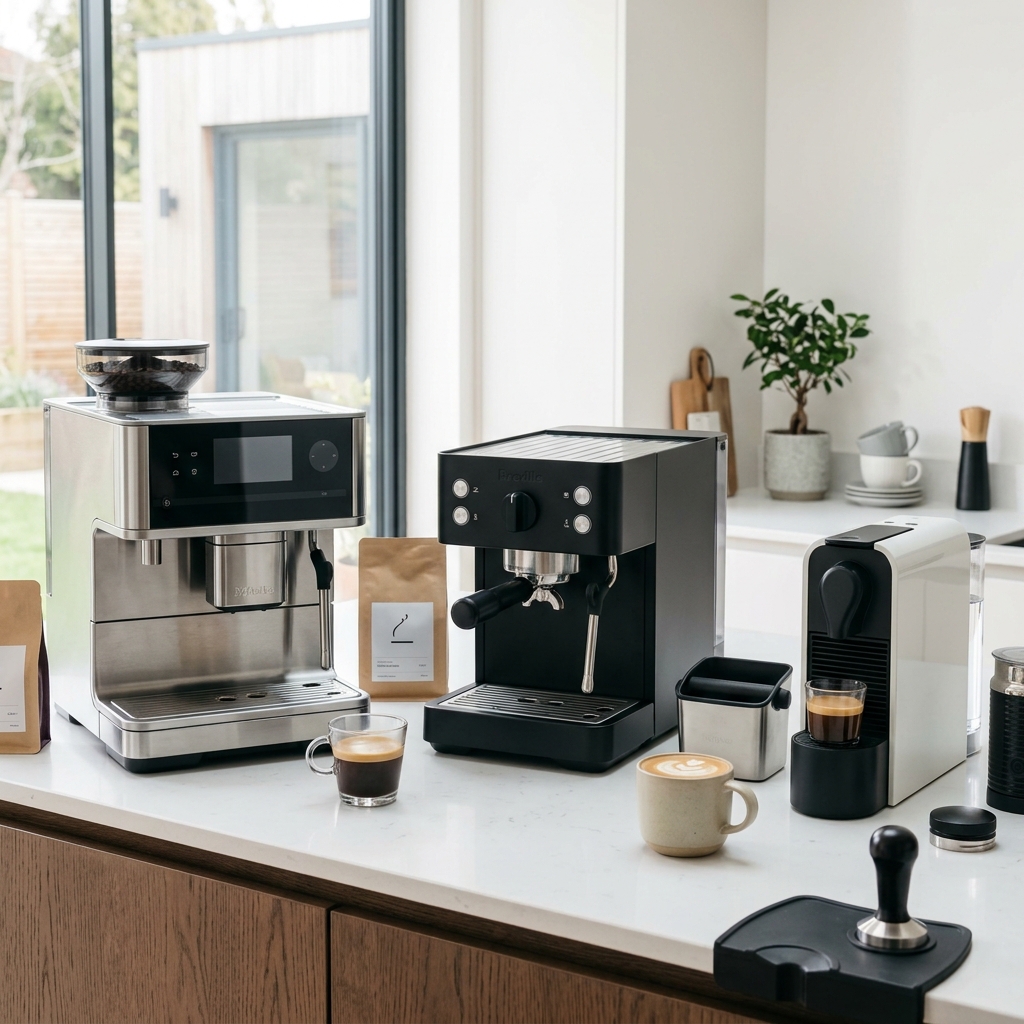
Table of Contents
What to Consider When Buying an Espresso Machine in 2026
Choosing the right espresso machine can be daunting. Here’s a breakdown of the key factors to consider:
- Budget: Espresso machines range from under £200 to over £6000. Determine how much you’re willing to spend.
- Frequency of Use: A few cups a week? A daily ritual? This influences the required build quality and features.
- Desired Features: Do you need milk frothing capabilities for lattes and cappuccinos? A built-in grinder? Automatic cleaning?
- Machine Type: (See section below) Manual, semi-automatic, automatic, super-automatic (bean-to-cup) or capsule all offer different levels of control and convenience.
- Smart Features (2026 Trend): Many 2026 models now include Wi-Fi connectivity, allowing for remote control via smartphone apps, automatic software updates, and even integration with voice assistants like Alexa and Google Home.
Types of Espresso Machines: A 2026 Overview
Here’s a rundown of the different types of espresso machines currently available:
- Manual (Lever): Requires significant skill and effort. You control every aspect of the brewing process. Pros: Full control, potentially highest quality espresso. Cons: Steep learning curve, physically demanding.
- Semi-Automatic: You control when the water flows, but the machine stops it automatically. Pros: Good control, relatively affordable. Cons: Requires practice, consistent results can be challenging.
- Automatic: The machine controls the water volume automatically. Pros: Easy to use, consistent results. Cons: Less control over the brewing process.
- Super-Automatic (Bean-to-Cup): Grinds the beans, tamps, and brews the espresso automatically. Pros: Maximum convenience, consistent results. Cons: Most expensive, can be difficult to maintain.
- Capsule: Uses pre-portioned coffee capsules. Pros: Extremely convenient, minimal cleanup. Cons: Limited coffee choices, expensive per cup, not environmentally friendly.
Best Budget Espresso Machines (Under £300)
These machines offer excellent value for money and are ideal for beginners.
| Model | Price (GBP) | Type | Pros | Cons |
|---|---|---|---|---|
| De’Longhi Dedica Style EC685.M | £179.99 | Semi-Automatic | Compact, stylish, affordable, good steam wand. | Plastic build, limited features. |
| Russell Hobbs Bloombury Espresso Machine | £149.99 | Semi-Automatic | Very affordable, simple to use, includes milk frother. | Lower build quality, less precise temperature control. |
| Swan Nordic Kitchen Espresso Machine | £199.99 | Semi-Automatic | Stylish design, good value, easy to clean. | Steam wand can be temperamental. |
Mid-Range Espresso Machines (£300 – £800): Stepping Up Your Coffee Game
These machines offer enhanced features and build quality for a more refined espresso experience. 2026 models in this range commonly feature PID temperature controllers for more stable brewing.
| Model | Price (GBP) | Type | Pros | Cons |
|---|---|---|---|---|
| Sage Barista Express BES875UK | £649.99 | Semi-Automatic | Integrated grinder, PID temperature control, excellent steam wand. | Can be noisy, learning curve for grinder adjustment. |
| Gaggia Classic Pro | £449.00 | Semi-Automatic | Robust build quality, commercial-grade components, excellent temperature stability. | Requires some skill, basic features. |
| Philips 3200 Series LatteGo EP3951/10 | £499.00 | Automatic | LatteGo milk system (easy cleaning), automatic cleaning cycles, multiple coffee options. | Not a traditional espresso machine, more focused on convenience. |
Best High-End Espresso Machines (Over £800): For the Coffee Connoisseur
These machines are designed for serious coffee enthusiasts who demand the best possible performance. Dual boiler systems are common in this price range, allowing for simultaneous brewing and steaming.
| Model | Price (GBP) | Type | Pros | Cons |
|---|---|---|---|---|
| Rocket Appartamento | £1495.00 | Semi-Automatic | Exceptional build quality, E61 group head, excellent temperature stability. | Requires significant skill, expensive. |
| ECM Casa V | £1099.00 | Semi-Automatic | High-quality components, compact design, excellent temperature control. | Requires experience, relatively basic features. |
| La Marzocco Linea Mini | £5995.00 | Semi-Automatic | Professional-grade performance, exceptional build quality, renowned reputation. | Extremely expensive, requires significant expertise. |
Bean-to-Cup Machines in 2026: Convenience and Quality
Bean-to-cup machines offer the ultimate convenience, grinding beans and brewing espresso with the touch of a button. 2026 models boast improved grinder technology and smart home integration.
| Model | Price (GBP) | Type | Pros | Cons |
|---|---|---|---|---|
| Jura E8 Piano Black | £1295.00 | Super-Automatic | Pulse Extraction Process (PEP), excellent coffee quality, easy to use. | Expensive, complex maintenance. |
| De’Longhi Dinamica Plus | £899.00 | Super-Automatic | LatteCrema System, customizable coffee options, smart home integration. | Can be noisy, some plastic components. |
Traditional vs. Bean-to-Cup: While bean-to-cup machines offer convenience, traditional espresso machines generally provide greater control over the brewing process and potentially higher quality espresso, especially for experienced users.
Espresso Machine Maintenance and Cleaning: A 2026 Guide
Regular maintenance is crucial for prolonging the life of your espresso machine and ensuring optimal performance. In 2026, more machines feature automatic cleaning cycles, but manual intervention is still necessary.
- Descaling: Remove mineral buildup with a descaling solution every 1-3 months, depending on water hardness.
- Backflushing: Clean the group head by forcing water through it in reverse.
- General Upkeep: Wipe down the machine after each use, empty the drip tray regularly, and clean the milk frother.
- Eco-Friendly Cleaning: Consider using biodegradable descaling solutions and eco-friendly cleaning cloths.
Espresso Machine Accessories: Enhance Your Experience
- Tamper: For consistent tamping pressure (£30-£100).
- Milk Jug: For frothing milk (£20-£50). Motta Professional Milk Jug 600ml (£25.00) is a great option.
- Distribution Tool: For even coffee grounds distribution (£20-£60).
- Scale: For precise coffee and espresso measurements. Hario V60 Drip Scale (£55.00) is highly recommended.
- Cleaning Supplies: Descaling solution, cleaning brushes, and cloths (£10-£30).
Where to Buy Espresso Machines in the UK (2026)
- Currys: Wide selection, competitive prices. currys.co.uk
- John Lewis & Partners: High-quality brands, excellent customer service. johnlewis.com
- Lakeland: Specializes in kitchen appliances. lakeland.co.uk
- Specialist Coffee Retailers: (e.g., Coffee Machine Company, Espressoparts) Offer expert advice and a wide range of machines.
- Amazon UK: Convenient, competitive pricing, but verify seller reputation. amazon.co.uk
FAQ
- Q: How often should I descale my espresso machine?
A: Typically every 1-3 months, depending on your water hardness. Check your machine’s manual for specific recommendations. - Q: What is the difference between a semi-automatic and an automatic espresso machine?
A: Semi-automatic machines require you to control when the water flows, while automatic machines control the water volume automatically. - Q: Can I use pre-ground coffee in a bean-to-cup machine?
A: Most bean-to-cup machines have a bypass chute for using pre-ground coffee, but the quality may not be as good as freshly ground beans. - Q: What is the best way to clean the milk frother?
A: Wipe the steam wand immediately after use and purge it with steam. Periodically soak the frother in a milk cleaning solution. - Q: Are smart espresso machines worth the extra cost in 2026?
A: If you value convenience and integration with your smart home ecosystem, then yes. Features like remote control and automatic updates can be beneficial.