
Welcome to our comprehensive guide to the best induction hobs available in the UK in 2026. This article will help you navigate the world of induction cooking, understand what to look for, and find the perfect hob for your kitchen and budget.
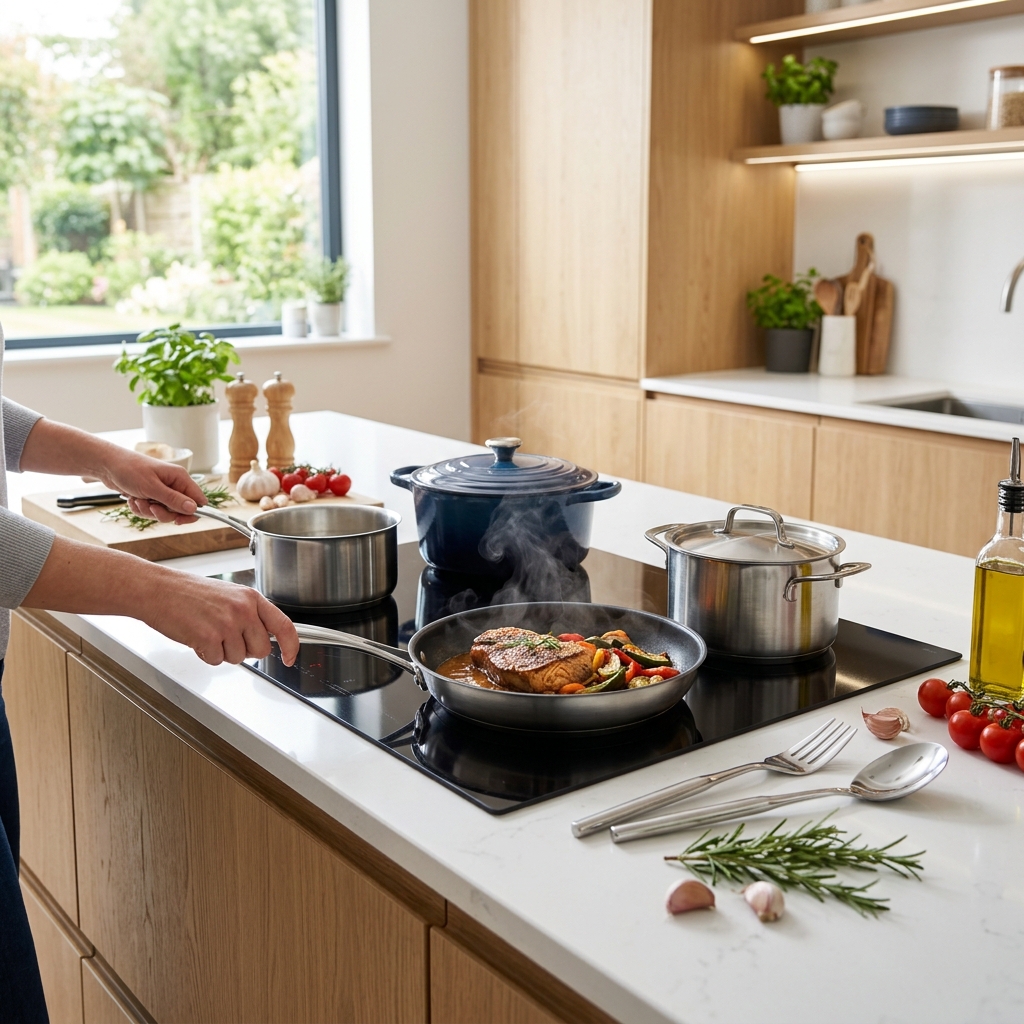
Table of Contents
What is an Induction Hob & Why Choose One?
Induction hobs are a modern cooking solution that utilise electromagnetic energy to directly heat your cookware. Unlike traditional gas or electric hobs, induction doesn’t heat the hob surface itself; instead, it creates a magnetic field that interacts with the iron content in your pots and pans. This offers several key advantages:
- Speed: Induction hobs heat up significantly faster than gas or electric alternatives. You can boil water in a fraction of the time.
- Efficiency: Because heat is generated directly in the cookware, very little energy is wasted. This makes induction hobs incredibly energy efficient.
- Safety: The hob surface remains relatively cool to the touch, reducing the risk of burns. Many models also feature safety locks and overheat protection.
- Easy Cleaning: Since the surface doesn’t get extremely hot, spills don’t bake on as easily, making cleaning a breeze. A quick wipe is usually all that’s needed.
However, there are a couple of potential drawbacks. The most significant is the requirement for induction-compatible cookware. You’ll need pots and pans with a ferrous base (typically stainless steel or cast iron). Also, some people find the initial investment slightly higher than traditional hob types.
Key Features to Consider When Buying an Induction Hob
Choosing the right induction hob involves considering several key features:
- Number of Zones: Consider how many cooking zones you typically use simultaneously. Options range from two-zone models for smaller kitchens to five-zone hobs for large families.
- Power Levels & Boosters: Higher power levels provide faster heating. Boosters offer a temporary surge of power for rapid boiling or searing.
- Timer Functions: Timers allow you to set cooking times for each zone, ensuring precise results.
- Automatic Pan Detection: This feature automatically detects the presence of a pan and activates the corresponding zone.
- Safety Features: Child locks prevent accidental operation, while overheat protection shuts off the hob if it gets too hot.
- Touch Controls: Most induction hobs feature intuitive touch controls for easy operation.
- Bridging Zones: Allow you to combine two zones to accommodate larger cookware like griddles or roasting pans.
- Smart Features & Connectivity: Some models offer smart home integration, allowing you to control the hob remotely via a smartphone app.
Top 5 Best Induction Hobs UK 2026 – Our Expert Reviews
Based on extensive testing and research, here are our top 5 picks for the best induction hobs in the UK in 2026:
1. Smeg SI6750PB Induction Hob – u00a3899
Pros: Stunning design, exceptional build quality, flexible cooking zones, precise temperature control, intuitive touchscreen controls. Smeg’s reputation for reliability is strong.
Cons: High price point, can be challenging to clean due to the surface finish.
Key Specs: 4 zones, Booster function, Timer, Child Lock, Automatic Pan Detection, Power: 7200W.
Suitability: Ideal for serious cooks who appreciate premium design and advanced features. Suited for larger kitchens and families.
2. Neff N66T96X5 Induction Hob – u00a3799
Pros: Excellent performance, FlexInduction zones for versatile cooking, TwistPad control for precise adjustment, automatic settings, easy to clean.
Cons: TwistPad can take some getting used to, relatively expensive.
Key Specs: 4 zones (including 2 FlexInduction zones), Booster function, Timer, Child Lock, Automatic Pan Detection, Power: 7400W.
Suitability: A great all-rounder for families and those who enjoy experimenting in the kitchen.
3. AEG IKE94550XB Induction Hob – u00a3649
Pros: DirectControl interface for effortless operation, PowerBoost function for rapid heating, SenseBoil technology prevents boil-overs, sophisticated design.
Cons: Some users have reported the touch controls can be overly sensitive.
Key Specs: 4 zones, PowerBoost function, Timer, Child Lock, Automatic Pan Detection, Power: 7200W.
Suitability: Perfect for busy households where speed and convenience are paramount.
4. Siemens iQ700 ED755FYP5E Induction Hob – u00a3949
Pros: cookingSensor keeps food at your desired temperature, timeLight shows remaining cooking time, flexInduction zones, PowerBoost, easy to clean.
Cons: High price, complex features may not be necessary for all users.
Key Specs: 4 zones (including 2 flexInduction zones), cookingSensor, PowerBoost function, Timer, Child Lock, Automatic Pan Detection, Power: 7400W.
Suitability: A premium hob for those who want the very best in cooking technology.
5. Bosch PUE611BB1B Induction Hob – u00a3489
Pros: Reliable performance, easy-to-use touch controls, PowerBoost function, QuickStart function for rapid heating, affordable price.
Cons: Basic design, lacks some of the advanced features found in higher-end models.
Key Specs: 4 zones, PowerBoost function, Timer, Child Lock, Automatic Pan Detection, Power: 6900W.
Suitability: An excellent choice for first-time induction hob buyers or those on a tighter budget.
Budget-Friendly Induction Hobs: Great Options Under u00a3400
If you’re looking for an affordable induction hob without sacrificing too much performance, here are a couple of options:
Hotpoint Ariston PC640S IX Induction Hob – u00a3349
Pros: Highly affordable, good performance for the price, easy to clean, simple controls.
Cons: Basic features, less powerful than premium models, build quality is decent but not exceptional.
Swan SMHP64010N Induction Hob – u00a3299
Pros: Very budget-friendly, compact size ideal for smaller kitchens, easy to operate.
Cons: Limited features, lower power output, may not be suitable for heavy cooking.
At this price point, you’ll typically find fewer zones and less powerful boosters. However, these hobs still offer the core benefits of induction cooking – speed, efficiency, and safety.
Premium Induction Hobs: Luxury & Advanced Features (u00a3600+)
For those seeking the ultimate cooking experience, there are several premium induction hobs available:
As detailed above, the Smeg SI6750PB and Siemens iQ700 ED755FYP5E fall into this category. These models boast features like flexible cooking zones that adapt to the size of your cookware, smart home integration for remote control, and precise temperature control for perfect results every time.
Induction Hob Installation: What You Need to Know
Installing an induction hob requires a dedicated electrical circuit and a suitable worktop. You’ll need to ensure your kitchen’s electrical system can handle the hob’s power requirements (typically 230V, but check the specifications). Most induction hobs require a 45A or 50A circuit breaker.
Worktop compatibility is also important. Solid wood, laminate, granite, and quartz are generally suitable, but you should check the hob’s installation instructions for specific recommendations.
We strongly recommend professional installation by a qualified electrician. Incorrect installation can be dangerous. Installation costs vary but typically range from u00a3150 to u00a3300, depending on the complexity of the work.
Induction Hob Maintenance & Cleaning
Keeping your induction hob clean is surprisingly easy. The smooth glass surface can be wiped clean with a damp cloth and a mild detergent. For stubborn spills, use a ceramic hob cleaner specifically designed for induction surfaces. Avoid abrasive cleaners or scouring pads, as these can scratch the glass.
Regular cleaning will prevent food from baking onto the surface and ensure optimal performance. Always allow the hob to cool down completely before cleaning.
Frequently Asked Questions (FAQs)
Q: What type of cookware can I use with an induction hob?
You’ll need cookware with a ferrous base – meaning it must be attracted to a magnet. Stainless steel and cast iron are generally compatible. Check your cookware by seeing if a magnet sticks to the bottom.
Q: Are induction hobs more energy-efficient than gas or electric hobs?
Yes, significantly. Induction hobs are around 84% energy efficient, compared to around 60% for gas and 70% for traditional electric hobs.
Q: Are induction hobs safe?
Yes, induction hobs are very safe. The surface remains relatively cool, reducing the risk of burns. Most models also feature child locks and overheat protection.
Q: Can I install an induction hob myself?
While technically possible, we strongly recommend professional installation by a qualified electrician. Incorrect installation can be dangerous and void the warranty.
Q: How do I clean an induction hob?
Simply wipe the cooled surface with a damp cloth and mild detergent. For stubborn spills, use a ceramic hob cleaner. Avoid abrasive cleaners.