
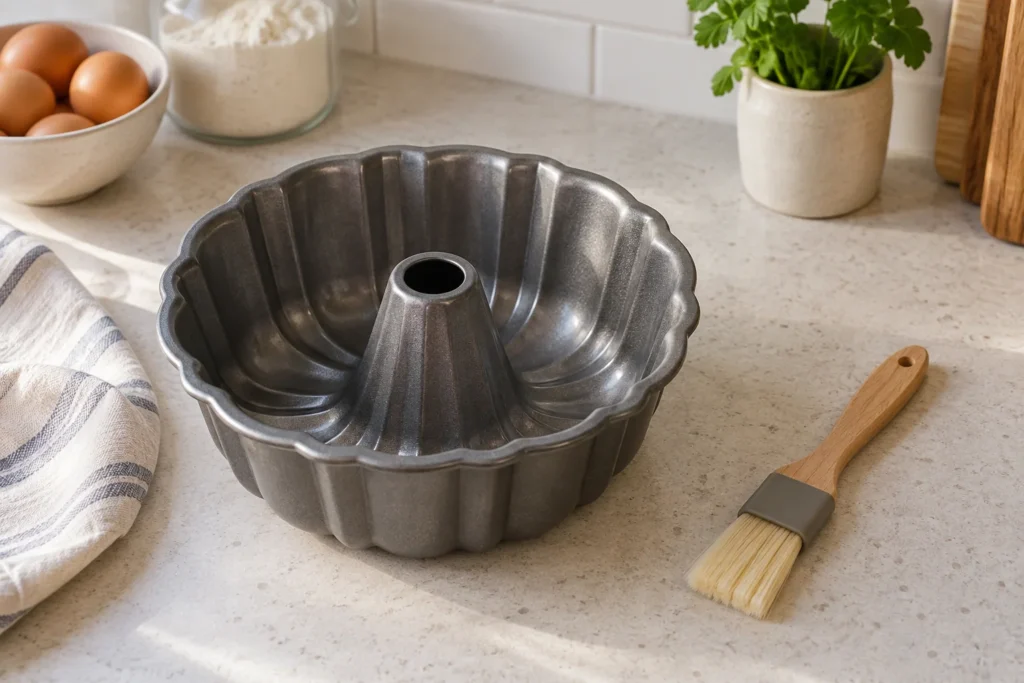
A Bundt cake tin gives the outside of the cake its shape, so choosing one means planning both the bake and its release. Match the recipe's stated capacity first. Then consider how much detail you want, how you will prepare the grooves and how the cake will be supported when it is turned out.
Image: AI-generated editorial illustration of generic equipment; not a photograph of a reviewed product.
Table of Contents
Start with capacity, not the photograph
Two tins can look similar from above yet hold different amounts because their depth, central tube and decorative pattern differ. Read the manufacturer's stated capacity alongside the recipe's required tin. For a concrete example, the Nordic Ware Swirl Bundt Pan: use and care is described as a ten-cup cast-aluminium pan. That specification belongs to that model, not to every Bundt shape.
Keep capacity and fill instructions separate. A tin's total volume is not a direction to fill it to the rim with cake mixture. Follow the recipe and the exact pan's guidance together. If they do not agree, choose a compatible recipe or ask the manufacturer before mixing rather than deciding where excess mixture should go at the last moment.
Choose a pattern you want to maintain
Look inside the empty tin. Broad, open curves and narrow, elaborate channels create different access for preparation and washing. Consider the tools you already use and whether their tips can reach the entire design without being forced against the surface. A striking photograph of a finished cake does not show that part of ownership.
Also picture the decoration you intend to add. If you want the tin's pattern to remain visible, a shape you can identify clearly before decoration is a sensible starting point. If elaborate icing is your main interest, decide whether you need intricate moulded detail at all. This is a presentation choice, not a claim that one pattern bakes better.
| Detail to inspect | Why it affects your routine |
|---|---|
| Central tube and surrounding grooves | They form part of the surface you must prepare and later clean |
| Rim and handles | They determine where you can hold the full tin |
| External height and width | They must fit your oven and cooling space |
| Pattern at the base | It becomes the visible top when the cake is inverted |
Prepare the exact surface as instructed
Non-stick wording does not automatically mean no preparation. Nordic Ware's instructions for the cited Swirl pan specify butter or shortening with flour or cocoa, or a baking spray containing flour. It distinguishes that from regular cooking spray. Use the directions supplied with your own tin rather than applying this one product's method to every coating.
Lay out the approved preparation materials before mixing. Check the tube, outer wall and lowest details systematically so you do not finish one side and lose track of the other. If a recipe specifies a different treatment from the pan instructions, resolve the conflict before starting. Do not combine several release products simply because more seems safer.
Rehearse the release arrangement while cold
Set out the cooling rack or serving support specified by your recipe. Check that it covers the tin adequately and that you can hold the arrangement with suitable protection. Clear enough worktop to put the empty tin down after removal. Planning this with an empty, cool pan is easier than discovering an awkward grip with a hot cake inside.
Use the recipe and manufacturer for cooling and release timing. There is no single number of minutes that this guide can responsibly assign to every mixture and Bundt construction. If the cake does not release as expected, stop and consult the relevant guidance; forcing sharp tools into the pattern can create another problem as well as spoiling its shape.
Keep a useful record for next time
After the bake, note the exact pan, recipe and preparation method you used. Record your own result plainly, including any area that stuck, so a repeat attempt can address a specific issue. Those notes describe your kitchen's attempt rather than proving a product's general performance.
Clean according to the pan's care label, paying attention to hidden residue in the pattern. The cited Nordic Ware model calls for hand washing and avoiding abrasive tools. Dry and store it so the interior is protected from other equipment. A well-chosen Bundt tin should fit your recipe, your handling routine and the amount of detailed cleaning you are willing to do.