
Table of Contents
Why Descale Your Coffee Machine?
The UK’s hard water is a blessing and a curse. It tastes good, but it’s also the primary culprit behind limescale build-up in your coffee machine. Limescale isn’t just unsightly; it significantly impacts your coffee’s flavour, your machine’s performance, and its overall lifespan. As water heats, calcium carbonate deposits form, narrowing the internal pathways. This leads to slower heating, reduced water flow, and ultimately, a weaker, bitter-tasting brew. Left unchecked, limescale can cause irreversible damage to heating elements and pumps, leading to costly repairs or the need for a replacement machine. This applies to both bean-to-cup machines, which rely on complex internal systems, and espresso machines, where consistent pressure and temperature are crucial. Regular descaling is therefore a non-negotiable part of coffee machine maintenance.
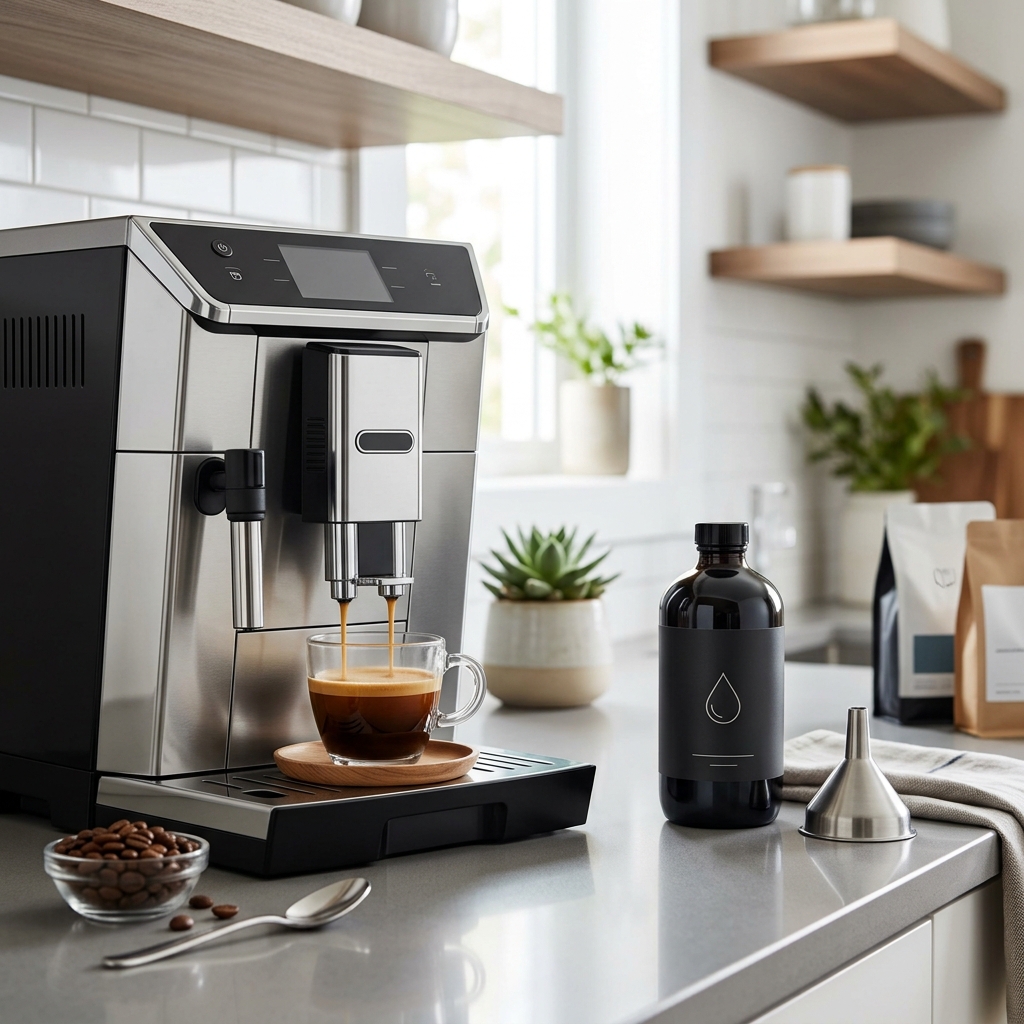
Types of Coffee Machine Descaler
There are several types of descaler available, each with its own advantages and disadvantages:
- Liquid Descalers: These are pre-mixed solutions, generally convenient and easy to use. They often contain citric or sulfamic acid.
- Powder Descalers: These require mixing with water before use. They are typically more concentrated than liquid descalers, offering a cost-effective option, but require accurate measuring.
- Eco-Friendly Descalers: Often based on lactic or citric acid, these are designed to be gentler on the environment and your machine. They may require longer descaling cycles.
The best type of descaler depends on your machine and preferences. Always check your coffee machine’s manual for specific recommendations. Some manufacturers, like DeLonghi, even recommend using their branded descalers for optimal performance.
Top 5 Coffee Machine Descalers UK – 2026 Reviews
1. Durgol Swiss Eco Descaler
Price: £12.99
Durgol Swiss Eco Descaler is a highly effective and popular choice, known for its rapid descaling action. It’s formulated with organic acids and is suitable for a wide range of coffee machines, including those with sensitive materials.
2. Caffenu Eco Descaler
Price: £9.99
Caffenu Eco Descaler offers a good balance between performance and cost. It’s an eco-friendly option that effectively removes limescale without harsh chemicals. Available widely across UK retailers.
3. Brita Coffee Machine Descaler
Price: £7.49
A budget-friendly option from a trusted brand. The Brita Coffee Machine Descaler is easy to use and effective for regular descaling. It’s a good choice if you descale frequently.
4. Urnex Cafiza Espresso Machine Cleaner
Price: £18.50
Specifically designed for espresso machines, Urnex Cafiza not only descale but also cleans the internal components, removing coffee oils and residue. It’s more expensive, but provides a thorough clean, especially for professional-style machines.
5. Delonghi Descaler (DLSC001)
Price: £8.99
Formulated specifically for Delonghi coffee machines, this descaler guarantees compatibility and optimal performance. It’s a good choice for owners of Delonghi appliances who want to follow the manufacturer’s recommendations.
| Product Name | Price (GBP) | Type | Eco-Friendly | Best For |
|---|---|---|---|---|
| Durgol Swiss Eco Descaler | £12.99 | Liquid | Yes | All Coffee Machines |
| Caffenu Eco Descaler | £9.99 | Liquid | Yes | Regular Descaling |
| Brita Coffee Machine Descaler | £7.49 | Liquid | Partially | Budget-Conscious Users |
| Urnex Cafiza Espresso Machine Cleaner | £18.50 | Powder | No | Espresso Machines |
| Delonghi Descaler (DLSC001) | £8.99 | Liquid | No | Delonghi Machines |
How Often Should You Descale?
Descaling frequency depends on your water hardness and how often you use your machine. The UK is divided into soft, moderately hard, and hard water areas. You can find your local water hardness information on the Water UK website.
- Soft Water (under 50ppm): Every 6-12 months.
- Moderately Hard Water (50-150ppm): Every 3-6 months.
- Hard Water (over 150ppm): Every 1-3 months.
If you use your machine daily, you’ll need to descale more frequently than someone who uses it only occasionally. Look out for warning lights on your machine – these usually indicate limescale build-up.
Descaling Process: A Step-by-Step Guide
- Read your machine’s manual: This is the most important step! Specific instructions vary by model.
- Prepare the descaling solution: Mix the descaler with water according to the product instructions.
- Fill the water reservoir: Pour the descaling solution into the water reservoir.
- Run the descaling cycle: Most machines have a dedicated descaling cycle. If not, run a brewing cycle without coffee.
- Repeat: Run the descaling cycle 2-3 times, or as directed by the machine’s manual.
- Rinse thoroughly: After descaling, rinse the reservoir and run several brewing cycles with fresh water to remove any residual descaler.
Safety Tip: Always unplug your coffee machine before starting the descaling process.
Eco-Friendly Descaling Alternatives
While commercial descalers are effective, you can also try natural alternatives:
- Citric Acid: Mix 1-2 tablespoons of citric acid with 1 litre of water. Follow the same descaling process as with commercial descalers.
- White Vinegar: Mix equal parts white vinegar and water. Vinegar can leave a lingering odour, so thorough rinsing is crucial.
However, natural descalers may not be as effective as commercial options, and they can potentially damage some machine components. Always test on a small area first and consult your machine’s manual. Dispose of used descaling solutions responsibly, following local regulations.
Troubleshooting: Common Descaling Issues
- Descaler not flowing: Check for blockages in the water lines. Try gently shaking the reservoir.
- Machine not recognising the descaling cycle: Ensure the machine is switched on and in the correct mode. Refer to the manual for specific instructions.
- Strong odour after descaling: This is common with vinegar. Run several rinsing cycles with fresh water.
Where to Buy Coffee Machine Descaler in the UK
You can find coffee machine descalers at most major UK retailers, including:
FAQ
- Q: Can I use any type of descaler for my coffee machine?
A: No. Always check your machine’s manual for specific recommendations. Some machines have specific descaling requirements. - Q: How will I know if my coffee machine needs descaling?
A: Signs include slower brewing, weaker coffee, bitter taste, and a warning light on the machine. - Q: Is descaling the same as cleaning my coffee machine?
A: No. Cleaning removes coffee oils and residue, while descaling removes limescale build-up. Both are important for maintaining your machine. - Q: Can I use vinegar on expensive espresso machines?
A: It’s generally not recommended. Vinegar can be corrosive and may damage sensitive components. Citric acid is a safer alternative, but always test a small area first. - Q: What do I do with the used descaling solution?
A: Follow local regulations for disposal. Dilute the solution with plenty of water before pouring it down the drain.