
Table of Contents
Introduction: The Pursuit of the Perfect Brew
The simple act of brewing a cup of coffee has become a ritual for millions of Brits. No longer content with instant granules, we’re increasingly seeking out specialty beans and mastering the art of brewing at home. But achieving that truly exceptional cup – one that’s balanced, flavourful, and satisfying – requires more than just good beans. It demands understanding the nuances of the brewing process. This guide will take you through every step, from bean to cup, to help you unlock the full potential of your coffee.
Understanding Coffee Beans: From Origin to Roast
Coffee beans aren’t created equal. Their origin and roast level significantly impact flavour. Let’s break it down:
Bean Origins
- Arabica: The most popular variety, accounting for around 60% of global production. Known for its smoother, more aromatic flavour profile with notes of chocolate, caramel, and fruit. Generally more expensive.
- Robusta: Stronger, bolder flavour with higher caffeine content. Often has chocolatey and nutty notes but can also be more bitter. Frequently used in espresso blends.
- Liberica & Excelsa: Less common varieties, offering unique and often smoky or floral flavours.
Roast Levels
- Light Roast: Highlights the bean’s origin flavours, with higher acidity and a lighter body.
- Medium Roast: A balanced flavour profile with medium acidity and body. Popular for everyday drinking.
- Dark Roast: Bold, smoky, and often bittersweet flavours. Lower acidity and a fuller body.
Freshness is Key: Coffee beans begin to lose flavour immediately after roasting. Purchase whole beans and grind them just before brewing. Store beans in an airtight container, away from light, heat, and moisture. Ideally, use within two weeks of roasting.
Grinding Your Beans: The Key to Flavour Extraction
Pre-ground coffee loses flavour rapidly. Investing in a grinder is the single biggest improvement you can make to your coffee brewing.
Burr vs. Blade Grinders
| Feature | Burr Grinder | Blade Grinder |
|---|---|---|
| Grind Consistency | Consistent and uniform | Inconsistent, creates dust and boulders |
| Flavour Extraction | Optimal, even extraction | Uneven extraction, often bitter |
| Price | £80 – £300+ (e.g. Wilfa Svart Aroma Coffee Grinder – £150.00) | £20 – £60 |
| Noise | Generally quieter | Louder |
Grind Size Guide
- French Press: Coarse
- Pour Over: Medium-Fine
- Aeropress: Varies (Fine to Medium)
- Moka Pot: Fine
- Espresso: Very Fine
Water Quality: Often Overlooked, Always Important
Coffee is 98% water, so its quality matters! Tap water often contains chlorine and other minerals that can negatively impact flavour. Filtered water is highly recommended (Water Filter Jug (Brita) – £25.00).
Temperature: Ideal brewing temperature is between 90-96°C. Using a kettle with temperature control, like the Fellow Stagg EKG Electric Kettle (£180.00), is a worthwhile investment. Boiling water can scorch the coffee grounds, resulting in a bitter taste.
Mineral Content: A slight mineral content in your water is actually beneficial for extraction. Distilled water can result in a flat, lifeless brew.
Brewing Methods: A Deep Dive
French Press: Bold and Full-Bodied
The French Press, or cafetière (Bodum Chambord French Press – £40.00), is a classic for a reason. It produces a rich, full-bodied cup with a satisfying texture.
- Ratio: 1:15 (e.g., 30g coffee to 450ml water)
- Grind: Coarse
- Brew Time: 4 minutes
- Method: Add coffee to the press. Pour in hot water (93°C). Stir gently. Let bloom for 30 seconds. Add remaining water. Steep for 4 minutes. Slowly press the plunger down.
- Tip: Avoid pressing the plunger down too quickly, as this can disturb the sediment.
Pour Over (V60, Chemex): Clean and Delicate
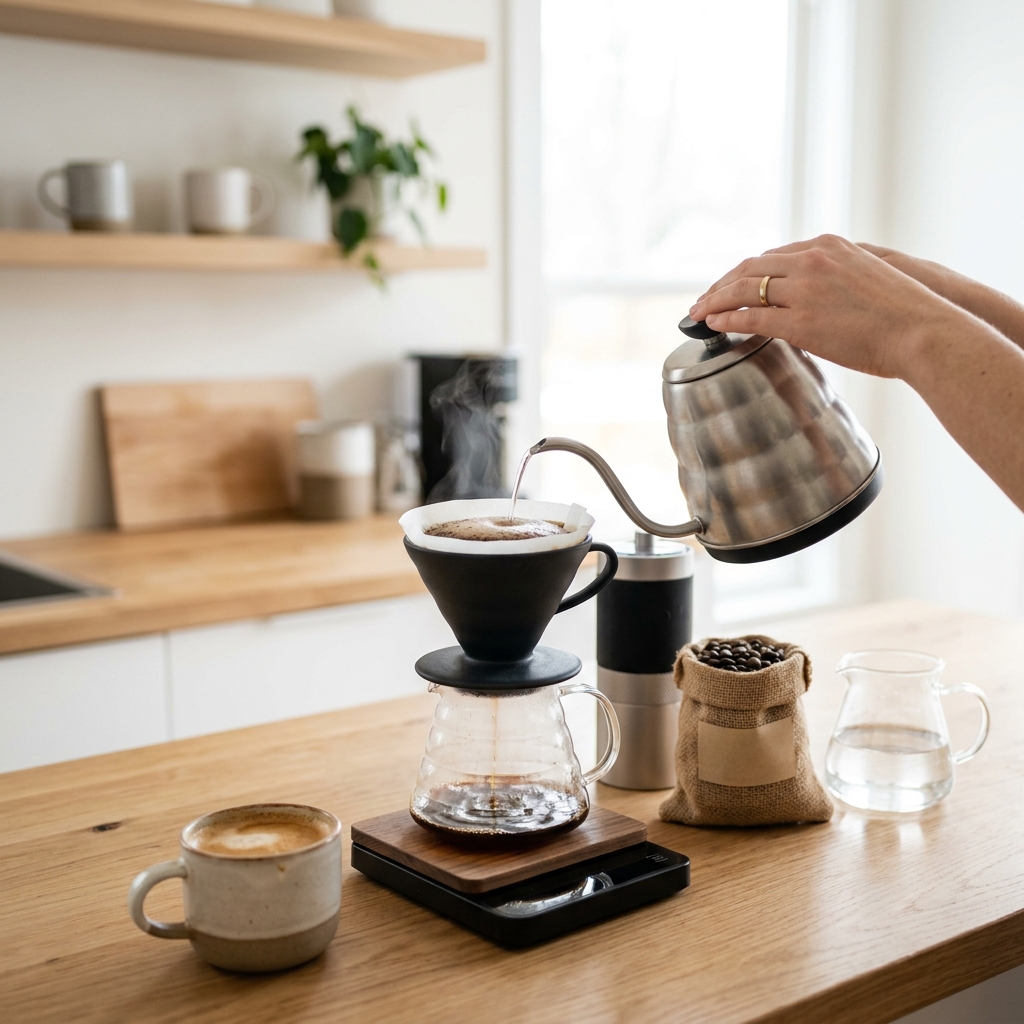
Pour-over methods (Hario V60 Pour-Over Kit – £35.00) showcase the nuanced flavours of the coffee bean. Requires a bit of technique but rewards with clarity and cleanliness.
- Ratio: 1:16 (e.g., 20g coffee to 320ml water)
- Grind: Medium-Fine
- Method: Rinse the filter with hot water to remove paper taste. Add coffee to the filter. Bloom with a small amount of water (double the coffee weight) for 30 seconds. Slowly pour the remaining water in a circular motion, ensuring even saturation.
- Tip: A gooseneck kettle is essential for precise pouring.
Aeropress: Versatile and Portable
The Aeropress Go Travel Coffee Press (£30.00) is incredibly versatile and perfect for travel or quick brews. Experiment with different techniques to find your preferred flavour profile.
- Ratio: Varies depending on preference.
- Grind: Fine to Medium
- Method: Inverted method often preferred. Add coffee, water, stir, steep for 60-90 seconds, flip, and press.
- Tip: Experiment with different brew times and grind sizes.
Moka Pot: Strong and Espresso-Like
The Bialetti Moka Express (£30.00) delivers a strong, concentrated brew similar to espresso. Requires careful heat control to avoid bitterness.
- Grind: Fine
- Method: Fill the bottom chamber with water (below the valve). Add coffee to the filter basket. Screw the top chamber on tightly. Place on low heat. Remove from heat as soon as the coffee stops flowing.
- Tip: Use pre-heated water in the bottom chamber to reduce brewing time and prevent a burnt taste.
Drip Coffee Machine: Convenience and Consistency
Drip machines offer convenience and consistency. While not ideal for flavour nuance, they’re a practical choice for everyday brewing.
- Ratio: Follow machine instructions (usually 1:16)
- Tip: Clean your machine regularly to remove mineral buildup.
Troubleshooting Common Brewing Problems
- Bitter Coffee: Grind too fine, water too hot, over-extraction.
- Weak Coffee: Grind too coarse, not enough coffee, under-extraction.
- Uneven Extraction: Inconsistent grind, poor pouring technique.
Cleaning and Maintenance: Prolonging Your Equipment’s Life
- French Press: Disassemble and wash thoroughly with soap and water.
- Pour Over: Rinse filter holder and carafe after each use.
- Aeropress: Rinse all parts after each use.
- Moka Pot: Disassemble and wash all parts. Avoid using soap.
- Drip Coffee Machine: Descale regularly with a descaling solution.
Conclusion: Enjoying Your Perfect Cup
Brewing coffee properly is a journey of experimentation and refinement. These guidelines provide a solid foundation, but don’t be afraid to adjust variables to suit your taste. Invest in quality beans, a good grinder, and practice your technique. The reward? A consistently delicious cup that you’ll truly savour. For those looking for the highest quality, the Sage Barista Express Espresso Machine (£700.00) can provide barista-level results at home.
FAQ
- What’s the best coffee-to-water ratio? A good starting point is 1:15 or 1:16, but adjust to your preference.
- Should I pre-heat my brewing equipment? Yes, pre-heating helps maintain a consistent brewing temperature and prevents heat loss.
- How often should I clean my grinder? Regularly, ideally after every few uses to prevent oil buildup.
- Can I use tap water for brewing? Filtered water is highly recommended for the best flavour.
- What does ‘bloom’ mean in pour over? Blooming is the process of saturating the coffee grounds with a small amount of hot water to release CO2, enhancing flavour extraction.