
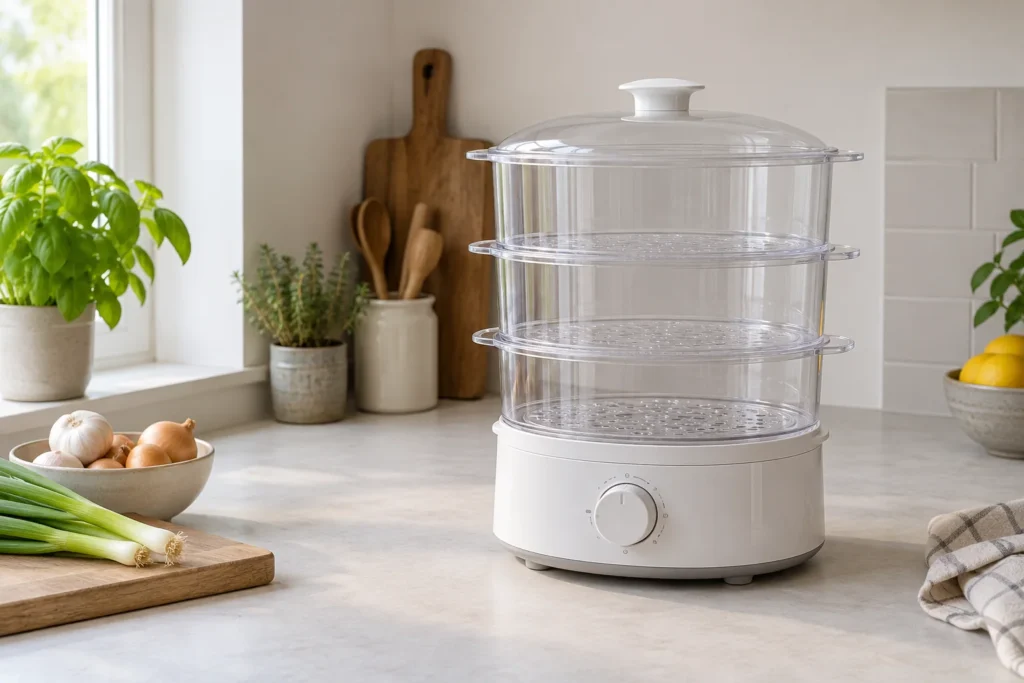
The useful way to clean an electric food steamer is to divide it into named components before choosing a washing method. A tray, rice bowl and powered base may sit together during cooking, but they do not necessarily have the same care instructions. Identify the exact model, then use its component diagram and cleaning section together.
Image: AI-generated editorial illustration of generic equipment; not a photograph of a reviewed product.
Table of Contents
Find the correct instructions
Record the model number from the appliance label while the steamer is cool and unplugged. A photograph saves having to turn the unit over whenever you need support. Search the manufacturer's site using that number, and check that the manual's baskets, controls and parts match the appliance in front of you.
For example, the Tefal steamer user guide NC00140762 guide distinguishes removable accessories from the electric base. Its cleaning section requires unplugging and complete cooling, permits washing the removable parts, prohibits immersing the base and rules out abrasive cleaners. These permissions belong to the models covered by that guide; another steamer needs its own instructions.
Save the manual with a clear filename such as the maker, model and document code. If the support page and an older downloaded booklet disagree, ask the manufacturer which applies to your appliance. Combining the most convenient instruction from each document does not establish a valid cleaning method.
Make a component list
Lay out the cooled removable parts as the maker permits and match each to the diagram. Names such as juice collector, drip tray and reservoir are easy to confuse when shopping for a replacement or reading a short online answer. The component's job and connection to the base matter more than its apparent material.
| Component to identify | Instruction to find |
|---|---|
| Lid and cooking baskets | Approved washing method and any dishwasher restrictions |
| Rice bowl | Whether it has different care requirements from the baskets |
| Juice or drip collector | Removal, emptying and cleaning instructions |
| Water reservoir | How it is emptied and cleaned on this model |
| Powered base and controls | Permitted surface cleaning and water-contact restrictions |
Keep the list short enough to use. A note saying “all removable parts” is only helpful if you have established which pieces the manufacturer considers removable. Do not pull apart a fixed assembly to make it fit that description.
Plan the washing space
Before starting, decide where the electrical unit will remain and where cleaned accessories will dry. Check whether the baskets fit your sink or permitted dishwasher position without forcing them. Tall stacked baskets can look compact in storage while taking up considerable space when separated.
Use the maker's washing instructions for each item. Look at the undersides, rim channels and connections when inspecting your work, since a quick glance from above misses much of the shape. If something remains marked, distinguish an appearance issue from residue before repeating treatment. Stronger products are not an automatic next step.
A small written care card can list the cleaning method beside each component name. This is especially useful in a shared kitchen: someone seeing a plastic or steel part for the first time should not have to guess its dishwasher permission.
Treat descaling as a separate procedure
The Tefal guide above has a distinct scale-removal method involving an overnight treatment in the reservoir, followed by rinsing. It specifies its own quantities and excludes other scale-removing products. Read that complete section if it matches your model; do not turn the appliance on as an improvised shortcut.
Record the exact instruction page and any manufacturer-stated interval on the care card. General kettle advice does not establish compatibility with a food steamer. Likewise, a cleaning product label cannot expand the appliance maker's list of permitted treatments. If the two instructions do not agree, resolve the mismatch with support before using the product.
Inspect and store the complete set
Use the manual's reassembly and storage arrangement so that the next cooking session starts with all the right parts. Check that detachable pieces are present and that the lid and baskets sit normally. A photograph of the clean, correctly assembled set can make this easier for everyone who uses it.
For leaks, damaged parts or a fault with heating, use the maker's troubleshooting and service route. The cited Tefal guide directs these faults to its service team; it does not present descaling as a repair for every symptom. Good cleaning records help you describe the problem without dismantling the electrical unit.