
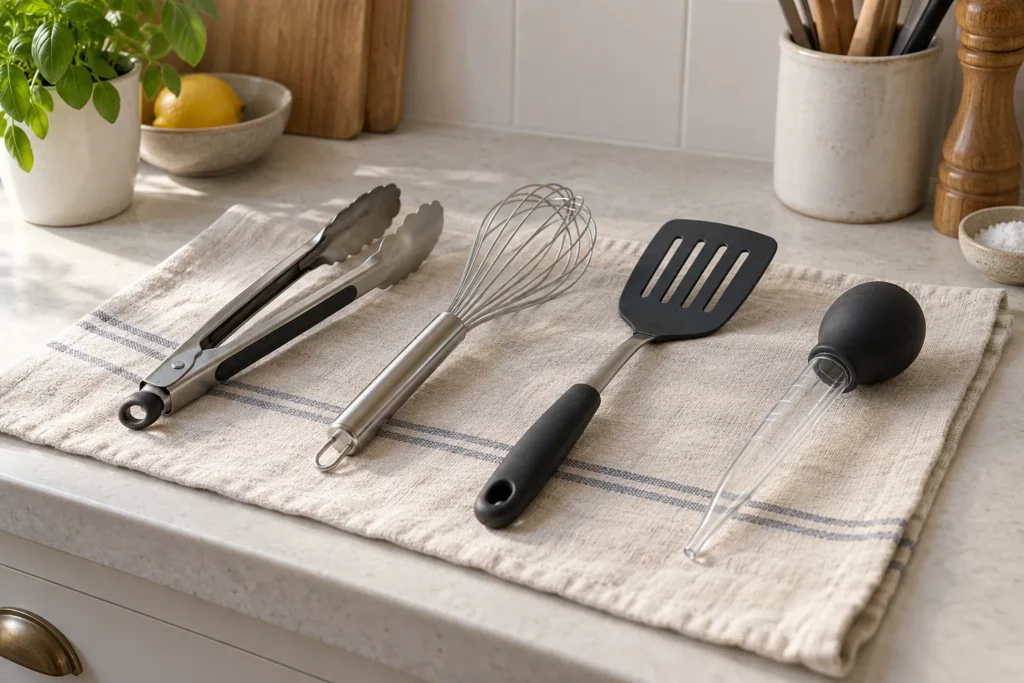
Choose a bulb baster when you need to draw up and transfer a suitable liquid; choose a basting or pastry brush when you need to spread a coating over a surface. They perform different actions, even when both are sold for basting. Start with the recipe's method, then compare reach, control and how the tool will be cleaned.
Image: AI-generated editorial illustration of generic equipment; not a photograph of a reviewed product.
Table of Contents
Understand what each tool does
A bulb baster uses a squeezable bulb and tube to collect and release liquid. A brush carries a coating on its bristles or flexible head. A spoon may already cover some simple transfer tasks if the recipe and vessel arrangement allow it. There is no requirement to own both specialist forms before you know which action is missing.
| Task | Form to consider | Main inspection point |
|---|---|---|
| Draw liquid from a vessel | Bulb and tube baster | Tip access and bulb connection |
| Apply a coating across a surface | Suitable brush | Head size and controllable application |
| Transfer a small accessible amount | Existing suitable spoon | Reach and a stable working position |
This comparison does not establish that basting is required for a particular dish or promise a cooking result. Follow a tested recipe for whether, when and how the step belongs in the method.
Check a bulb baster's complete shape
Look at tube length, tip angle and bulb size. OXO angled baster with cleaning brush provides an example of an angled tip, a separate cleaning brush and an integrated rest. Those are useful features to inspect, but the maker's product description is not a guarantee that the tool will fit your roasting tin or feel comfortable to squeeze.
Compare the tool with the vessel's depth and rim. Think through picking it up, collecting liquid, transferring it and putting it down. The normal resting position matters because a rounded tube can be awkward to place. Use a suitable clean rest or plate according to the tool's design.
Read the material and temperature instructions
The bulb and tube may be made from different materials. Check the instructions for the complete assembly, including any restriction on heat exposure or contact with the vessel. Do not treat a silicone bulb as evidence that every part has the same rating.
Plan the basting step around the recipe and your oven or hob instructions. A long tool is not permission to reach into an unsafe position or handle an unstable hot vessel. Have the appropriate heat protection and a clear landing area prepared before following the recipe's hot-equipment steps.
Choose a brush for the coating and surface
Head width affects how much area you cover in one movement and how precisely you can work around an edge. A wide brush may suit a broad surface but feel clumsy for a small pastry. Compare the bristle arrangement and how the head connects to the handle, not just the overall colour or material name.
OXO silicone pastry brush is a manufacturer example of a brush designed for applying pastry coatings. Use its specification to understand that particular tool, then check the requirements of your own recipe. No brush material guarantees the same behaviour with every thin liquid, sticky glaze or delicate surface.
Make cleaning access a buying criterion
For a bulb baster, confirm whether the bulb is intended to detach and whether the supplied brush reaches the full inside length of the tube. Check how the tip is cleaned and whether every part can dry properly. A tube that is easy to fill but difficult to inspect deserves careful consideration.
For brushes, inspect the base of the bristles and any removable head. Follow the maker's washing and disassembly instructions. Do not assume dishwasher permission for one model applies to a wooden-handled or differently assembled alternative.
Inspect before the next use
Check the bulb connection, tube and brush head for damage or retained residue after the approved cleaning routine. Replace or seek advice about an item that no longer assembles correctly. A poor seal or loose component should be resolved before it is used with a hot liquid.
Buy the form that serves a specific recipe step and that you can clean thoroughly using its documented method. Keep the care information with the tool's model details. That makes occasional-use equipment easier to use confidently when it comes out for a roast, pastry project or another planned dish.