
Table of Contents
Introduction: Kitchen Flooring in 2026 – What’s Trending?
The kitchen remains the heart of the home, and in 2026, we’re seeing a continued trend towards open-plan living and kitchens that seamlessly integrate with dining and living areas. This influences flooring choices, with homeowners prioritising durability, water resistance, and a style that complements both cooking and relaxation spaces. Demand for realistic aesthetics is high – people want the look of natural materials without the associated maintenance. While material costs have seen some fluctuation in recent years, supply chains are stabilising, although a moderate increase in prices is still anticipated for premium materials throughout 2026. Sustainability remains a key consideration, with recycled and responsibly sourced options gaining popularity.
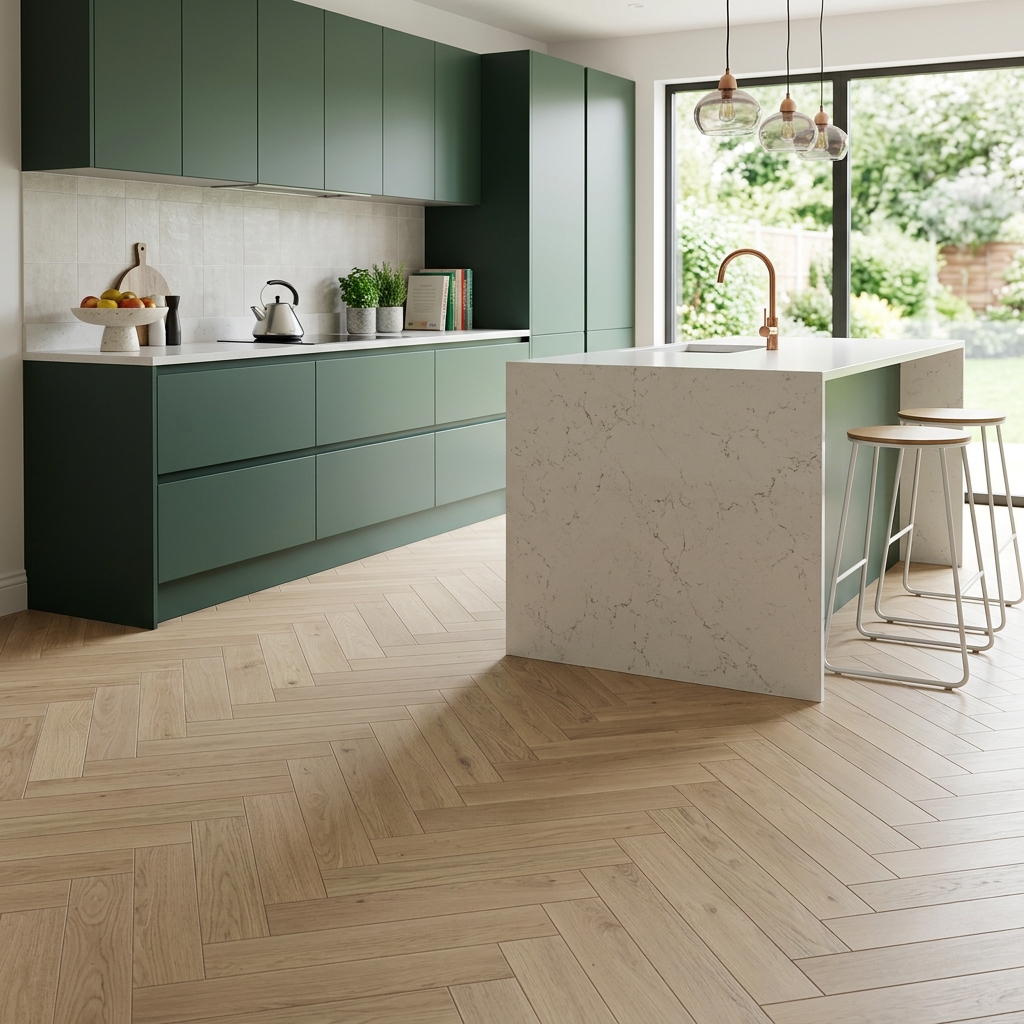
Vinyl Kitchen Flooring: The Practical & Stylish Choice
Vinyl flooring has undergone a significant transformation in recent years. Gone are the days of basic, easily-damaged vinyl sheets. Today’s vinyl options are incredibly durable, waterproof, and come in a vast array of styles, including realistic wood and tile effects. There are three main types:
- Sheet Vinyl: A continuous roll of vinyl, offering excellent water resistance.
- Vinyl Tiles: Individual tiles, easier to replace if damaged.
- Luxury Vinyl Tile (LVT): The premium option, offering superior realism, thickness, and durability. Brands like Karndean Designflooring (£50-£100 per sqm) and Amtico Signature (£60-£120 per sqm) are leading the way.
Pros & Cons of Vinyl Flooring
| Pros | Cons |
|---|---|
| Waterproof & easy to clean | Can be susceptible to dents from heavy objects |
| Affordable | Lower-end vinyl can look less realistic |
| Easy to install (especially click-lock LVT) | Not as environmentally friendly as some other options |
| Wide range of designs and colours | Difficult to repair if significantly damaged |
Wood Kitchen Flooring: Classic & Warm
Wood flooring brings a timeless warmth and elegance to any kitchen. However, its suitability relies on the type of wood and the level of care taken. There are three main options:
- Solid Wood: Offers the most authentic look and can be refinished multiple times, but is susceptible to moisture damage and expansion/contraction.
- Engineered Wood: Consists of a real wood veneer bonded to a stable core, making it more resistant to moisture than solid wood.
- Laminate: A synthetic flooring that mimics the look of wood, offering excellent durability and affordability. Modern laminates are significantly improved, with realistic textures and enhanced water resistance. Quick-Step Laminate Flooring (£20-£50 per sqm) and Pergo Laminate Flooring (£25-£60 per sqm) are popular choices.
Pros & Cons of Wood Flooring
| Pros | Cons |
|---|---|
| Beautiful and adds value to the home | Susceptible to water damage (especially solid wood) |
| Warm and comfortable underfoot | Requires regular maintenance (oiling, waxing, polishing) |
| Can be refinished (solid wood & some engineered wood) | Can be expensive (especially solid wood) |
Tile Kitchen Flooring: Durable & Hygienic
Tile is renowned for its durability, water resistance, and hygienic properties, making it a popular choice for kitchens. Options include:
- Ceramic Tiles: Affordable and versatile, but less durable than porcelain. Topps Tiles Ceramic Tiles (£15-£40 per sqm).
- Porcelain Tiles: Extremely durable, waterproof, and resistant to staining. British Ceramic Tile Porcelain Tiles (£30-£80 per sqm).
- Natural Stone Tiles: Offers a luxurious look and feel, but requires sealing and regular maintenance.
Large format tiles and patterned tiles are particularly trending in 2026, creating a more seamless and visually interesting look.
Pros & Cons of Tile Flooring
| Pros | Cons |
|---|---|
| Extremely durable and long-lasting | Can be cold underfoot |
| Waterproof and easy to clean | Hard surface – can be uncomfortable for prolonged standing |
| Wide range of designs and colours | Can be expensive to install |
| Hygienic and resistant to stains | Grout requires regular cleaning and maintenance |
Laminate Kitchen Flooring: Budget-Friendly & Versatile
Laminate flooring has come a long way. Modern laminates offer improved water resistance, realistic textures, and are remarkably affordable. Crucially, choose a laminate specifically designed for kitchens—these will have a higher AC (Abrasion Class) rating for durability and enhanced water resistance.
Other Kitchen Flooring Options to Consider
While less common, these options can work well in certain kitchens:
- Concrete: Industrial chic and incredibly durable, but can be cold and requires sealing.
- Cork: Sustainable, comfortable underfoot, and naturally water-resistant, but requires careful sealing.
- Linoleum: An eco-friendly option made from natural materials, durable and comfortable, but can be more expensive than vinyl.
- Fibo Waterproof Wall Panels: Increasingly used *as* flooring, these panels offer a seamless, waterproof, and stylish solution. (£80-£150 per sqm).
Kitchen Flooring Costs UK 2026: A Price Breakdown
These are average costs, excluding VAT. Installation costs will vary depending on location and complexity.
- Vinyl (Sheet): Material: £15-£30 per sqm, Installation: £20-£40 per sqm
- Vinyl (LVT): Material: £50-£120 per sqm, Installation: £30-£60 per sqm
- Solid Wood: Material: £60-£150 per sqm, Installation: £40-£80 per sqm
- Engineered Wood: Material: £40-£100 per sqm, Installation: £30-£60 per sqm
- Laminate: Material: £20-£60 per sqm, Installation: £15-£30 per sqm
- Ceramic Tile: Material: £15-£40 per sqm, Installation: £40-£80 per sqm
- Porcelain Tile: Material: £30-£80 per sqm, Installation: £40-£80 per sqm
Subfloor Preparation: Expect to add £10-£30 per sqm if subfloor leveling or repairs are needed.
Choosing the Right Kitchen Flooring: A Buyer’s Guide
Consider these factors:
- Lifestyle: Families with children or pets need durable, easy-to-clean options.
- Budget: Laminate and vinyl are the most affordable choices.
- Kitchen Design: Choose flooring that complements your kitchen’s style.
- Underfloor Heating: Ensure the flooring is compatible with underfloor heating systems.
- Slip Resistance: Important for safety, especially in busy kitchens. Look for a slip resistance rating of R10 or higher.
Where to Buy Kitchen Flooring in the UK (Online & In-Store)
Here are some reputable retailers:
- Topps Tiles: Wide range of tiles, both online and in-store.
- British Ceramic Tile: Specialises in tiles, with showrooms across the UK.
- Karndean Designflooring: LVT specialists, with a network of approved retailers.
- Amtico: Premium LVT, available through dedicated showrooms.
- Quick-Step: Laminate and vinyl flooring, available online and in-store.
- B&Q: Wide selection of flooring options at competitive prices.
- Wickes: Similar to B&Q, offering a range of flooring solutions.
Many retailers offer free samples and home visits to help you make the right choice.
Conclusion: Finding Your Perfect Kitchen Floor
Choosing kitchen flooring is a significant investment. By carefully considering your lifestyle, budget, and design preferences, you can find the perfect floor to create a beautiful, functional, and durable kitchen space. Don’t hesitate to request samples and seek professional advice to ensure you make an informed decision that will last for years to come. Remember to factor in ongoing maintenance – keeping your floor clean and well-maintained with products like Bona Wood Floor Cleaner (£20) or Pro-Kem Wood Floor Polish (£30) will extend its lifespan and keep it looking its best.
FAQ
Q: How much does it typically cost to install kitchen flooring?
Installation costs vary widely depending on the flooring type, room size, and complexity of the job. Expect to pay between £15 and £80 per square metre for professional installation.
Q: What is the most durable kitchen flooring option?
Porcelain tile is generally considered the most durable kitchen flooring option, followed by LVT and engineered wood.
Q: Is laminate flooring suitable for kitchens?
Yes, modern laminates designed for kitchens offer improved water resistance and durability. However, it’s crucial to choose a high-quality laminate specifically rated for kitchen use.
Q: How often should I clean my kitchen floor?
Daily sweeping or vacuuming is recommended to remove dirt and debris. Mop the floor weekly with a suitable cleaner, depending on the flooring type.
Q: Will underfloor heating work with all types of kitchen flooring?
Not all flooring types are suitable for underfloor heating. Tile, LVT, and engineered wood are generally compatible, while solid wood may require more careful consideration.