
Table of Contents
Introduction: Why a Kitchen Island is a Must-Have in 2026
The kitchen remains the heart of the UK home, and in 2026, the kitchen island has solidified its position as a non-negotiable feature for many. No longer simply a workspace, the island has evolved into a multi-functional hub, providing increased workspace, valuable storage, a social gathering point for family and friends, and, crucially, the potential to significantly increase property value. Demand continues to rise as open-plan living becomes even more prevalent. Key trends for 2026 centre around seamless smart home integration – think built-in charging stations and integrated displays – and a growing preference for sustainable and ethically sourced materials. From compact solutions for smaller spaces to grand statement pieces, there’s a kitchen island to suit every home and lifestyle.
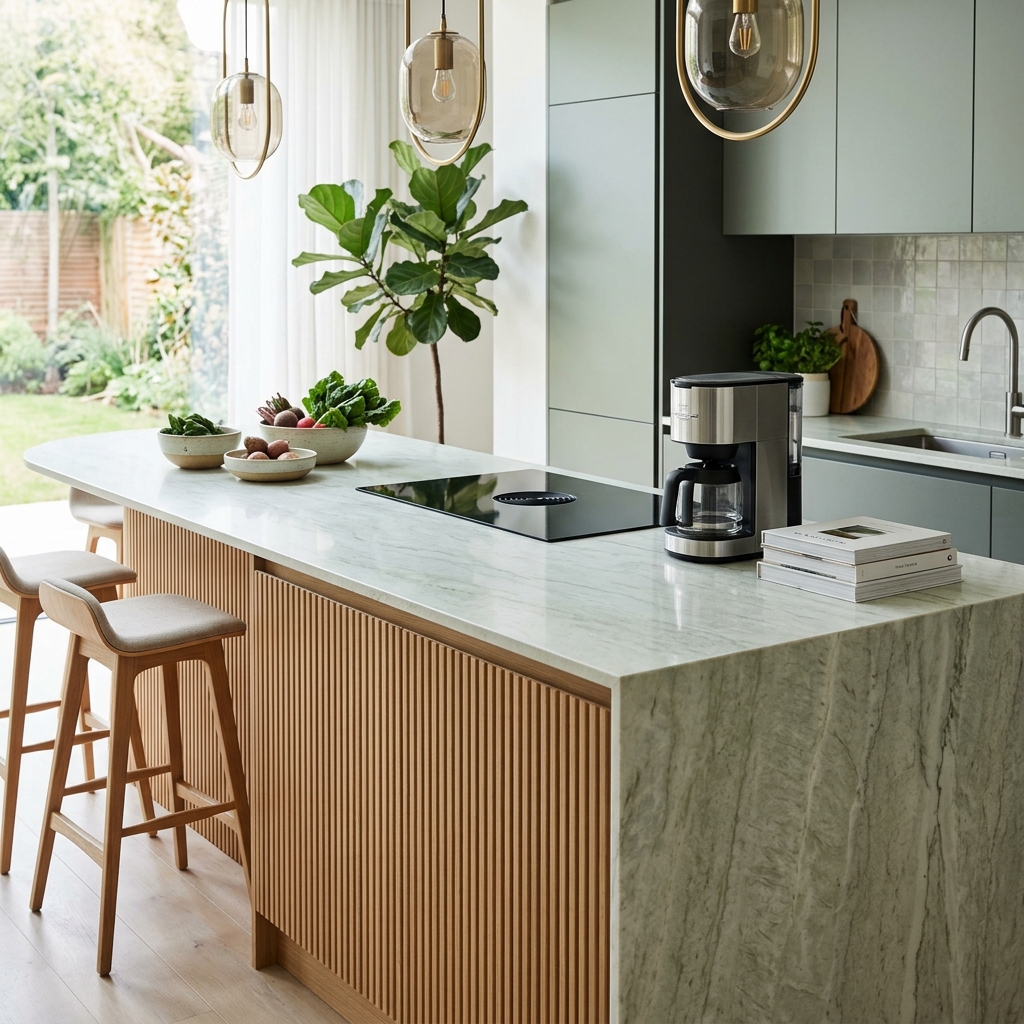
Understanding Your Space: Island Size & Layout
Before diving into designs, accurate measurement is crucial. Consider your kitchen’s dimensions, taking into account existing cabinets, appliances, and walkways. A general rule of thumb is to allow at least 90cm-120cm of clearance around all sides of the island for comfortable movement. For a comfortable seated area, factor in an extra 60-75cm of legroom.
- U-Shaped Kitchens: Islands fit neatly into the open space, often acting as a central workstation.
- L-Shaped Kitchens: Islands create a natural division between the cooking and living areas.
- Galley Kitchens: Islands can be trickier but are possible if the galley is wide enough – consider a smaller, mobile island.
Small kitchens require careful planning. Don’t overcrowd the space; a smaller island prioritising functionality is better than a large, impractical one.
Kitchen Island Styles: 2026 Design Trends
2026 sees a move towards warmer, more inviting kitchen aesthetics. Here’s a breakdown of popular styles:
- Contemporary: Sleek lines, minimalist design, often featuring handleless cabinets and integrated appliances.
- Modern Farmhouse: A blend of rustic charm and modern convenience, with shaker-style cabinets and natural materials.
- Traditional: Classic detailing, ornate cabinetry, and a focus on timeless elegance.
- Industrial: Exposed brick, metal accents, and a raw, urban aesthetic.
- Scandinavian: Light colours, natural wood, and a focus on simplicity and functionality.
Trending Colour Palettes: Warm neutrals (creams, beiges, greiges), deep greens (sage, olive), muted blues (dusty blue, navy), and natural wood tones are dominating in 2026.
Material Trends: Quartz remains popular for its durability and low maintenance. Granite offers a luxurious feel. Reclaimed wood adds character and sustainability. Concrete is favoured for its industrial edge.
Island Functionality: Beyond Food Prep
Kitchen islands aren’t just for chopping vegetables. Consider these functional additions:
- Seating: Breakfast bars and comfortable stools create a casual dining or socialising space.
- Storage: Drawers, cupboards, pull-out pantries, and wine racks maximise storage capacity.
- Appliances: Sinks, dishwashers, hob/induction cooktops, and even built-in ovens can be integrated into the island.
- Smart Home Integration: Charging stations for devices, wireless phone chargers, and integrated displays for recipes or entertainment are increasingly popular.
- Dual-Purpose Islands: Islands that can transition from food preparation to serving, or even double as a home office space.
Kitchen Island Materials: A UK Guide
Choosing the right material is vital. Here’s a comparison:
| Material | Cost (approx. per square metre, 2026) | Durability | Maintenance | Sustainability |
|---|---|---|---|---|
| Solid Wood (Oak) | £150 – £300 | High | Regular oiling/waxing | Good (especially FSC-certified) |
| Solid Wood (Walnut) | £200 – £400 | High | Regular oiling/waxing | Good (especially FSC-certified) |
| Quartz | £300 – £600 | Very High | Low – wipe clean | Moderate |
| Granite | £400 – £800 | Very High | Sealing required annually | Moderate |
| Laminate | £80 – £150 | Moderate | Low – wipe clean | Low |
| Composite Materials (e.g., recycled glass) | £200 – £500 | High | Low – wipe clean | High |
Lighting Your Kitchen Island: 2026 Illumination Ideas
Lighting is key to creating the right atmosphere. In 2026, we’re seeing a move towards layered lighting:
- Pendant Lights: A classic choice, with minimalist designs and natural materials (wood, rattan) being popular.
- Recessed Lighting: Provides general illumination and can be used to highlight specific areas.
- Under-Cabinet Lighting: Essential for task lighting during food preparation.
- Integrated LED Strips: Offer a sleek and modern look, often incorporated into the island’s overhang.
Consider dimmable lights to adjust the mood.
Kitchen Island Storage Solutions: Maximising Space
Don’t waste an inch! Clever storage solutions include:
- Pull-Out Drawers: For easy access to pots, pans, and utensils.
- Corner Solutions: Lazy Susans or pull-out shelving maximise corner cabinet space.
- Spice Racks: Keep spices organised and within reach.
- Utensil Holders: Dedicated compartments for knives, forks, and spoons.
- Integrated Recycling Bins: A convenient and hygienic solution.
Small Kitchen Island Ideas: Making the Most of Limited Space
Small kitchens don’t have to miss out. Consider these options:
- Mobile Kitchen Islands: On castors for easy movement and flexibility.
- Compact Breakfast Bars: A slim island with a small overhang for seating.
- Drop-Leaf Islands: Can be expanded for extra workspace and then folded away when not needed.
- Islands with Integrated Seating: Stools that can be tucked away under the island when not in use.
Cost Breakdown: How Much Does a Kitchen Island Cost in the UK (2026)?
Costs vary significantly depending on size, materials, and complexity.
- Basic Flat-Pack Island (DIY): £300 – £600
- Ready-Assembled Island (B&Q, Wickes): £400 – £800
- Mid-Range Custom Island (Howdens, Magnet): £800 – £2000
- High-End Bespoke Island (Quartz top, appliances): £2000+
- Installation Costs (Professional): £300 – £800 (depending on complexity)
Remember to factor in the cost of appliances, lighting, and any plumbing or electrical work.
Where to Buy Kitchen Islands in the UK: Retailers & Suppliers
Our Top Pick
For a balance of style, functionality and price, the Howdens Allerton Kitchen Island – Grey (£800) offers excellent value. It’s well-constructed and provides ample storage. For a truly bespoke and luxurious option, the Magnet Kitchen Island – Quartz Top (Bespoke) (£1500) is a superb choice.
FAQ
Q: How much space do I need around a kitchen island?
You should aim for at least 90cm-120cm of clearance around all sides of the island to allow for comfortable movement.
Q: What’s the best material for a kitchen island worktop?
Quartz is a popular choice for its durability and low maintenance. Granite offers a luxurious feel, while solid wood adds warmth and character.
Q: Can I install a kitchen island myself?
If you’re comfortable with DIY, a flat-pack or ready-assembled island can be installed yourself. However, if you’re planning on incorporating plumbing or electrical work, it’s best to hire a professional.
Q: What are the latest trends in kitchen island lighting for 2026?
Minimalist pendant lights, integrated LED strips, and layered lighting schemes are all popular choices in 2026.
Q: How can I make a small kitchen island feel bigger?
Choose light colours, incorporate clever storage solutions, and consider a mobile or drop-leaf island.