
Table of Contents
Why You Need Digital Kitchen Scales in 2026
In 2026, the modern kitchen is increasingly focused on precision and healthy living. While traditional kitchen scales served their purpose, digital scales offer a level of accuracy and convenience that’s simply unmatched. For bakers, precise ingredient measurements are crucial for consistent results – a few extra grams of flour can make all the difference between a perfect bake and a disaster. Beyond baking, digital scales are invaluable for portion control, a cornerstone of healthy eating habits. Knowing exactly how much you’re consuming helps you manage calorie intake and maintain a balanced diet.
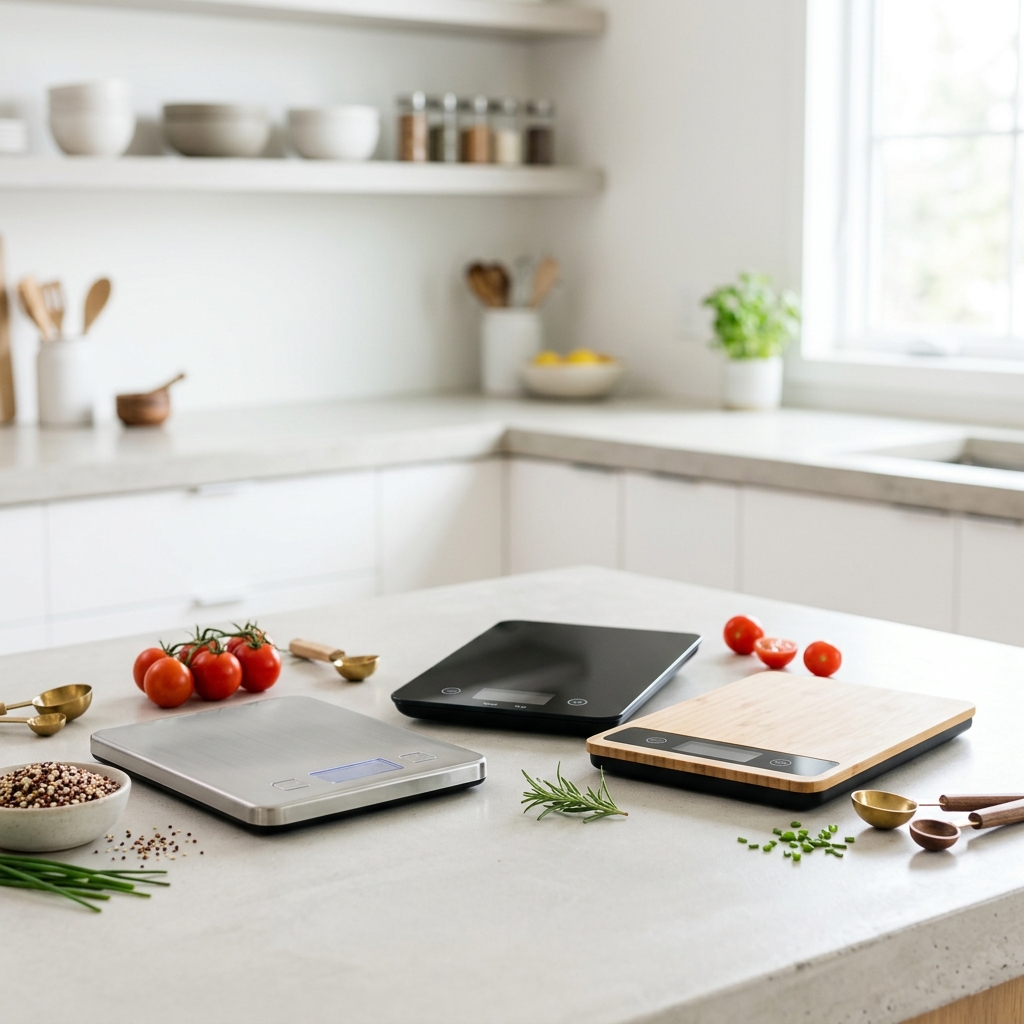
The trend in 2026 sees increasing integration of ‘smart’ scales, connecting to apps via Bluetooth to provide nutritional information, track macros, and even suggest recipes based on what you’re weighing. While these are at a higher price point, they represent a significant leap forward in kitchen technology. Even basic digital scales, however, remain an essential tool for anyone serious about cooking.
What to Look for in Digital Kitchen Scales: A 2026 Buyer’s Guide
Choosing the right digital kitchen scales can feel overwhelming with so many options available. Here’s a breakdown of the key features to consider:
- Capacity: Most scales offer a capacity between 5kg and 8kg, sufficient for everyday use. Consider larger capacities if you frequently weigh bulk ingredients.
- Accuracy & Resolution: This is arguably the most important factor. Resolution refers to the smallest increment the scale can measure (e.g., 1g or 0.1g). For general cooking, 1g is usually fine, but for baking, 0.1g resolution is highly recommended.
- Unit Conversions: Look for scales that can switch between grams (g), ounces (oz), pounds (lbs), and sometimes millilitres (ml).
- Tare Function: The tare function allows you to zero the scale with a container on it, so you only weigh the ingredient itself. Essential for accurate measurements.
- Display Type: LCD (Liquid Crystal Display) and LED (Light Emitting Diode) are common. LED displays are typically brighter and easier to read in low light.
- Power Source: Scales typically run on batteries (usually AAA) or are USB-C rechargeable. USB-C rechargeable models are more environmentally friendly and convenient.
- Material: Stainless steel surfaces are durable, hygienic, and easy to clean. Plastic scales are generally more affordable but may not be as robust.
- Size: Consider the available space in your kitchen. Some scales are compact, while others are larger.
- Smart Features: App connectivity, nutritional information display, and macro tracking are features found on more advanced (and expensive) scales.
Top 5 Digital Kitchen Scales UK – Our 2026 Reviews
1. Salter Electronic Kitchen Scales – £24.99
The Salter Electronic Kitchen Scales remain a reliable and affordable option for everyday cooking. Offering a 5kg capacity and 1g resolution, they’re perfect for general use. The easy-to-read LCD display and simple operation make them ideal for beginners. It uses 2 x AAA batteries (not included).
Pros: Affordable, easy to use, reliable brand.
Cons: 1g resolution isn’t ideal for baking, basic features.
Best For: Budget-conscious cooks, everyday weighing.
2. OXO Good Grips Food Scale with Pull-Out Display – £49.99
The OXO Good Grips scale stands out with its innovative pull-out display. This feature prevents large bowls or plates from obstructing the reading. It has a 5kg capacity and 1g resolution. The pull-out display is particularly useful when weighing ingredients directly in a large pot. Powered by 2 x AAA batteries.
Pros: Excellent display visibility, easy to clean, stable base.
Cons: Slightly more expensive than basic models.
Best For: Users with large mixing bowls, easy readability.
3. KitchenAid Digital Kitchen Scale – £64.99
The KitchenAid Digital Kitchen Scale boasts a sleek design and robust build quality. It offers a 5kg capacity and 1g resolution. Its compact size makes it easy to store, and the stainless steel platform is durable and easy to clean. It features a tare function and auto shut-off. It uses 2 x AAA batteries.
Pros: Stylish design, durable construction, reliable performance.
Cons: Limited features compared to smart scales, 1g resolution.
Best For: KitchenAid enthusiasts, those prioritising style and durability.
4. SMEG Digital Kitchen Scale – £99.99
If you’re looking for a statement piece, the SMEG Digital Kitchen Scale delivers. Available in a range of colours to match SMEG appliances, this scale features a 5kg capacity and 1g resolution. It’s more than just looks; the scale is accurate and easy to use, with a clear LCD display. Powered by 3 x AAA batteries.
Pros: Stylish design, high-quality construction, accurate measurements.
Cons: High price point, 1g resolution.
Best For: Design-conscious cooks, those wanting a stylish appliance.
5. GreaterGoods Digital Food Kitchen Scale – £32.99
The GreaterGoods Digital Food Kitchen Scale offers a fantastic balance of features and affordability. With a 5kg capacity and 0.1g resolution, it’s suitable for both everyday cooking and more precise baking. It includes a tare function, auto shut-off, and a clear LCD display. Powered by 2 x AAA batteries.
Pros: Excellent value for money, 0.1g resolution, compact and portable.
Cons: Plastic construction may not be as durable as stainless steel.
Best For: Bakers on a budget, those needing high accuracy.
Scale Feature Deep Dive: Accuracy & Resolution Explained
Understanding accuracy and resolution is vital when choosing a kitchen scale. Accuracy refers to how close the measured weight is to the actual weight. A scale may *say* 500g, but the actual weight could be 498g or 502g. Resolution, as mentioned earlier, is the smallest increment the scale can display.
A scale with 1g resolution can only display weights in whole gram increments. This is fine for many recipes, but for baking, where precise measurements are critical, a 0.1g resolution scale is significantly better. It allows for more nuanced adjustments, leading to more consistent results. A 0.1g scale can detect even small differences in ingredient amounts, which can be the difference between a perfectly risen cake and a flat one. Higher resolution scales are generally more expensive, but the increased accuracy can be well worth the investment for serious bakers.
Digital Kitchen Scales vs. Traditional Scales: Which is Right for You?
| Feature | Digital Kitchen Scales | Traditional (Spring) Scales |
|---|---|---|
| Accuracy | Highly accurate, especially with 0.1g resolution | Less accurate, prone to errors |
| Ease of Use | Easy to read digital display, tare function | Requires careful reading of the dial, no tare function |
| Features | Unit conversions, tare function, smart features (optional) | Limited features |
| Price | £25 – £100+ | £10 – £30 |
| Durability | Varies depending on material (plastic/stainless steel) | Generally durable, but spring can wear out |
Maintaining & Caring for Your Digital Kitchen Scales
To ensure your digital kitchen scales last for years, follow these tips:
- Cleaning: Wipe the platform with a damp cloth after each use. Avoid using abrasive cleaners.
- Storage: Store the scales in a dry place, away from direct sunlight and extreme temperatures.
- Battery Replacement: Replace batteries as soon as the display starts to fade. Use good quality batteries.
- Troubleshooting: If the scale isn’t working, check the batteries first. If it still doesn’t work, consult the user manual.
Frequently Asked Questions (FAQs)
Q: Can I use kitchen scales for postage?
While you *can* use kitchen scales to weigh parcels, they are not typically certified for postal accuracy. For precise postage calculations, it’s best to use a dedicated postal scale.
Q: How do I calibrate my kitchen scales?
Most digital kitchen scales don’t require calibration. However, some models have a calibration function. Refer to your user manual for instructions. Generally, it involves placing a known weight on the scale and following the on-screen prompts.
Q: What does ‘tare’ mean?
‘Tare’ means to zero the scale. It allows you to subtract the weight of a container from the total weight, so you only measure the weight of the ingredients inside.
Q: My scale is displaying an error message, what should I do?
Refer to your user manual for specific error codes and their meanings. Common solutions include replacing the batteries, ensuring the scale is on a level surface, or restarting the scale.
Q: Are USB-C rechargeable scales better than battery operated ones?
USB-C rechargeable scales are generally considered more environmentally friendly as they reduce battery waste. They are also more convenient as you don’t need to constantly replace batteries. However, they may be slightly more expensive initially.