
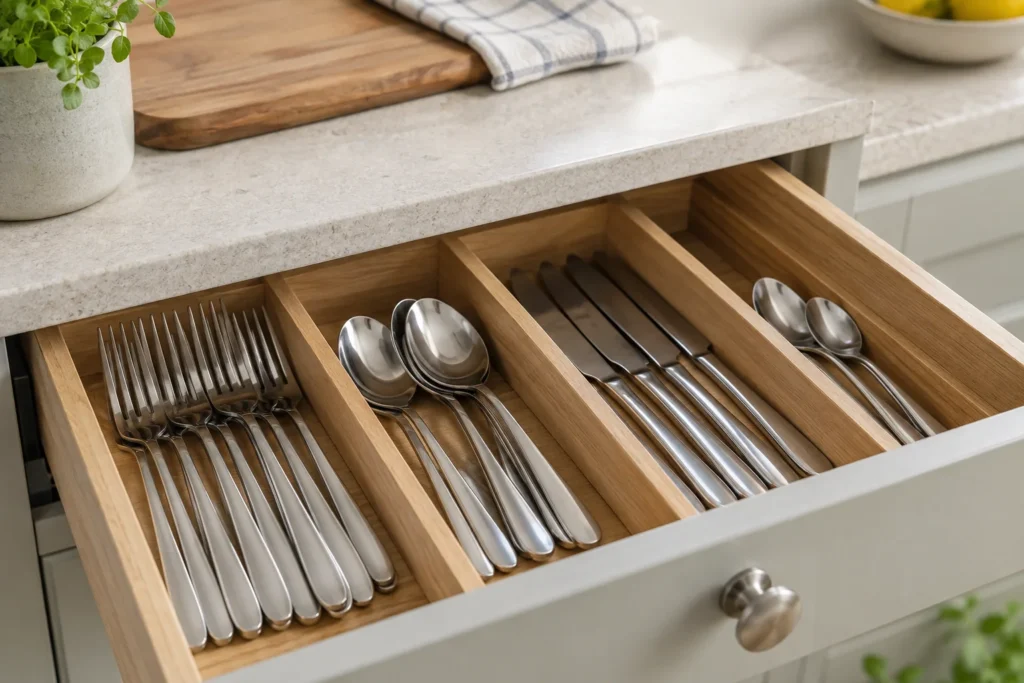
The numbers 18/10 and 18/0 describe a stainless-steel composition used in cutlery. They are useful information, but they do not tell you the size of a spoon, the comfort of a handle or the quality of every piece in a set. Read them alongside the full product specification rather than using them as a complete buying score.
Image: AI-generated editorial illustration of generic equipment; not a photograph of a reviewed product.
Table of Contents
Understand what the two numbers refer to
Cutlery manufacturer Amefa’s steel-grade explanation identifies 18/10 with 18% chromium and 10% nickel, and 18/0 with 18% chromium and no nickel content in that designation. The figures concern the alloy; they are not the cutlery’s thickness, weight or number of pieces.
If a listing simply says stainless steel, ask for the material specification where it matters to your decision. Do not infer the grade from a shiny photograph or a price bracket. A brushed or coloured finish can change appearance without supplying the missing material information.
Check forks, spoons and knives separately
The headline material for a collection may not describe every component in the same way. Robert Welch’s Stanton Satin place-setting specification, for example, distinguishes 18/10 spoons and forks from knives made using specially hardened steel. Read the piece-level details rather than extending one label across the entire set.
This is particularly useful when replacing a single missing item. Match the collection, piece name and dimensions as well as the finish. A teaspoon, coffee spoon and dessert spoon can look similar in isolated photographs while differing substantially in size.
Compare shape and dimensions
Look at handle length and width, spoon-bowl size, fork length and the form of the table knife. Consider the crockery and tasks the cutlery will serve. A long handle may fit a deep mug well but occupy more drawer space than you expect.
If possible, buy or inspect a sample place setting before committing to a large collection. Assess the feel in a suitable retail setting and consider the people who will use it. Neither a heavy piece nor a high alloy number establishes universal comfort.
Read care for the complete finish
Check whether the maker permits dishwasher washing and whether there are separate instructions for coatings, plating, wood or other handle materials. Do not apply advice for plain stainless steel to a coloured or plated finish without confirmation.
Treat the stated grade as one input to maintenance, not permission to leave cutlery wet or use any abrasive cleaner. Save the care instructions with the exact collection name. If marks appear later, that record helps the manufacturer identify an appropriate cleaning or assessment route.
| Specification | What it tells you |
|---|---|
| 18/10 or 18/0 | The stated alloy composition |
| Piece-level material | Whether knives differ from forks and spoons |
| Dimensions and weight | Practical size and handling information |
| Finish | The surface appearance and relevant care instructions |
| Individual replacements | How to maintain a matching collection over time |
Compare a place setting rather than one spoon
Lay out the pieces your household uses for an ordinary meal and compare their dimensions across candidate ranges. A comfortable dessert spoon does not establish that the matching fork or table knife will suit the same person. Count additional serving pieces separately, and check whether replacements are sold individually if that matters to you. Keep the steel description in its own row beside handle shape, piece dimensions and finish-care instructions. This avoids buying an oversized box because one material label appears more impressive, while overlooking that several included pieces would rarely leave the drawer.
Buy the pieces your table uses
Count everyday place settings separately from serving pieces and occasional extras. A larger set can look attractive while including items that rarely leave the box. Check whether matching replacements are currently offered, without assuming a collection will remain available indefinitely.
For kitchen preparation knives rather than table cutlery, see our knife-set guide. For cutlery, use the steel label to understand the material, then decide through piece-level specifications, handling and care. Those combined details give a more useful comparison than treating 18/10 or 18/0 as a verdict on the whole set.