
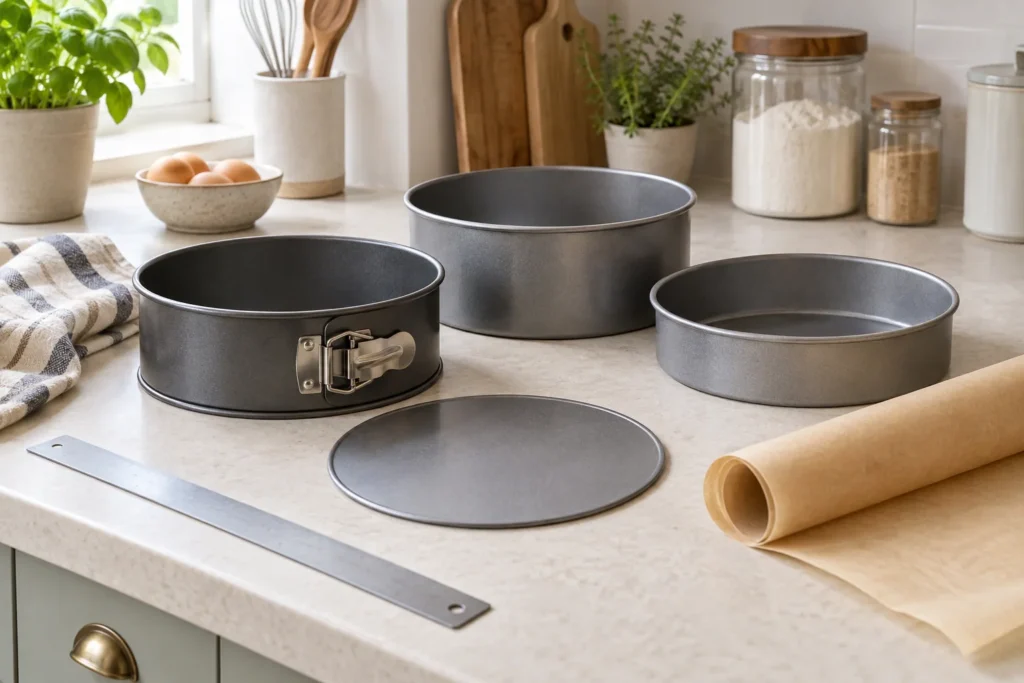
An adjustable cake ring changes its diameter, but it does not automatically provide the base or seal of a conventional cake tin. Choose one for a recipe or assembly method that specifies a ring, then check its permitted uses and supporting surface. The ability to make a circle larger is only one part of the setup.
Image: AI-generated editorial illustration of generic equipment; not a photograph of a reviewed product.
Table of Contents
Identify what the ring is designed to do
Read the product description for assembling chilled desserts, baking, tart work or other named uses. These permissions need to come from the exact manufacturer. The de Buyer adjustable stainless-steel pastry ring is adjustable and includes oven permission, but its instructions also exclude liquid preparations. That limitation matters even though it is sold among pastry equipment.
Do not treat a broad cake-ring label as proof that any batter can be poured inside. If your recipe calls for a sealed cake tin, a ring is a different arrangement. Choose the specified vessel or obtain explicit adaptation advice instead of trying to solve an unsupported setup with extra layers of wrapping.
Set and check the diameter
Adjust the empty ring on a level worktop according to its mechanism. Use any graduations as a starting point, then check the internal diameter in more than one direction. An oval shape can produce two different measurements even when one line agrees with the mark you selected.
Check that the mechanism stays where the maker intends and that the overlapping metal lies correctly. Do not force a ring beyond its stated adjustment range. If the product offers several heights, confirm the reference and actual height you are buying; diameter range and height are separate specifications.
| Check | Why it matters |
|---|---|
| Minimum and maximum diameter | The recipe size must fall inside the permitted range |
| Internal height | The wall must suit the intended preparation |
| Adjustment mechanism | The selected size needs to remain set as designed |
| Supporting surface | The ring itself may have no base |
| Liquid restriction | A close-looking join does not prove a seal |
Choose the complete support arrangement
Use the tray, board or other supporting surface specified by the recipe and permitted for the intended temperature. A surface appropriate for assembling a chilled dessert is not necessarily an oven tray. Check the complete setup rather than transferring one part of a photograph into a different application.
Measure the ring at the largest size you expect to use and include any clips or handles. It may fit in a cupboard when contracted but exceed your tray or fridge shelf when expanded. Trial the complete arrangement empty before preparing food so you can see where the ring will sit and how the support will be moved.
Match the liner to the application
Follow the recipe and ring maker for any liner. Paper intended for oven use and an acetate collar used in cold assembly are different products with different permissions. Do not assume that a transparent collar can go into an oven because it fits neatly inside the ring.
Check the liner's height and fit while the ring is empty. It should follow the planned arrangement without changing the selected diameter or obstructing the mechanism. Lining is not evidence that a manufacturer-prohibited liquid preparation has become acceptable; the underlying use restriction still applies.
Plan removal and storage
Read the release sequence before filling. Some tasks involve expanding the ring, while others rely on a specified liner or different removal method. Know where the released ring will go and how the food will remain supported. A narrow space between shelves can make an otherwise simple vertical movement awkward.
After use, follow the care instructions for cleaning the overlapping sections and adjustment parts. Store the ring at a permitted size without forcing it into an unrelated round tin. Keep the product reference and a note of the recipes that use it. An adjustable ring earns its place when it gives you useful, repeatable sizes for supported preparations, not when its flexibility is mistaken for universal cake-tin compatibility.