
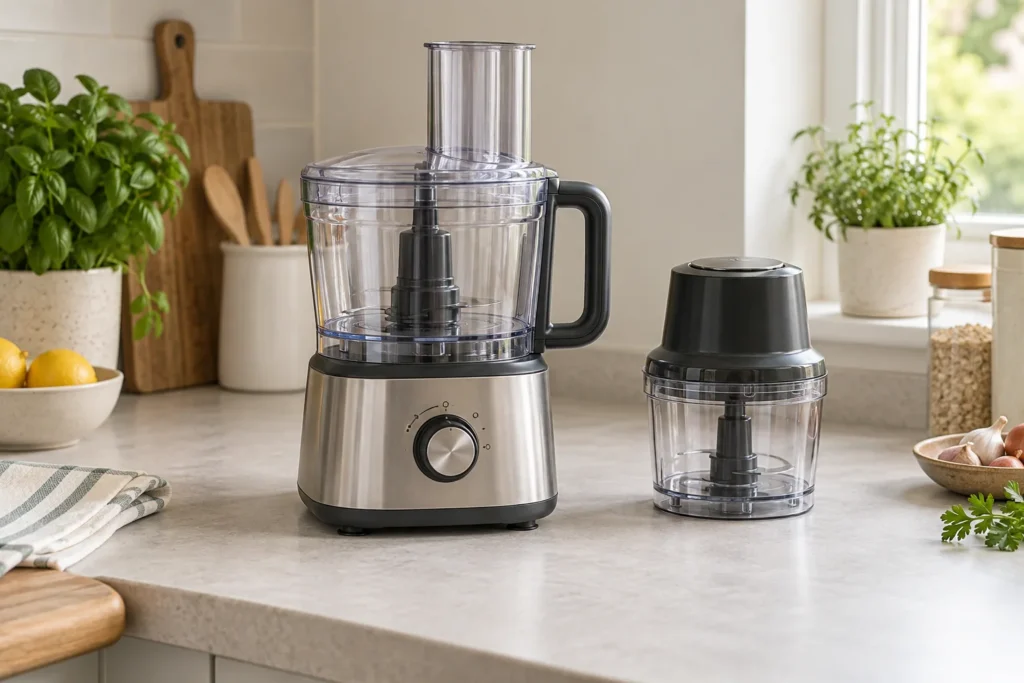
A food processor cake works best when the recipe was designed for that mixing method. Nigella Lawson’s marzipan loaf is one such example: it uses the processor to combine a small cake batter, including marzipan that would otherwise need careful mixing by hand.
Image: AI-generated editorial illustration of generic equipment; not a photograph of a reviewed product.
Table of Contents
Choose the recipe before choosing the tin
This is a practical guide to Nigella Lawson’s published marzipan loaf cake, not a claim that Best Kitchen UK has baked or tested an original recipe. Her specified tin is a 1lb, or 450g, loaf tin; that name is a nominal tin size, not permission to fill any container with 450g of batter.
Find your tin before turning on the processor. Check its actual shape and dimensions against the recipe’s intended loaf format, and make sure it fits the oven shelf with room to handle it. A broad shallow tin changes the batter depth; a smaller, deeper tin changes it in the other direction. Avoid changing tin size and ingredients together on a first attempt.
The metric ingredients
The published recipe uses 150g room-temperature marzipan, 125g soft unsalted butter, 1 teaspoon vanilla paste or extract, 50g caster sugar, 75g plain flour, ¼ teaspoon fine sea salt, 1 teaspoon baking powder, 1½ teaspoons ground cardamom and 3 large room-temperature eggs.
Use the ingredient labels to check allergens, including the marzipan, and tell anyone you serve what the cake contains. Do not assume that an almond ingredient is suitable for someone avoiding nuts, or that a flour substitution makes every other ingredient suitable for a restricted diet. Weigh the flour and marzipan separately, and keep the baking powder distinct from bicarbonate of soda.
Set up the processor and prepare the tin
Use a bowl and blade approved by your processor’s instructions for cake batter and stay within its cake-mixture allowance. If your machine is too small, do not try to process an overflowing batch: choose a recipe and method appropriate to it. A mini chopper’s bowl volume does not establish its suitability for this batter.
Nigella’s method heats the oven to 170°C, or 150°C fan. Line the loaf tin, or line its base and grease the sides. Tear up the marzipan, then process it with the remaining ingredients until smooth, stopping to scrape the bowl. Disconnect before scraping and keep the spatula away from a moving blade.
Examine the whole mixture after each safe scrape. A smooth surface can conceal a lump against the lower wall. Use what you see to decide whether another brief mix is needed; running continuously while you arrange the tin removes the opportunity to judge the batter. Have the prepared tin beside the bowl so the next step is straightforward.
Bake, check and cool
Transfer the batter to the tin. The published bake is about 40 minutes, with loose foil after 30 minutes to limit further browning. Look for the cake starting to leave the sides and a clean cake tester. Cool in its tin on a rack and turn out when cold.
Use oven gloves and keep the foil loose rather than pressing it into the cake. Set a reminder for the first check, but assess the cake itself at the end: ovens, tin material and ingredient temperatures can vary. If the top is attractive but the centre is visibly unset, appearance alone is not a reason to remove it. Do not taste uncooked batter while checking the mixture.
| Observation | Useful detail to record |
|---|---|
| Marzipan remains in lumps | Its starting temperature, piece size and whether the bowl was scraped. |
| Top colours before the centre is ready | The shelf position, actual oven mode and whether the loose covering was used. |
| Cake breaks during removal | How long it cooled and how the tin was prepared. |
| A different tin gives a different shape | Its measured dimensions, not only the label on its packaging. |
Keep the first bake easy to understand
Serve the loaf plain initially so you can decide whether its almond and cardamom flavour suits you. A heavy topping can hide the very texture you want to assess. Keep a note of the precise recipe version used and follow the author’s storage instructions if keeping it.