
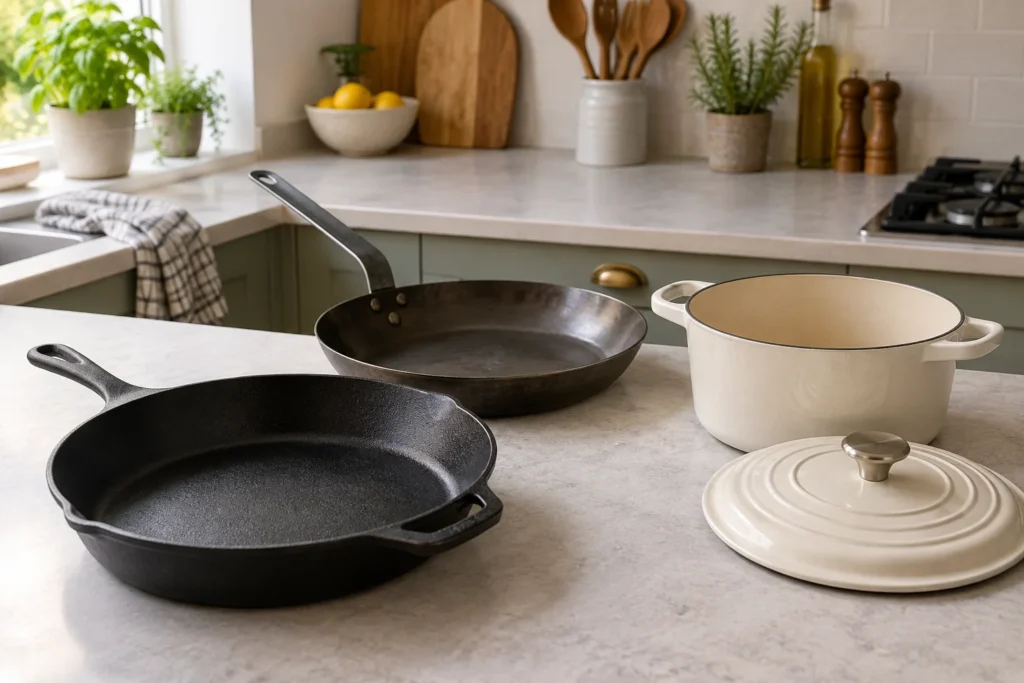
Rust on a bare cast-iron pan may be a restoration problem rather than a reason to discard it, but identify the pan and inspect its condition first. A sound seasoned surface with limited rust is a different case from damaged enamel, a cracked body or cookware with an unknown history.
Image: AI-generated editorial illustration of generic equipment; not a photograph of a reviewed product.
Table of Contents
Confirm that the affected surface is bare iron
Check the product information instead of judging by colour. Some enamelled cookware has a dark interior that can resemble seasoned iron. A rust-removal method intended to scour bare metal may damage an enamelled surface.
Lodge distinguishes ordinary cast-iron care from rust restoration. Its current instructions describe removing rust, washing and drying, applying a very thin oil layer and reseasoning when needed. The maker also distinguishes restoration tools from those it recommends for daily cleaning. Follow the complete method for the specific pan rather than applying every restoration step after each meal. Lodge cast iron cleaning and rust restoration
Inspect the whole item before starting
Look at the body, rim, handle and base while the pan is cold. If there are cracks, severe deterioration, uncertain repairs or a history of non-food use, obtain an appropriate assessment before trying to return it to cooking service.
For an inherited or second-hand pan, an attractive shape and a familiar brand marking do not establish its history. Cleaning away visible rust cannot answer every question about what the item has contained or how it has been repaired.
Photograph the affected areas before restoration. This gives the maker a clear starting point if the condition is difficult to assess and helps you distinguish remaining rust from a changed surface afterwards.
Follow one approved restoration route
Use the manufacturer’s stated tools and sequence for that surface. Read the entire method before beginning, including whether and how reseasoning is required. If oven heating is involved, confirm that all fittings are approved for the specified conditions.
Do not mix the process with an improvised chemical bath or an industrial rust remover. A cleaner sold for outdoor tools is not automatically suitable for food-contact cookware. Nor should a method for bare iron be used across an enamelled rim without explicit permission.
| Condition or uncertainty | Sensible next action |
|---|---|
| Identified bare iron with maker-supported rust care | Follow that restoration process |
| Dark surface of uncertain finish | Identify the model before scouring |
| Damaged or chipped enamel | Ask the maker to assess it |
| Crack, structural fault or unknown repair | Obtain an assessment before cooking |
| Rust returning after cleaning | Review drying and storage conditions |
Evaluate the result without inventing a test
After completing the approved process, inspect the dry pan in good light. If areas remain uncertain, ask the maker what they are before proceeding. Do not cook a sacrificial meal and treat its appearance as proof that the pan is suitable.
Keep notes of the tools and products used. They are helpful if support recommends a further step, and they prevent accidental repetition of an aggressive stage that was intended only once.
Restoration is not a way to correct a structural fault. A clean surface does not make a crack, loose fitting or unstable base disappear.
Fix the routine that allowed moisture to remain
Think through what happened between washing and the next use. Was the pan left soaking, placed away before drying, or stored somewhere damp? Lodge identifies prolonged moisture exposure and dishwasher use among the situations that can lead to rust on its seasoned cast iron.
Choose a storage position that lets you follow the maker’s drying and oiling routine without handling a crowded stack of pans. If a lid is stored with the item, follow the maker’s storage instructions and check that hidden surfaces are dry too.
Write down the normal care sequence separately from the restoration method. The aim is to make everyday care simple enough that a full rust treatment is rarely needed. Once the pan has been assessed and restored appropriately, maintain it according to its actual finish rather than responding to every colour change with another stripping session.