
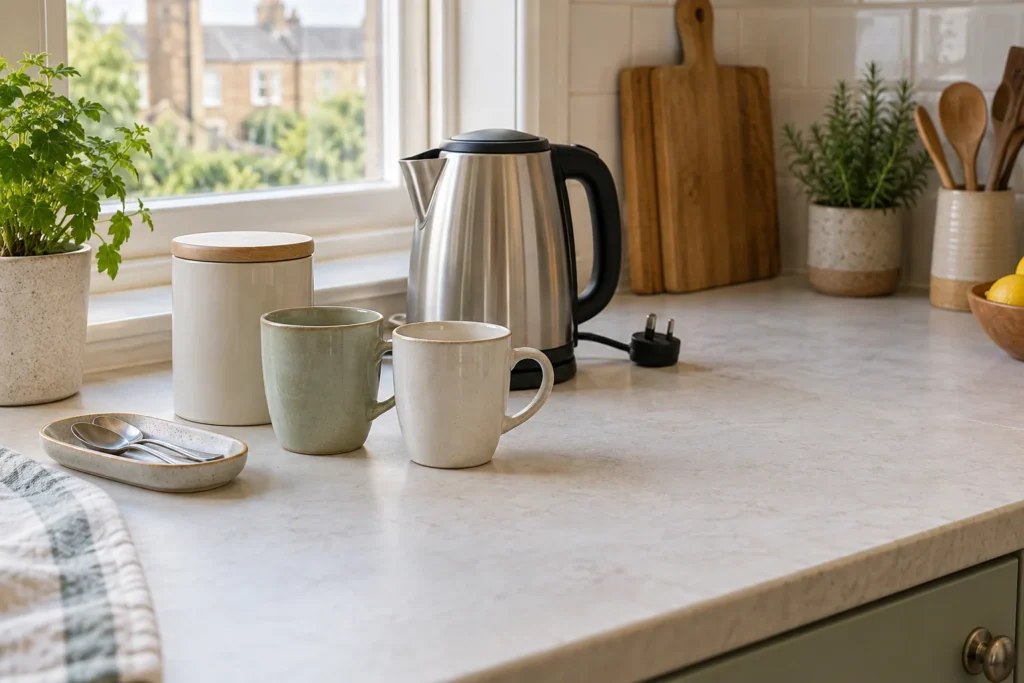
A tea and coffee station in a small kitchen should make drinks easier to prepare while leaving useful worktop space for other tasks. Begin with the drinks your household makes regularly. A station built around an imagined café menu can quickly become a display of equipment and jars that rarely earn their place.
Image: AI-generated editorial illustration of generic equipment; not a photograph of a reviewed product.
Table of Contents
Map one ordinary drink-making routine
List the items used for your usual drink: appliance or brewing device, cup, tea or coffee, measuring tool and anything served alongside it. Then note what happens afterwards, including used leaves or grounds, washing and returning equipment to storage.
Place the clean equipment on the counter without operating it and walk through that sequence. Identify where the cup is filled and where another person could stand without blocking the work. The useful layout supports the complete routine, not just the attractive moment before the drink is made.
Keep appliance instructions in control
Read the exact appliance manual for placement, access and clearance requirements before choosing the station’s position. Include the movement needed to fill a reservoir, open a lid or remove a tray. A machine can fit under a cupboard while still being inconvenient or unsuitable to operate there.
Do not route cables or relocate equipment in ways that conflict with the instructions. The aim is to make the permitted setup easier to use. If the existing counter does not provide the required space, a smaller collection of equipment may be more practical than another shelf around the same crowded arrangement.
Give cups and supplies different jobs
Keep the cups used every day close enough to retrieve without reaching across the operating appliance. Put only the working supply of tea or coffee in the station; store backups in a clearly identified cupboard area. This reduces the number of objects that need to move when cleaning.
IKEA’s kitchen organisation range includes countertop and wall options. Choose one only where it solves a specific access problem. A tray groups objects, but its footprint still needs to be accounted for in the preparation area.
Preserve the food’s storage information
Retain the original instructions and identity when transferring tea or coffee to another container. A decorative jar is not automatically the best place for every product simply because it matches the station. Our coffee-bean storage guide covers that separate storage decision in more detail.
Keep different coffees or teas identifiable to everyone using them. A small, clear label is more useful than expecting somebody to recognise similar-looking contents. If you use a measuring scoop, make sure it can be retrieved and returned without becoming another loose object across the counter.
Plan the clearing-up route
| Stage | Space to provide |
|---|---|
| Gather supplies | Accessible working ingredients and cups |
| Prepare the drink | Appliance clearances and filling access |
| Serve | A clear landing position for the finished cup |
| Clear up | Route to washing and the appropriate waste collection |
For example, a station used by two people in the morning may need a clear cup position more than it needs room for six displayed mugs. Try the routine with the normal users and notice where they wait or reach around one another. Adjust that bottleneck before buying additional accessories.
Walk through a two-person drink round
Two people making drinks together can reveal a bottleneck that a neat display hides. On a sketch, mark where each person retrieves a cup, adds supplies and sets down the finished drink. Keep those movements separate from opening cupboard doors or retrieving food for a meal. If the same narrow patch must hold the kettle, open coffee container and both cups at once, reduce the items displayed there. Supplies can be nearby without every container sitting permanently on the worktop. The aim is a workable sequence during a normal busy moment, rather than a station arranged only for one photograph.
Keep the station small enough to maintain
Choose a layout that can be cleared and wiped according to the worktop and equipment care instructions. If an object is rarely used, give it another home and reclaim the space. A useful drinks station is a compact working arrangement that remains easy to use on an ordinary busy morning.