
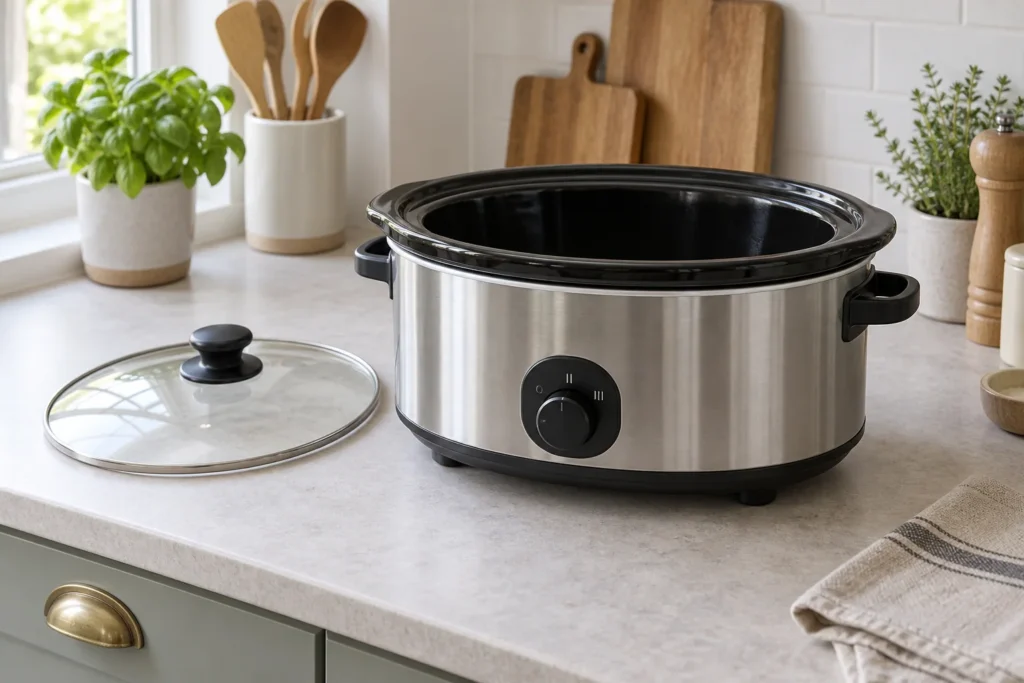
Choosing between a ceramic and metal slow-cooker pot is largely a question of handling and workflow. Consider what you will lift, whether browning happens elsewhere and how the insert will be cleaned. The material name alone does not establish hob compatibility, oven permission or a particular cooking result.
Image: AI-generated editorial illustration of generic equipment; not a photograph of a reviewed product.
Table of Contents
Compare the removable insert, not the whole cooker
The load you handle during serving or cleaning is usually the insert, sometimes with food still inside. A total appliance weight includes the base and may not tell you enough about that task. Look for the empty pot’s weight if the manufacturer provides it, or inspect the component in person.
Think about the route between cooker, serving area and sink. Handles need to feel secure with the protection required for hot use. A pot that is comfortable when empty may become awkward with a substantial meal inside. Plan manageable serving and cleaning steps instead of assuming the entire meal must be lifted at once.
Treat hob permission as a separate specification
Some metal inserts are designed for hob use, while others are intended only for their electrical base. The Morphy Richards 461020 specification is a useful example: its searing pot is approved for certain hobs but expressly excludes induction. Metal therefore does not mean compatible with every hob.
The practical choice is between browning in a separate frying pan, using an insert approved for your hob or choosing a cooker with an integrated sauté function. Those are three different arrangements. Decide which one fits your recipes and kitchen before deciding that a particular material is essential.
| Question | Why it matters | What to compare |
|---|---|---|
| How will ingredients be browned? | The answer determines the number of vessels and transfers. | Exact hob permission or a documented built-in function. |
| How will the pot be lifted? | Grip and load affect everyday handling. | Insert weight, handles and your serving arrangement. |
| Which utensils are permitted? | A coating may require particular care. | The manufacturer’s utensil and surface instructions. |
| Where will it be washed? | A large insert can be awkward even when dishwasher-safe. | Sink fit, dishwasher space and the component-level cleaning guide. |
Our PossibleCooker and Good to Go comparison applies these handling and care questions to two specific appliances. Keep the exact model’s pot permissions with it instead of transferring them from another metal insert.
Read the coating and temperature-change instructions
A metal pot may have a non-stick coating, so metal construction is not a reason to scrape it with whatever utensil is nearby. A ceramic vessel also needs the handling and cleaning method specified for its design. Avoid broad claims that one material is automatically scratch-proof or suitable for every dishwasher cycle.
Consider how you tend to finish meals. If you regularly reduce a sauce, confirm the approved route before moving the pot to another heat source. If you prefer to portion food directly from the cooker, a secure serving position and suitable ladle may matter more than a searing feature.
Check replacements before they become urgent
Photograph the model label and record the insert’s official part number if available. Similar litres or a similar oval shape do not establish interchangeability. The pot’s contact with the base, rim fit and other dimensions are part of the appliance design.
A clear replacement-parts listing is useful evidence of what to order; it is not a promise that stock will always be available. If no exact insert is listed, ask the manufacturer about support before buying an unverified alternative. Do not use a damaged pot while trying to adapt an approximate replacement.
Choose the material around your actual routine
For someone who likes to brown ingredients in a separate pan they already own, a cooker’s searing arrangement may add little value. Someone who wants fewer transfers may reasonably prioritise an approved hob-safe insert or integrated sauté programme. Someone concerned about lifting should compare the actual removable parts rather than a material’s reputation.
Make the choice using your three most common recipes and the way you serve them. Neither ceramic nor metal earns an automatic cooking-quality award here. The useful option is the one whose documented permissions and physical handling fit the job you need it to do.