
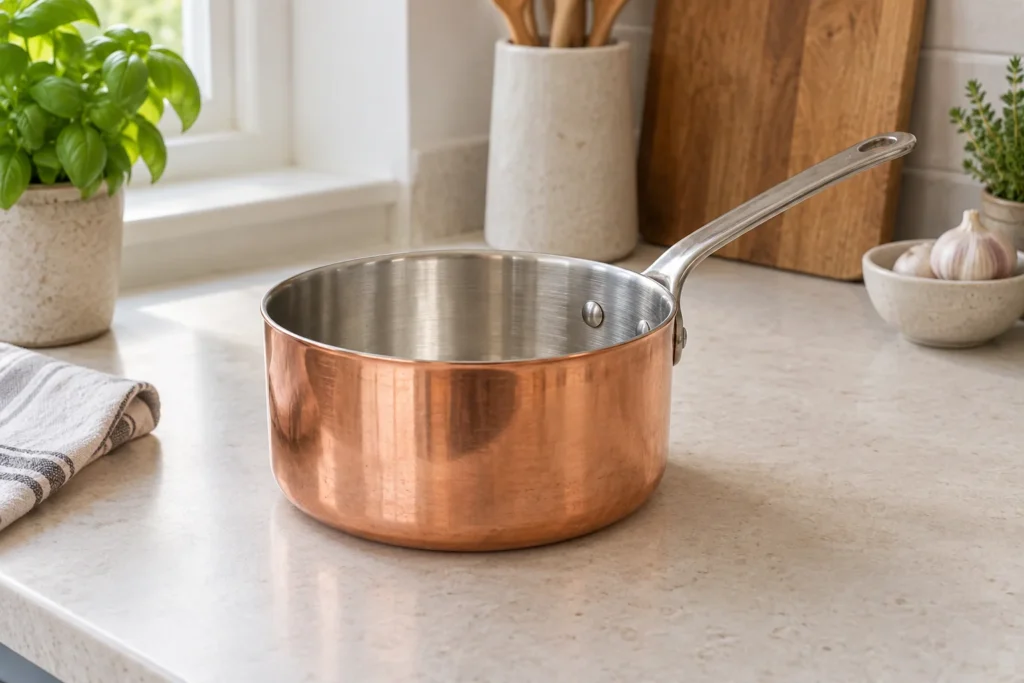
Choose copper cookware by the actual construction and interior lining, not the colour of the outside. A copper-bodied pan, a layered pan containing copper and a copper-coloured finish are different things. Identify which you are considering, then check the intended heat source, handle arrangement and care routine.
Image: AI-generated editorial illustration of generic equipment; not a photograph of a reviewed product.
Table of Contents
Establish where the copper is
Look for a clear materials description and any stated thickness. Does the figure refer to the copper itself, the complete wall or another component? A product photograph cannot establish that distinction. If the listing mainly describes appearance, ask the maker to explain the construction before comparing it with a traditional copper pan.
A visible copper band can be part of a layered design, while a uniformly copper-coloured exterior may be decorative. Neither is automatically a problem; the important point is knowing what you are paying for and what instructions apply to it.
Identify the cooking lining
Mauviel cookware construction and care questions distinguishes stainless-steel-lined, tin-lined and other specialist copper ranges. The lining matters because food contacts it and its instructions determine the permitted cooking and cleaning routine. Do not apply advice for one lining to another based solely on the outer metal.
| Construction detail | Question to resolve |
|---|---|
| Copper body or layer | Where is the copper, and is its thickness specified? |
| Interior lining | Is it stainless steel, tin or a different documented surface? |
| Specialist unlined item | What exact tasks is it intended for? |
| Handle and fixing | How is it attached, and what heat restrictions apply? |
| Base | Which hobs are explicitly permitted? |
A specialist unlined vessel should be chosen for its stated purpose, not treated as a general substitute for a lined saucepan. Follow the manufacturer and recipe requirements for the actual product.
Read the heat and maintenance limits
Tin and stainless-steel linings have different care considerations. Mauviel notes that traditional tin-lined cookware can require re-tinning. If that is the construction you choose, understand how the maker expects lining condition to be assessed and where professional service is available. Do not attempt a home repair or copy a metalworking process from a cookware article.
For any lining, read preheating, utensil and cleaning instructions. The complete pan's handle or lid may impose additional restrictions. A copper body's reputation for heat response does not supply an oven temperature or permission for a particular method.
Check induction as an exact-product question
Mauviel's FAQ distinguishes traditional copper ranges from a range with an induction-compatible construction. That shows why “copper cannot work on induction” is too broad and “all modern copper works” is also unhelpful. Read the exact model's compatibility statement and the hob's base-size guidance.
Do not add an interface disc merely because one exists. Check whether both the cookware and hob manufacturers permit the proposed arrangement and what limits apply. An accessory should not be used to override an incompatibility warning.
Consider handling and appearance separately
Check empty weight, total length and the grip provided by the handles. Include the contents you normally prepare when thinking about lifting, without conducting an unsafe load test. A long handle may suit hob control but require more cupboard and oven space than expected.
Decide how much exterior maintenance you want to do. Ask whether a changing exterior appearance is expected and which cleaning products the maker permits. A wish for a permanently polished display is a different priority from owning a working pan with an accepted patina; choose with that routine in mind.
Buy for a named cooking role
Identify the pan shape and task first: a saucepan for a particular sauce routine, a sauté pan for a method you know, or a specialist vessel for its approved use. Compare those candidates with other suitable constructions without assuming copper guarantees better results.
Keep the construction, lining and care records with the product code. They will be useful if the interior changes or you need servicing later. A considered copper purchase combines a documented material specification with a manageable pan and a maintenance routine you understand, rather than relying on appearance or prestige alone.