
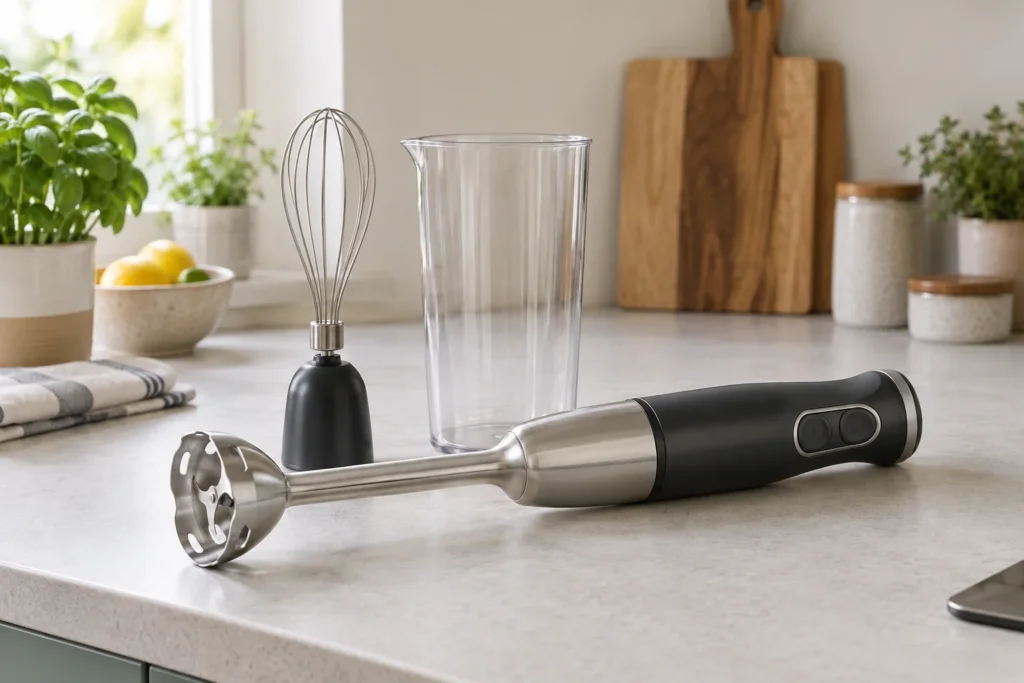
A food-processor attachment driven by a hand blender can add useful preparation tasks without another standalone motor base. Its capability still depends on the exact bowl, tools and compatible hand unit. A small chopper supplied with a stick blender should not be assumed to provide the same functions as a larger processor attachment.
Image: AI-generated editorial illustration of generic equipment; not a photograph of a reviewed product.
Table of Contents
Identify the system before comparing bowls
Find the full model number on the hand unit and the attachment code on the bowl or its documentation. The brand name alone is insufficient. Manufacturers can use different connection systems across ranges, and similar-looking gearboxes may not be interchangeable.
If you already own the hand blender, begin with the official compatibility information. If you are buying a bundle, compare its exact contents with the system you want. A processor shown elsewhere on the manufacturer’s website may be optional rather than included.
Distinguish chopping from disc processing
A chopper typically uses a cutting assembly inside its bowl. A fuller processor attachment may add slicing, shredding or other tools. Verify each required operation in the actual parts list and manual. The presence of a large lid or feed tube alone is not enough evidence.
The Braun MQ 9195XLI specification lists an XL processor alongside a separate 500ml chopper and describes multiple cutting tools. Its motor compatibility is identified by Braun’s straight-cut attachment system. This is a documented system example; confirm the exact UK bundle and codes before purchasing.
| What you need | Part that must be documented | Extra check |
|---|---|---|
| Chopped ingredients | Compatible chopping blade and bowl. | Ingredient quantity and stopping method. |
| Slices or shreds | Correct disc or insert, holder and pusher. | Supported food preparation and feed dimensions. |
| Dough | Approved kneading tool and recipe method. | Whether the limit refers to flour or finished dough. |
| Diced pieces | A genuine dicing system and its cleaning tool. | Exact compatibility and permitted ingredients. |
Check how you will hold and operate it
A hand-blender motor can change the control position compared with a standalone processor. Inspect how the motor connects to the lid, how the bowl is stabilised and which controls must be held. If possible, assess the unpowered arrangement in person.
Think through a normal preparation task from attachment to emptying. Can you remove the motor and lid comfortably in the prescribed sequence? Is there a clean dry place to set the hand unit? These small handling details matter when you repeat the task several times during a meal.
Read the attachment’s own limits
The motor’s general blending instructions do not necessarily describe processor use. Find the relevant bowl’s ingredient chart, operating period and rest instructions. A motor supplied with several attachments can have different practical limits for each arrangement.
Use a suitable recipe at the documented quantity. If the manual does not approve a demanding task, such as a particular dough, do not assume the attachment can perform it because a standalone processor can. Choose a supported method or different equipment.
Plan cleaning and storage for the added parts
Separate the cutting tools, bowl and gearbox when checking cleaning permissions. A washable bowl does not mean the geared lid can be immersed. Follow the manufacturer’s instructions for removing and refitting user-serviceable parts, and keep sharp components stored safely.
Lay out the accessories before deciding that the system saves space. It may save a motor base while still requiring a large bowl, lid, pusher and several discs. Compare that complete footprint with what you would actually replace in the cupboard.
Decide whether the attachment solves the recurring task
It makes sense when the compatible system supplies the exact preparation function you use often and the handling is comfortable. It makes less sense when most of the desired functions depend on unverified optional tools or a bowl you will rarely retrieve.
Write the decision as a specific statement: the attachment will slice the vegetables you prepare each week, or chop the quantity needed for your regular recipe. If that statement is supported by the exact manual and parts list, you have a practical basis for choosing it.
If the attachment system becomes too complicated or lacks a required tool, compare a separate appliance using our food-processor guide.