
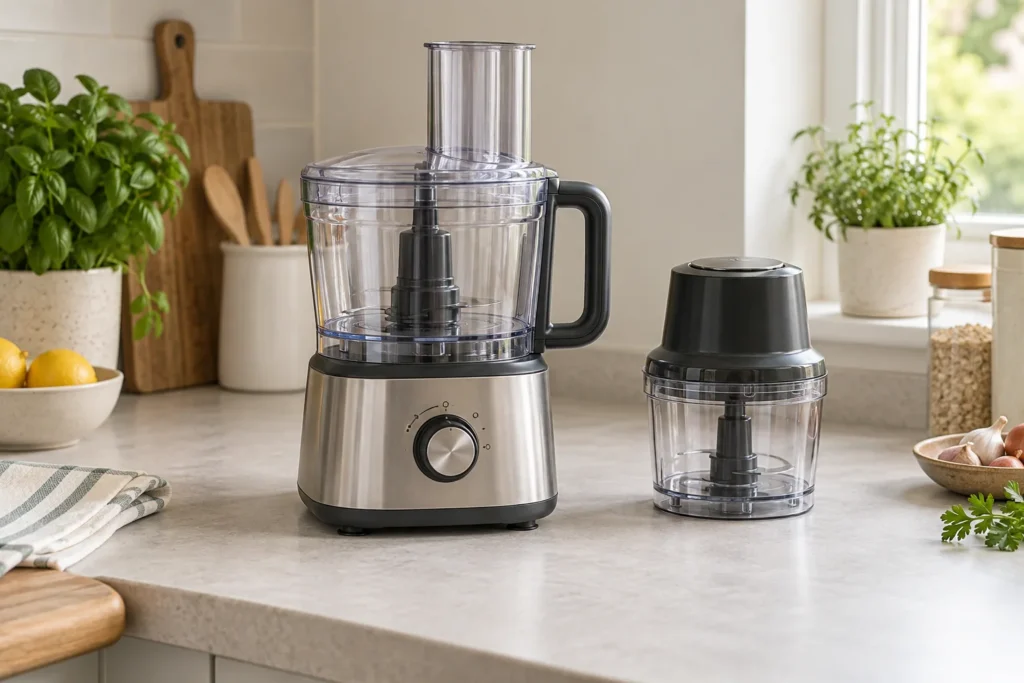
Before using a food processor, identify the bowl, lid, cutting tool, drive components and controls for your model. Choose one supported task for the first use. A clear assembly sequence and the correct blade matter more than immediately trying every accessory in the box.
Image: AI-generated editorial illustration of generic equipment; not a photograph of a reviewed product.
Table of Contents
Identify the parts before plugging in
Use the component diagram to match each loose item to its name. A disc support and a chopping blade can occupy the same area of the bowl but perform different jobs. Keep packaging covers separate from accessories intended for use or storage.
Read the first-use cleaning instructions and prepare the parts accordingly. Set aside anything you cannot identify rather than experimenting with combinations. If the product was bought second-hand, confirm that the lid, bowl and tools belong to the exact model before operating it.
Choose the tool from the intended result
For a chopped mixture, the manual may specify a knife blade. For slices or shreds, it may require a disc, holder and pusher. A dough tool is another separate configuration. Use the processor’s own ingredient chart to match the tool and quantity to the job.
The Kenwood MultiPro Compact quick-start guide explains that the bowl and lid interlocks must engage for operation. That is a safety feature, not an obstacle to defeat. If the machine will not start, inspect the supported assembly sequence instead of holding a switch down with another object.
| Task | Before loading | Before removing food |
|---|---|---|
| Chopping | Fit the specified blade in the instructed order. | Stop fully and follow the blade-removal method. |
| Slicing or grating | Fit the correct disc side, holder and pusher. | Disconnect and handle the disc by its designated grip. |
| Mixing dough | Verify the tool and flour or dough limit. | Follow the recipe and machine’s stopping instructions. |
| Liquid mixture | Confirm liquid permission and working fill. | Check the prescribed pouring and disassembly arrangement. |
Load according to the ingredient chart
Prepare ingredients to the size and condition specified. A feed tube is not permission to force anything through it. For disc tasks, use the supplied pusher as directed and keep fingers and improvised tools away from the cutting path.
For bowl tasks, distinguish the total volume from the maximum for the particular mixture. A demanding load can have a lower limit than a light chopped ingredient. Do not add more food simply because there appears to be unused space above the blade.
Use pulse as a controllable operation
Pulse commonly provides a start-stop action, but the exact control and suggested use depend on the machine. Follow the recipe’s texture cues and the manual’s operating limits. A fixed number of pulses from an unrelated processor is not a guarantee of the same result.
Observe the mixture through the bowl when possible. To inspect, redistribute or scrape ingredients, stop and disconnect in the prescribed way first. Never reach around a moving blade. If the machine labours, stop and consult its load and troubleshooting instructions rather than pressing harder or extending the run.
Treat emptying as part of the method
Different designs secure their blades differently. Read whether the blade should be removed before pouring or whether another specific procedure applies. Keep the designated grip visible and handle the cutting assembly carefully. Do not assume it will remain safely in the bowl when tipped.
Transfer the food to a suitable dish and put sharp parts in a visible safe place ready for cleaning. Avoid leaving them hidden under food scraps or in a sink where someone else might reach for a spoon.
Clean and learn one task at a time
Wash only the components approved for that method and keep the motor housing within its cleaning instructions. Dry and reassemble or store parts as directed. A geared accessory may require different care from an ordinary plastic bowl.
For the first few uses, record the ingredient quantity, tool and useful texture observation. Build familiarity with one repeatable job before adding more attachments. If the machine lacks a function you need, our food-processor guide can help you compare other equipment arrangements rather than improvising an unsupported use.