
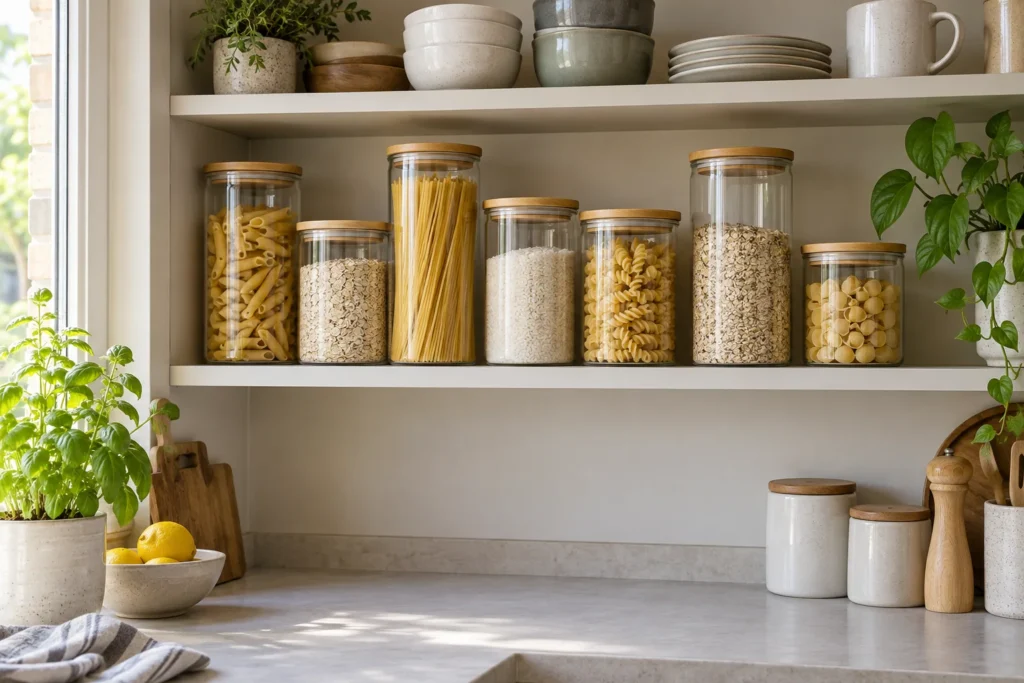
If you are looking for mouse-proof food storage, start with the cupboard and the room as well as the container. A new box may help protect its contents, but it does not resolve the reason mice are entering the kitchen. You need food storage that can be inspected and a route for dealing with the wider problem.
Image: AI-generated editorial illustration of generic equipment; not a photograph of a reviewed product.
Table of Contents
Use local pest guidance as the starting point
Tower Hamlets Council’s mouse guidance recommends keeping food in sealed hard plastic, glass or metal containers, closing entry points, and using food-waste bins with secure, closable lids. Consult your own council’s pest-control service for advice and available local help.
Treat a container manufacturer’s pest-resistance claim as something to verify for that exact product. A material name alone does not establish the strength of its lid, seal or closure. Avoid assuming that any thin plastic tub becomes mouse-proof merely because it closes with a click.
Check the whole closure
Inspect the body, rim, hinges and lid as one assembly. Look for damage or a distorted fit and follow the manufacturer’s condition guidance. If you are buying, establish whether the advertised protection applies to the complete closed container and the way you intend to store it.
Choose a size you can close properly with the usual contents inside. An overfilled box with its lid resting loosely on top has not achieved the intended containment. Keep the instructions and product reference so a replacement lid or seal can be matched accurately later.
Make cupboards easy to inspect
Remove unnecessary obstacles to seeing the shelf and its back corners. Keep packets and containers in defined groups that can be moved without dismantling a precarious stack. The purpose is not an immaculate display; it is the ability to notice a changed condition promptly.
Check areas where pipes or cables enter cupboards and where the cabinet meets the wall or floor. Record suspected entry points for an appropriate professional or property manager. Do not improvise work around services or block access to valves while trying to close a gap.
Keep food identity and packaging evidence
When moving food into a suitable container, retain its name, relevant dates and storage instructions. If packaging may have been affected by pests, seek the local food-safety or pest-control advice appropriate to the situation rather than simply tipping the contents into a clean-looking box.
Keep photographs or notes of the problem if they will help a council service, landlord or pest professional understand where activity has occurred. Describe what you observed and where, without trying to diagnose the exact source from one mark or sound.
Include food waste in the routine
Food storage and waste storage sit in the same room, so check both. Ensure the waste container closes as intended and that the space around it remains accessible for cleaning. A cupboard full of sealed food boxes does not remove the need to manage peelings, crumbs and discarded packets.
| Area | Practical check |
|---|---|
| Food containers | Complete closure, appropriate material and no unresolved damage |
| Cupboard shelves | Contents can be moved and the surface inspected |
| Service openings | Suspected access points recorded for suitable advice |
| Food waste | Lid closes and the surrounding area is manageable |
| Follow-up | Local pest-control contact and property responsibility are clear |
If you rent, keep the record of suspected activity separate from the food inventory so it can be shared clearly with the person responsible for the property. Note the cupboard, date and visible observation. A factual record helps the next inspection focus on the right area without turning an uncertain sign into a confident diagnosis.
Avoid buying a storage system around an untreated problem
Choose containers that remain useful after the immediate issue is resolved. Measure shelf fit, opening access and filled weight, and avoid spending heavily on unverified “proof” claims. Our kitchen storage guide can help create an inspectable layout. Combine that layout with appropriate pest-control advice so the cupboard arrangement supports, rather than obscures, the work needed.