
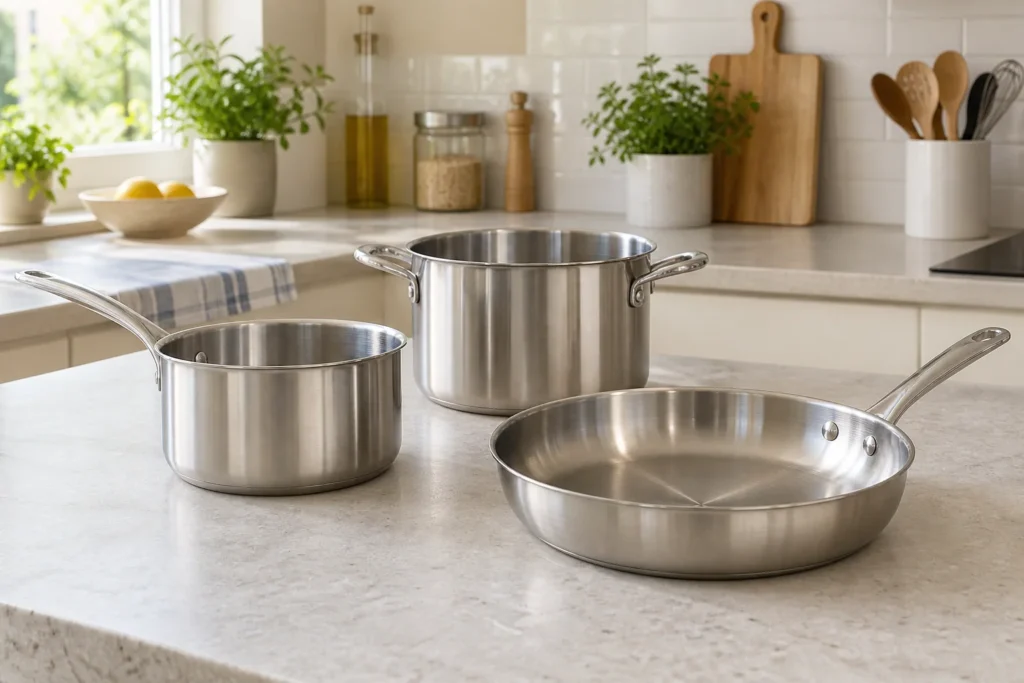
Rainbow marks on a stainless steel pan do not automatically mean that a coating is peeling or the pan needs replacing. First check whether the surface is uncoated steel and whether the mark is simply a smooth colour change. Raised deposits, rough pits and separating material need a different assessment from a coloured sheen.
Image: AI-generated editorial illustration of generic equipment; not a photograph of a reviewed product.
Table of Contents
Describe the surface before treating it
Inspect the clean, cold pan in ordinary light and from more than one angle. A changing sheen can look dramatic in a close-up photograph. Record whether you can see residue, scratches, lifted edges or a change in the pan’s shape, without scraping the surface to investigate.
ZWILLING’s cookware care guidance discusses white and rainbow discolouration on uncoated stainless steel and lists suitable cleaning options for its cookware. It separately warns that aggressive cleaners can impair coated surfaces. This supports checking the finish before selecting a treatment, rather than diagnosing every coloured pan from an image. ZWILLING cookware care
Find the applicable instructions
Identify the pan model and read the section for its actual cooking surface. The underside, polished interior, brushed exterior and decorative finish may not share every permitted cleaning method.
If the maker lists a stainless steel cleaner, confirm that the cleaner itself is intended for that cookware surface. Follow its contact and rinsing directions. When guidance mentions household ingredients without enough detail for your situation, ask the maker for the relevant method instead of inventing a concentration or heating time.
Separate four common-looking problems
| Appearance | What to establish before cleaning |
|---|---|
| Smooth rainbow sheen | Whether the maker treats it as removable discolouration |
| White residue or spots | Whether deposits are present and which cleaner is permitted |
| Brown sticky film | Whether cooking residue needs ordinary cleaning first |
| Rough pits, peeling or distortion | Whether there is damage requiring an assessment |
This table is a way to organise observations, not a remote diagnosis. If you cannot confidently distinguish the last category from a cosmetic mark, send photographs to the manufacturer before trying a harsher method.
Do not polish one small spot repeatedly just to force an instant visual match. A change in finish caused by uneven abrasion can become more noticeable than the original colour. Use only the approved cleaning tool and method for the whole affected area.
Keep a useful before-and-after record
Take photographs under the same lighting, with the pan dry in both. Comparing a wet surface under a ceiling lamp with a dry surface in daylight tells you little about the treatment.
Write down what you used and how you followed the label. If a first approved clean removes the deposit but leaves a smooth sheen, report that distinction when seeking advice. It helps the maker avoid recommending a residue-removal step you have already completed.
There is no need to chase a mirror finish simply because the product photograph shows one. Decide whether the appearance actually troubles you after the maker has established what it is. A cosmetic preference and an equipment-safety question deserve separate answers.
Review the routine around the marks
Note when they appear: after one particular cooking task, after dishwasher use, or after drying on a rack. A repeated pattern is useful information, but it does not prove the cause on its own. Check the pan’s instructed heat, cleaning and drying routine against what happened.
Avoid adding a new cleaner after every wash merely to prevent a colour that has not been identified. Start with normal approved care and address the documented cause or cleaning need if the manufacturer provides one.
Decide whether to clean or ask
For a confirmed cosmetic mark on an otherwise sound pan, use the approved treatment if you want to improve its appearance. If the surface is rough, lifting or uncertain, or the pan changed shape during overheating, seek an assessment instead. The goal is to preserve a usable cooking surface, not to make a photograph look flawless at the cost of unnecessary abrasion.