
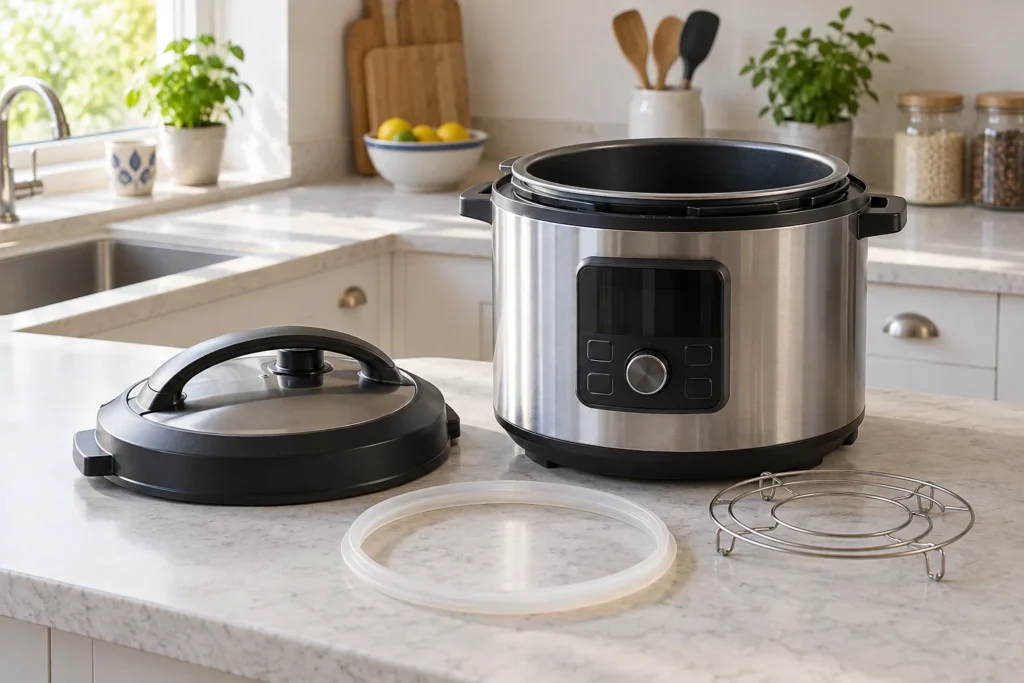
A replacement pressure cooker inner pot must be approved for the exact cooker. Litres and diameter alone are insufficient: the shape, base, rim and any handles form part of the intended assembly. Check compatibility before comparing stainless steel with a coated alternative.
Image: AI-generated editorial illustration of generic equipment; not a photograph of a reviewed product.
Table of Contents
Start with the cooker model and original pot
Disconnect the appliance and let it cool before inspecting the removable pot. Record the full model number from the base, its stated size and the original pot’s markings. Look at whether the pot has fixed handles, locating features or a shaped base, but do not use resemblance as a compatibility test.
Decide whether you want a spare or are replacing damage. A spare can make it easier to prepare ingredients for a second recipe, while a damaged rim or distorted base requires the correct replacement before use. Persistent heating faults or leakage may also need appliance support, not simply another pot.
Read the named compatibility list
The Instant Pot UK 5.7L ceramic-coated pot listing limits compatibility to named 5.7L Duo, Duo Plus and Classic models. The Pro manual separately requires the Pro-series stainless pot with its easy-grip handles. A shared litre description therefore does not establish interchangeability.
Check the current full list rather than only the product title or shopping-category breadcrumb. If your exact version is absent or the wording conflicts, ask support with the model label and part number. An old review saying the pot fits another cooker is not a replacement for the maker’s approval.
Compare care after compatibility is settled
An uncoated stainless pot and a coated pot may need different utensils and cleaning. Read the permitted methods and ask whether they suit the dishes you commonly make. A coated option should not be chosen on a claim that it makes every recipe release perfectly, while a stainless option does not eliminate the need for careful cleaning.
Consider how you will deglaze after sautéing, remove a cooked dish and clean the corners. Use approved soft tools on coatings and follow the maker’s advice about damage. Avoid unsupported health comparisons between materials; the decision here is verified compatibility and a care routine you can follow.
| Question | Evidence to retain |
|---|---|
| Does it fit my cooker? | Official named models or a manufacturer confirmation. |
| What is included? | Pot, handles and any specified parts listed in the contents. |
| Can it go on a hob or in an oven? | Explicit instructions for this exact replacement pot. |
| How should I clean it? | Material-specific care and dishwasher permissions. |
| Are the fill marks clear? | Correct pressure and other working markings for its intended use. |
Do not assume removable means hob-safe
A pot that comes out of an electric cooker is not automatically suitable for a gas flame, induction hob or oven. Those permissions depend on the exact component, including the base and handles. Likewise, a saucepan that sits neatly inside the cooker is not an approved substitute for its inner pot.
Keep any hob or oven temperature restrictions with the pot’s instructions. If you own two similar liners, label their storage positions so a permitted use for one is not transferred to the other. Do not put the electrical cooker base on the hob, even as a convenient temporary stand.
Inspect and install the replacement
Compare the delivered part with the order and check for transit damage. Wash and dry it as directed before first use, including the outside that contacts the cooker. Remove packaging and ensure the cooker’s accessible seating area is clean, with the power disconnected.
Set the pot in place without forcing it and check the documented seating and handle position. Refit the correct lid only by the normal method. If the lid closes differently, the pot rocks unexpectedly or an error appears, stop and contact support rather than modifying the rim or bending a handle.
Use a spare without changing the cooking rules
Two inner pots do not let the appliance run beyond its instructions. Allow the required handling and cooling steps between dishes, and keep each pot’s food and liquid within the applicable marks. If using one for storage, follow the food’s safe storage guidance and the pot manufacturer’s instructions. Keep the part number with your receipt so a future replacement can be identified without another round of guesswork.