
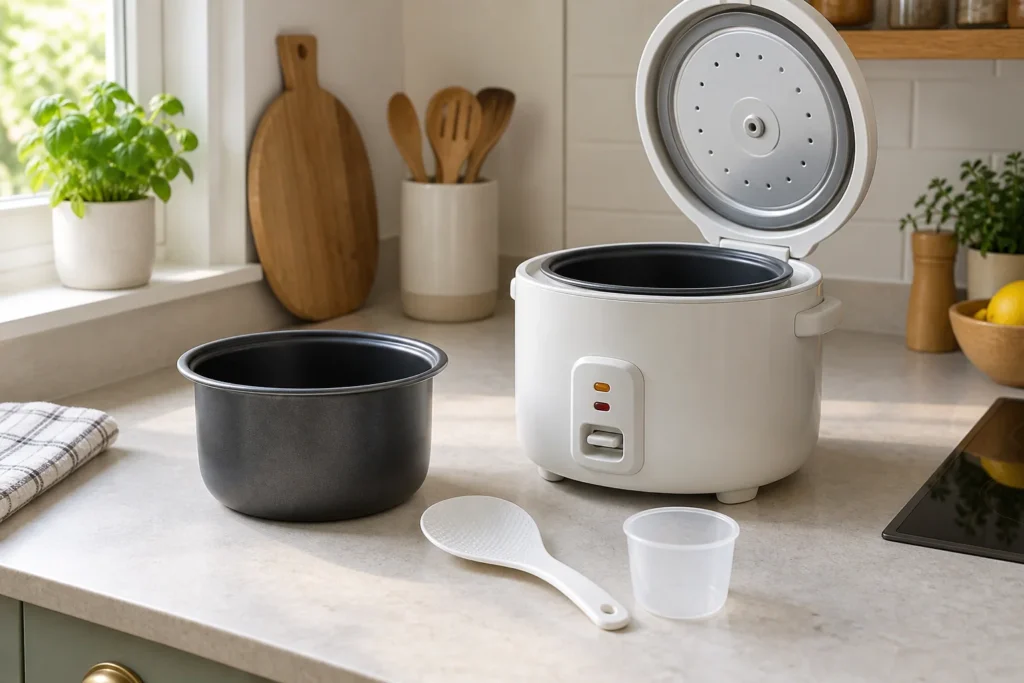
Choose a rice-cooker pot by the exact appliance’s construction and care instructions. An uncoated stainless surface and a coated bowl offer different cleaning and utensil considerations, but neither description alone predicts the rice result. The correct pot must remain matched to its cooker.
Image: AI-generated editorial illustration of generic equipment; not a photograph of a reviewed product.
Table of Contents
Identify the food-contact surface
Yum Asia’s UK construction information describes ceramic-coated inner bowls. For comparison, Buffalo’s US manufacturer catalogue shows an uncoated stainless rice-cooker design. The latter is a material example, not a recommendation to import a US appliance or a claim of UK compatibility.
Read beyond a seller’s phrase “stainless steel rice cooker”. It may describe the outside casing or removable inner lid rather than the bowl touching the rice. Likewise, a ceramic-coated bowl is not necessarily a solid ceramic pot. Record the stated substrate and coating separately when the maker provides them.
Compare the cleaning routine you will follow
Look for whether soaking is allowed, which cleaners are permitted and whether the pot is hand-wash only. Do not assume that all uncoated steel can take every abrasive treatment, or that every coated pot has identical restrictions. Handles, bonded bases and exterior finishes may need separate care.
A useful comparison is the rice-cooker cleaning routine: remove the rice, allow the pot to cool as directed, soften permitted residue, wash and dry. If you rely heavily on a dishwasher, confirm permission before buying rather than discovering afterwards that the bowl must be hand-washed.
Check utensil and rinsing instructions
Yum Asia’s current bowl-care guidance calls for gentle hand washing, non-abrasive utensils and washing rice in a separate container to protect its ceramic coating. Apply that advice to its bowls rather than generalising it to every rice cooker.
Keep the supplied paddle with the cooker and replace it if an edge becomes rough or damaged. A plastic utensil with a sharp broken corner can still scrape a coating. If several people use the kitchen, a separate rice-washing bowl can help prevent accidental vigorous rinsing in the cooking pot.
| Detail | What to verify |
|---|---|
| Construction | Actual food-contact material, not only the exterior description. |
| Cleaning | Soaking, detergent, dishwasher and abrasive restrictions. |
| Utensils | Approved materials and whether rice may be rinsed in the bowl. |
| Replacement | Exact pot part number and compatible cooker versions. |
| Condition | What the maker says about scratches, coating damage or distortion. |
Do not promise that a material prevents sticking
Sticking can also relate to rice measurement, water, programme, residue and the condition of the pot. A new material is not a guaranteed cure for an incorrect batch. Read the appliance’s troubleshooting guidance before replacing an otherwise sound bowl simply because one meal was awkward to serve. Our rice-sticking checks separate measuring questions from pot-condition problems.
Equally, do not treat visible damage as a recipe problem. A distorted base or deteriorating coating needs the manufacturer’s advice. Avoid scraping aggressively to restore a surface or applying an aftermarket coating. The pot’s fit and contact with the appliance must remain as designed.
Keep replacement compatibility explicit
Find the maker’s replacement bowl for the exact model and note whether handles or other fittings are included. A steel pot from another appliance should not be inserted as an upgrade because its diameter looks right. The base shape and thermal contact may differ even when the rim appears to fit.
If an official alternative material is offered for your model, read its own programme and care restrictions. Ask support when the listing is unclear. Retain the product code with the original manual so a future order does not depend on the colour of the bowl in a photograph.
Make a practical purchase decision
For most households, the best choice is a documented pot that you can handle, clean and replace correctly in a suitable cooker. Avoid claims that a material is universally healthier, chemical-free or incapable of damage. Our rice cooker guide helps compare the complete appliances; use this material checklist to judge their inner pots without losing sight of your usual batch size and rice programmes.