
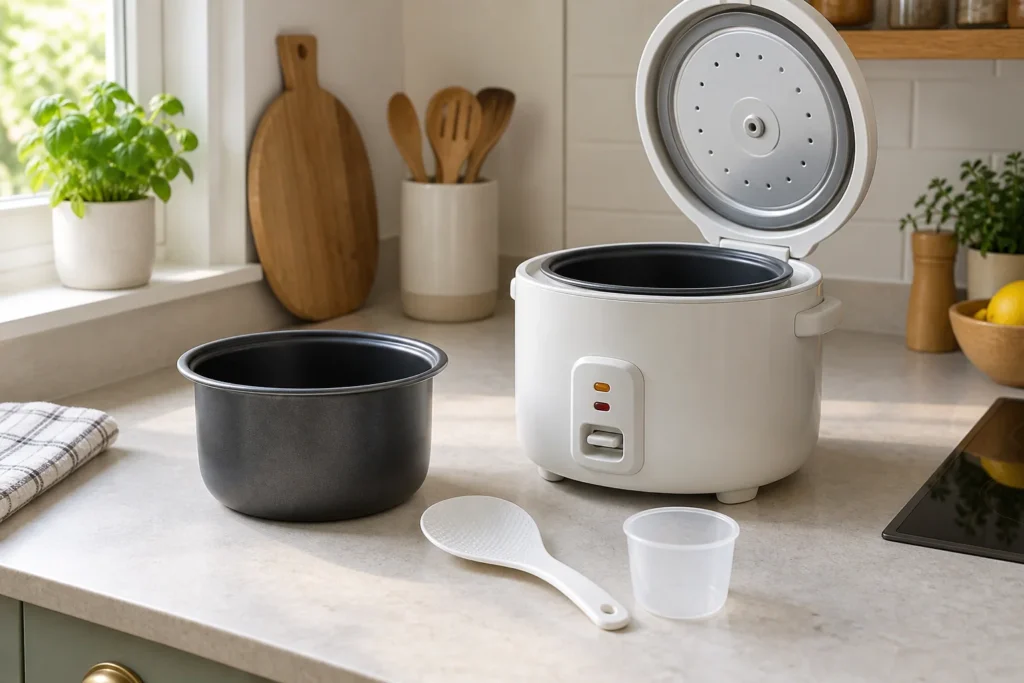
Clean a rice cooker after it has cooled and been disconnected, using the instructions for its removable parts. The bowl, inner lid, steam cap and condensation collector can retain different kinds of residue. The electrical body needs its own limited cleaning method and must not be treated like a washable saucepan.
Image: AI-generated editorial illustration of generic equipment; not a photograph of a reviewed product.
Table of Contents
Start with a clear parts layout
Remove leftover rice promptly for serving or safe storage before leaving the appliance to cool for cleaning. Do not use the cooker as a place to cool a forgotten batch. Once the appliance is safe to handle, identify which components the manual permits you to remove.
Use a shallow tray for caps and small seals so they do not disappear among cutlery in the sink. Keep the manual’s diagram visible if the lid has several pieces. An outer hinged lid is not necessarily removable just because an inner panel clips out.
Clean the bowl gently
Yum Asia’s bowl-care instructions specify hand washing with soft, non-abrasive tools and softening stuck food with warm water. They prohibit the dishwasher for those bowls. Other brands can have different permissions, so read the care section for your own pot. Our stainless-steel versus non-stick rice-cooker pot guide explains the material checks to make.
Let the bowl cool as directed before adding wash water. Avoid digging at dried rice with a metal spoon or scouring a coated surface until it looks new. If residue does not lift with the approved method, ask the manufacturer rather than escalating to a stronger chemical or abrasive pad. Inspect the outside and base as well as the interior.
Give the lid and steam path attention
The Yum Asia Panda manual identifies a removable inner lid, steam cap and condensation collector, with cleaning and refitting instructions for each. Its inner bowl and inner lid are not dishwasher-safe. Those details show why “wash the lid” is not a complete instruction for every cooker.
Follow the removal direction shown for your components. Pulling a collector upwards when it is designed to slide out can break a small fitting. Wash the accessible food-contact surfaces and passages by the prescribed method without enlarging vents or removing fixed safety parts.
| Area | What to inspect after cleaning |
|---|---|
| Inner bowl | No food residue; outside clean and dry before installation. |
| Removable inner lid | Underside, rim and any user-accessible seal surfaces. |
| Steam cap | Complete passages and correct reassembly. |
| Condensation collector | Emptied, washed, dried and refitted securely. |
| Cooker body | No spilled grains or moisture in accessible areas; electrical parts kept dry. |
Keep water away from the electrical body
Use only the maker’s approved wipe-clean method for the body and accessible heating area. Do not pour water into the base to flush out grains, and never immerse the appliance. If food or liquid has entered an inaccessible electrical area, disconnect safely and ask support what to do.
Clean the surrounding counter separately so water from wiping the worktop cannot collect beneath the cooker. Check the lead and connector visually while disconnected; damage requires proper service or an authorised replacement, not tape wrapped around the affected area.
Dry and rebuild the complete assembly
Allow washed components to dry as directed, including grooves where droplets remain. Refit the steam cap and inner lid according to the diagram, then check that no small component is left on the tray. A cooker should not be run with a forgotten cap merely because the lid still closes.
Make sure the outside of the bowl is dry and the seating area is clear before returning it to the body. Do not force a lid or bowl that no longer sits normally. If an item is distorted, cracked or missing, obtain the correct replacement before cooking.
Use cleaning to notice changes early
A repeated odour, unexpected leakage or new damage should be investigated rather than hidden with scented cleaners. Note whether the issue comes from food residue, a removable component or the appliance itself. Photograph damage while cold if support needs to identify it.
Keep a soft sponge, the approved paddle and a parts tray near the cooker so the routine is easy to repeat. A simple wash after each use is usually less troublesome than dealing with hardened rice days later, and it gives you a regular chance to inspect the pot and lid before the next meal.