
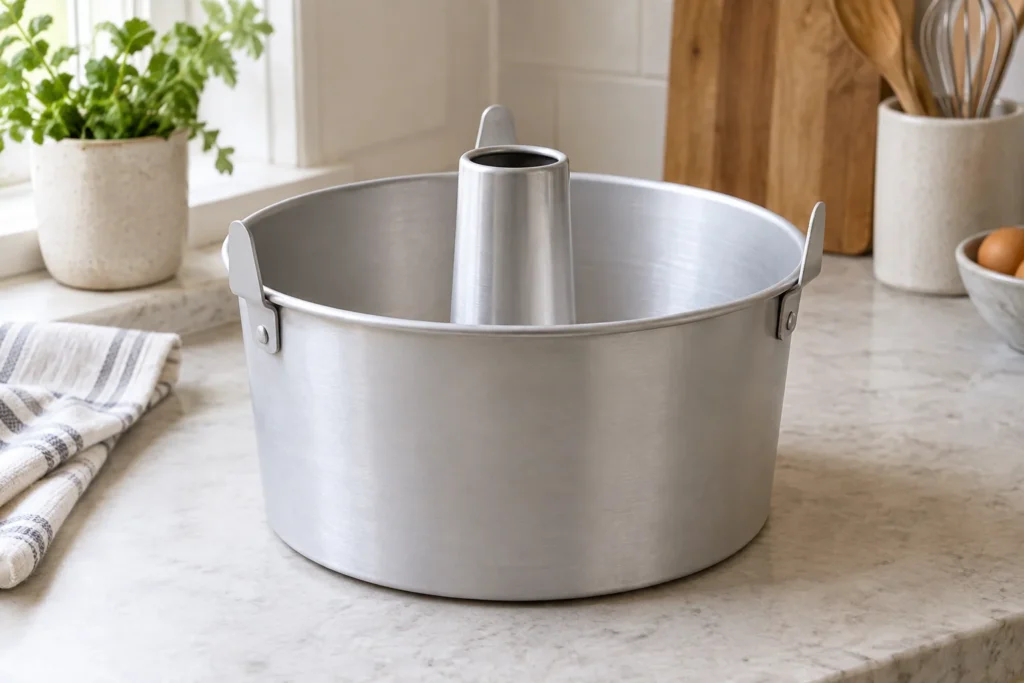
A chiffon cake tin should be chosen from the recipe's equipment instructions, particularly its required surface and cooling arrangement. Do not assume that every ring-shaped tin can replace it. A decorative Bundt mould and a plain tube tin may both have a hole in the middle while supporting different preparation and release methods.
Image: AI-generated editorial illustration of generic equipment; not a photograph of a reviewed product.
Table of Contents
Read the complete recipe before buying
Look for the specified diameter, depth, tube design and removable-base arrangement. Then read the preparation and cooling steps, not just the ingredient list. Those later instructions may explain why a particular tin was selected. If a recipe leaves the equipment unclear, ask its publisher rather than inferring the answer from a finished-cake photograph.
For example, Wilton glazed lemon chiffon cake specifies an ungreased pan and inverted cooling. That is a concrete reason to resist adding your usual release treatment automatically. It is not a universal instruction for every cake that contains the word chiffon: follow the exact recipe you intend to make.
Distinguish tube shape from decorative shape
A plain tube creates a central opening without necessarily adding an elaborate moulded pattern. Examine the inside of a candidate tin rather than only its exterior. Note whether the wall is straight or fluted, whether the central tube is joined to a removable base and where any supporting feet are located.
| Detail | What to check against the recipe |
|---|---|
| Interior surface | Whether the specified surface is coated or uncoated |
| Central tube | Its height, shape and relationship to the base |
| Removable parts | The intended release sequence |
| Cooling supports | How the maker says the tin should be supported |
| Overall height | Space needed in the oven and in the cooling arrangement |
Avoid treating the table as a list of mandatory features. It is a way to compare the actual recipe and actual tin. A feature that is useful for one cooling method may not be part of another manufacturer's design.
Plan the cooling position while everything is cold
If the recipe calls for inversion, establish the manufacturer's supported arrangement before starting. Use the tin's designed feet or the specific method that the instructions approve. Do not improvise an unstable stand because an unrelated recipe photograph shows a bottle or a stack of objects.
Check the full footprint and height in the intended position. The cooling location should remain available for the period specified by the recipe, away from the part of the worktop needed for other preparation. A tin that can be placed down safely but must immediately be moved to make room is an inconvenient choice for that kitchen.
Keep release and preparation linked
Read the release method before deciding whether a non-stick surface is desirable. If a recipe expects an ungreased surface, a coating advertised for easy release is not automatically an improvement. Equally, an uncoated tin should not be selected merely because it looks traditional when the chosen recipe specifies something else.
Check what the tin maker permits for separating the cooled cake from the wall and tube. Do not introduce a sharp utensil against a coating or force a removable base without the appropriate instructions. Rehearse the order of the empty pieces on the worktop so you know where the ring and base will be set down afterwards.
Resolve a mismatch before mixing
If you own a Bundt tin but the recipe calls for a particular chiffon tube tin, look for a recipe written for the equipment you have or obtain the specified tin. Matching the outer diameter alone does not settle surface, depth, internal geometry or cooling support.
Keep the product label with the recipe notes, including any manufacturer answer to an equipment question. After your first attempt, record what you actually used rather than writing only chiffon tin. That detail makes the next bake easier to repeat and prevents someone sharing your kitchen from applying a different greasing routine by habit. The useful choice is a complete recipe-and-tin arrangement whose preparation, cooling and release steps all make sense together.