
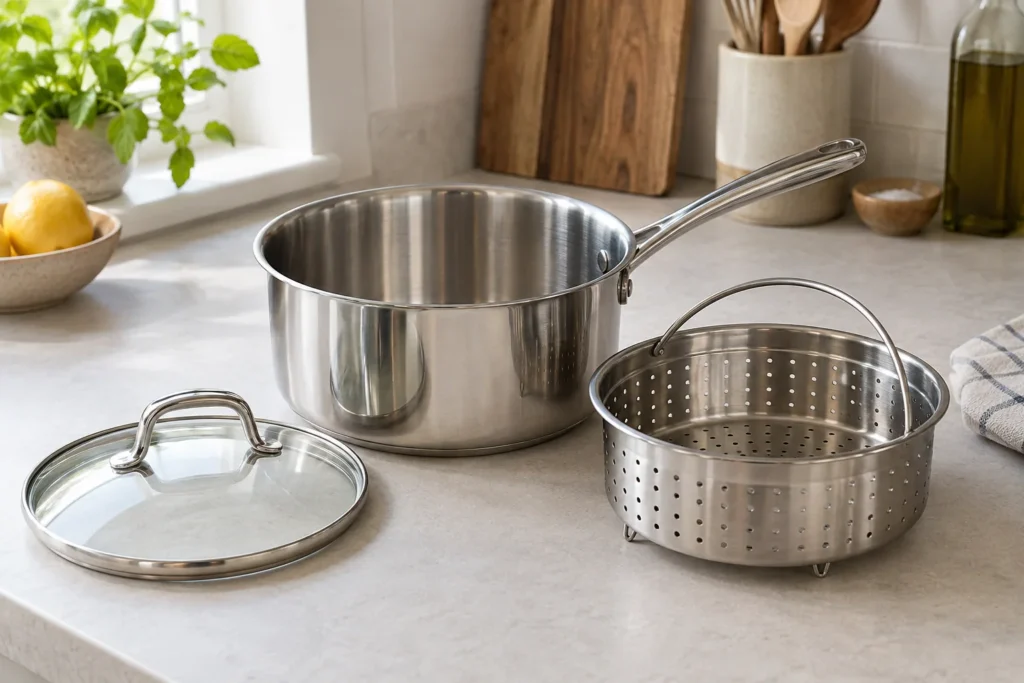
To steam chicken successfully, start with a complete recipe written for the equipment and chicken pieces you have. A timer setting alone cannot tell you whether an unfamiliar arrangement will work. This guide helps you choose that recipe, organise the equipment and check the result; it does not supply an untested cooking time.
Image: AI-generated editorial illustration of generic equipment; not a photograph of a reviewed product.
Table of Contents
Match the recipe to the steamer
An electric food steamer, a rice cooker and a basket over a saucepan are different setups. Even recipes with the same title can assume different equipment: the PBS: Michel Nischan’s steamed chicken recipe uses a rice cooker. Read the equipment and method before buying ingredients, rather than deciding from a photograph of the finished dish.
Look for an explicit chicken cut, amount and preparation. Bone-in thighs, whole breasts and sliced breast are different recipe starting points. If you have a different cut, find a method written for it. An instruction for four pieces is also incomplete for shopping purposes unless the recipe indicates their approximate size or total weight.
The same care applies to sauces and rice. A recipe that collects juices in a dish should tell you what dish to use. One that cooks several ingredients together needs instructions for that combination. Adding an extra bowl or tier creates a different arrangement from the one the author described.
Check the equipment while everything is cold
Put the empty, manufacturer-approved bowl or basket into the steamer and check the complete assembly. The lid should sit as intended, and the recipe's dish must fit the position specified in the appliance instructions. Measure the usable interior, including any central column or sloping sides, instead of relying on the advertised outer width.
| Recipe detail | What to check before starting |
|---|---|
| Chicken preparation | Cut, approximate size and total amount match the recipe |
| Container | The stated bowl or basket is supported by the steamer maker |
| Arrangement | Food position and tier order are explained |
| Liquid | The recipe distinguishes dish ingredients from reservoir water |
| Finishing check | You know how the recipe establishes that the chicken is cooked |
A bowl can be wide enough for the food and still awkward to retrieve. Check the manufacturer's removal method and prepare the place where the hot bowl will go. Keep the instructions accessible throughout the first use. A screen that locks halfway through the method is an avoidable complication.
Prepare a manageable first attempt
Choose a recipe whose full quantity fits your equipment. Doubling a recipe because the appliance has a spare tier is not the same as following the original method. For a first attempt, a smaller, well-described recipe is easier to organise than several improvised dishes with different finishing times.
Read the full sequence and put the measuring equipment, serving plate and thermometer where you will use them. Identify which utensils belong to preparation and which are for serving. Follow the recipe and official handling guidance for raw poultry; the planning exercise here is to remove last-minute decisions from the cooking stage.
Check the appliance manual for filling, monitoring and handling instructions. If the recipe assumes an action that the maker does not permit, choose another recipe or ask the manufacturer. A recipe cannot establish compatibility for every electrical appliance with a steaming function.
Check doneness before serving
Food Standards Scotland: cooking food safely says poultry must be cooked through. Its thermometer guidance is to use a clean probe in the thickest part and reach 75°C or above; a large dish should be checked in more than one place. Follow that guidance alongside the appliance instructions. Visible steam from the machine does not establish the temperature at the centre of the chicken.
Allow room in the meal plan for the cooking check. Avoid arranging accompaniments around an assumed exact finishing minute on the first attempt. If the chicken has not reached the required endpoint, continue according to the recipe and equipment instructions, then check again before serving.
Keep a useful record
Save the recipe link, appliance model, chicken amount and container used together. Record any difficulty with fitting the bowl or reading the instructions. Those observations help you choose a better-suited recipe next time without turning one experience into a universal timing claim. A dependable routine begins with a clearly specified method and a checked result.