
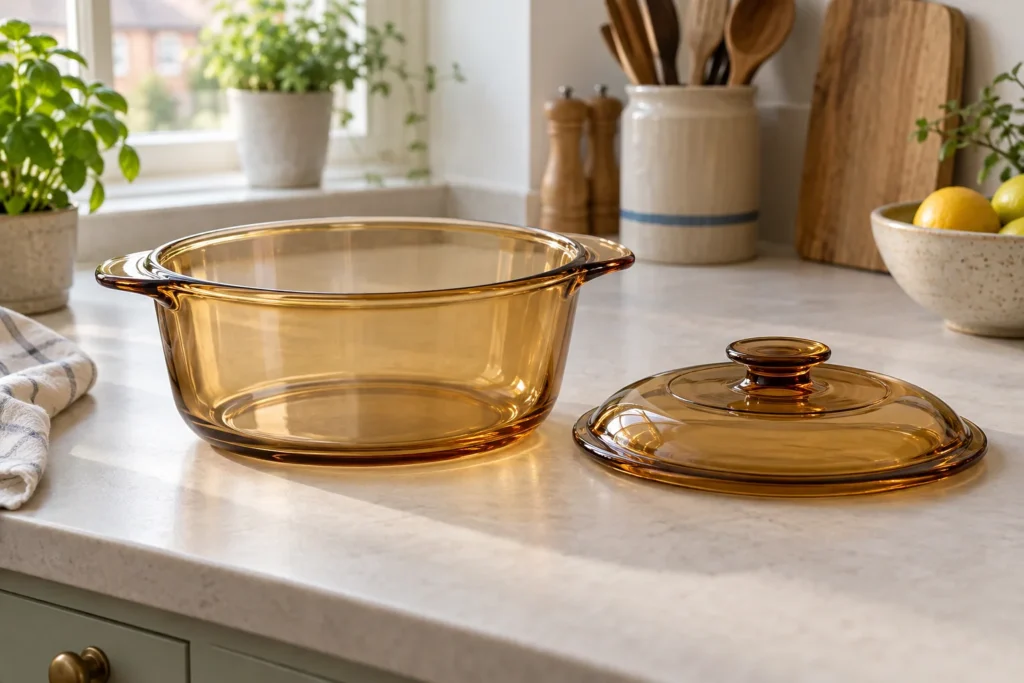
Use glass cookware only for the heat sources and conditions specified for the exact product. A glass oven dish is not automatically a hob pan, and a glass-ceramic vessel may have different instructions from its glass lid. Identify the item before applying a temperature limit or transferring a method from another piece of glassware.
Image: AI-generated editorial illustration of generic equipment; not a photograph of a reviewed product.
Table of Contents
Start with the maker and product type
Find the brand, range, model and any markings on the base. Look for the current use guide rather than relying on the colour or a familiar family name. Similar-looking products can be made for different purposes, and a second-hand item may not match a current range with the same broad branding.
Pyrex UK oval glass oven dish instructions provides one example of a glass oven dish whose instructions exclude direct hob use. By contrast, the VISIONS section of Corelle Brands: VISIONS use and care describes permitted hob use for its glass-ceramic cookware. These are product-specific instructions, not interchangeable permissions for anything transparent in the cupboard.
For an appliance that combines microwave and air frying, our UK microwave air fryer comparison provides a starting point. Check the exact appliance, container and cooking mode together before using your glassware.
Read the body and lid separately
A lid may be made from a different material and have stricter restrictions. The VISIONS guidance, for example, distinguishes the glass cover from the cookware body in its grill and temperature-change instructions. Check the complete assembly you intend to use, including any knob, seal or storage lid.
| Part or use | Information to find |
|---|---|
| Vessel body | Permitted heat sources and use conditions |
| Glass cover | Separate oven, grill and temperature-change restrictions |
| Plastic storage lid | Whether any heating use is allowed |
| Base marking | Exact product identity rather than an assumed material |
| Accessories | Approved support or handling arrangement |
Do not treat a missing warning on a detached lid as permission. Find the documentation that belongs to it or ask the maker before using an uncertain combination.
Plan temperature transitions
Read the instructions for preheating, adding liquid, moving between cold and hot environments, and placing hot cookware down. Different glass and glass-ceramic products have different requirements. A broad advertised temperature range does not necessarily permit every rapid transition within that range.
Prepare a suitable dry resting surface and the heat protection specified for the task. Keep the route from oven to worktop clear. These layout decisions help you follow the product instructions without having to search for a landing place while holding a hot vessel.
Inspect condition before use
Look for chips, cracks and damage around handles, rims and lid edges. Corelle's instructions warn against using or repairing damaged glass and glass-ceramic items. If you are unsure whether a mark is a manufacturing feature or damage, ask the maker with photographs rather than testing the item with heat.
An inherited or second-hand vessel deserves the same identification process. Its history, colour or apparent thickness cannot establish that it is suitable for a particular hob. Do not improvise repairs to a cooking vessel or assume that a small defect is irrelevant because it lies outside the food-contact area.
Compare capacity and handling
Once the intended use is clear, check internal capacity and complete dimensions. Include handles and lid height when measuring oven space. Consider the empty weight and how you will lift the vessel when filled, especially if the handles are small or integrated into the body.
Choose a shape that fits both the recipe and your washing arrangement. A large oval dish may be useful for a particular bake yet awkward in a small sink. That practical limitation matters even when the material and heat-source permissions are suitable.
Keep care matched to the product
Follow the maker's cleaning and storage instructions, including any restriction on abrasive tools or direct contact between stacked pieces. Do not use a stain-removal method intended for metal cookware merely because ordinary washing has left a mark.
Keep the use guide with the product identity so another household cook can find it. If the documentation cannot be established, choose a known suitable vessel for the intended method. The key distinction is the exact product and its approved use: transparent appearance alone cannot tell you whether it belongs on the hob, in the oven or only at the table.