
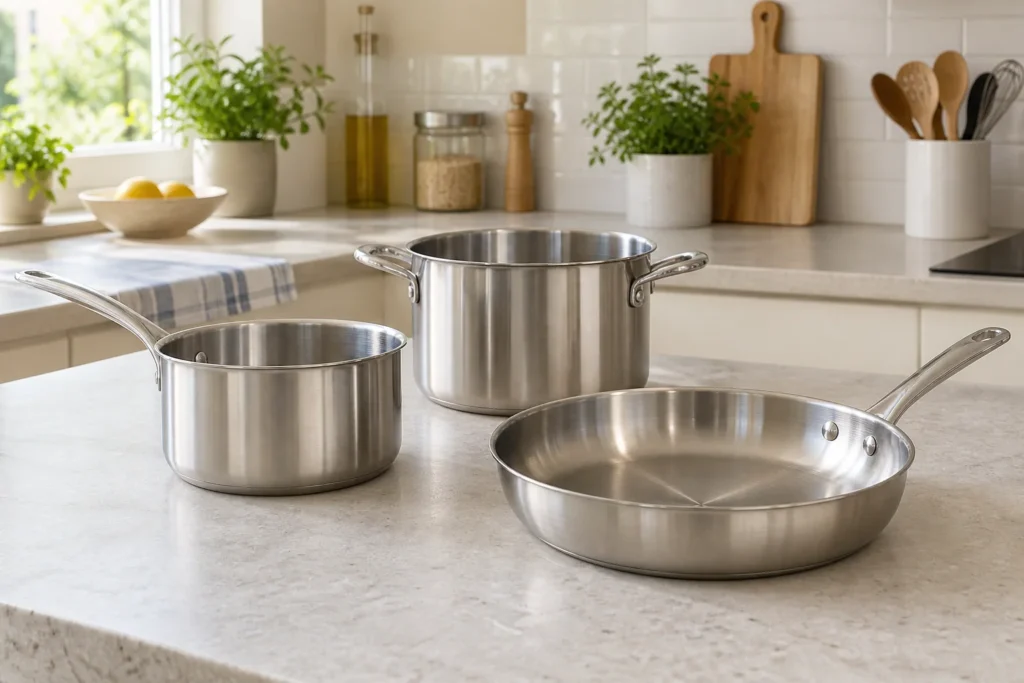
Choose cookware for an AGA by matching it to the particular cooker and the way you use its hotplates and ovens. Check the pan's base, complete dimensions, handle and lid instructions separately. A pan that fits through the oven opening may still be awkward to lift, while a useful hob pan may not suit the oven method you plan.
Image: AI-generated editorial illustration of generic equipment; not a photograph of a reviewed product.
Table of Contents
Identify the cooker and cooking position
Find the model information and current operating manual before shopping. Different AGA models and configurations should not be treated as one identical appliance. Note whether you want cookware for a hotplate, an oven shelf, the oven runners or another position explicitly described in the manual.
Write the intended use in plain language: “saucepan for hotplate cooking and an approved oven stage” is more useful than “AGA-compatible”. It tells you which parts of the cookware instructions need to agree with the cooker instructions. Keep any existing pan that already meets that need on your comparison list.
Check the base rather than just the diameter
Read the pan maker's statement about compatible heat sources and base design. Nominal rim diameter tells you how wide the opening is; it may not describe the contact area underneath. Compare the actual base with the relevant cooking surface and follow the cooker manufacturer's placement guidance.
Inspect a pan only when it is cool and on an appropriate level surface. A rocking or damaged base needs investigation, not an improvised fix. Do not assume that a heavy pan, a magnetic base or an AGA-style appearance establishes suitability for every cooking position.
Measure the complete oven footprint
Record the clear usable dimensions described for your cooker, then compare the pan including handles, lid and knob. Allow for the actual route into the cavity and for the heat protection you will use. A diagonal fit that requires twisting a full hot pan is not a practical everyday arrangement.
| Measurement | Include in the comparison |
|---|---|
| Width | Side handles as well as the body |
| Depth | Long handle or projecting lip |
| Height | Lid, knob and any permitted stacking arrangement |
| Support | Shelf or runner arrangement specified for the item |
| Handling | Space to grip and withdraw the cookware |
Check the landing space outside the oven too. The useful fit extends from the cooking position to a suitable resting surface, rather than ending at the oven door.
Understand purpose-designed stacking
AGA Living cookware design guide describes flat stacking lids in its stainless-steel cookware and trays designed for AGA oven runners. These are specific design features. They do not make every flat-looking lid a load-bearing support or every rectangular tray suitable for direct runner use.
If stacking is part of your plan, confirm the compatible cookware combination and the manufacturer's instructions. Include the assembled height and lifting sequence in your measurements. Do not copy a promotional arrangement using unrelated pans whose lids and handles were not designed for that use.
Check handles, lids and coatings
The pan body may tolerate a cooking method that a handle, lid seal or knob does not. Read the complete cookware rating and any instructions for removing a detachable handle. Only remove parts in the way the manufacturer describes; a removable-looking fixing is not an invitation to dismantle the pan.
Think about care alongside compatibility. A coated interior, bare metal exterior and glass lid may require different treatment. Choose a combination whose ordinary washing and storage instructions fit your routine, especially if the pan will move frequently between cooker and table.
Build around the meals you make
List the pans you use together for an ordinary meal and compare their combined space needs. A large casserole can be useful on its own yet occupy the position needed by another dish. Smaller purposefully chosen pieces may suit your routine better than an extensive matching set.
Before buying, retain the cooker model, intended cooking position and cookware specification in one note. If a detail remains unclear, ask the relevant manufacturer with those facts attached. That makes the answer specific and leaves you with a reliable reference when the cookware arrives or your cooking routine changes.