
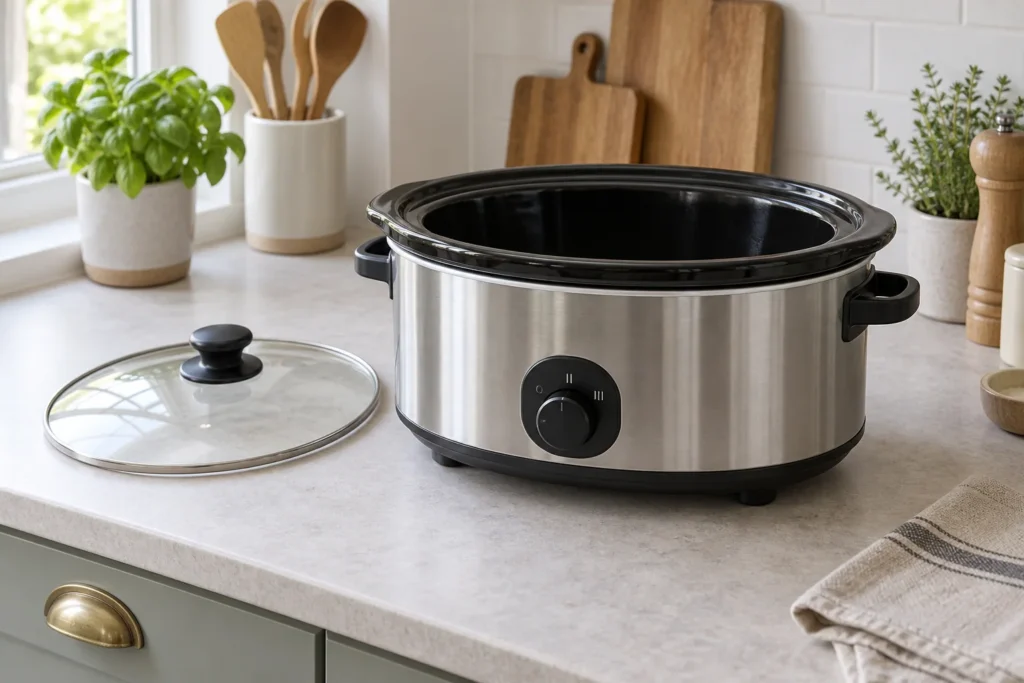
A slow cooker liner can reduce the residue left inside a compatible pot, but it does not change how the appliance must be used. Start with a liner explicitly intended for slow cooking and check both sets of instructions. The decision involves fit, the cooking method and how you will serve the food afterwards.
Image: AI-generated editorial illustration of generic equipment; not a photograph of a reviewed product.
Table of Contents
Check the product rather than the word bag
Oven bags, food-storage bags and slow cooker liners are different products. A heat-resistant claim does not automatically authorise every heating method. The relevant information is the manufacturer’s stated appliance use, size range and restrictions for that exact liner.
In its slow-cooker liner guidance, Reynolds limits the product to slow cookers, rules out other cooking appliances and says not to tuck the liner between the removable pot and electrical base. It also says not to lift the filled liner or reuse it. These are the manufacturer’s product instructions, not a general approval of unbranded alternatives.
Assess fit before adding food
Compare the liner’s stated size range with your cooker and examine how it sits in the correct insert. An oversized loose edge and an undersized bag pulled tightly across the bottom are different fit problems. Resolve uncertainty before loading ingredients, when you can still remove the liner cleanly and inspect the arrangement.
A label expressed in US quarts is not the same label as UK litres. Use the product’s compatibility information rather than treating identical numbers as equivalent. The lid should fit as the appliance and liner instructions require; a liner is not a reason to improvise around a latch or vent.
| Your cooking plan | The compatibility issue | Practical decision |
|---|---|---|
| Ordinary slow-cooking programme | The liner and cooker must both permit this use. | Check the instructions before fitting it. |
| Browning in a hob-safe insert | The insert’s hob permission does not extend to a liner. | Complete approved browning separately from any liner use. |
| Multicooker sauté programme | A slow-cooking label does not establish sauté compatibility. | Do not assume the liner can stay in for another programme. |
| Moving the finished meal | The liner is not a carrying container. | Serve or transfer food with suitable utensils. |
Plan serving before the pot is hot
Keep the cooker stable and serve from it using utensils appropriate for the liner and pot. Do not lift the liner by its edges to decant a heavy stew into another dish. If a serving bowl is required, use a ladle or spoon and transfer manageable quantities.
Think about the menu as well. A dish that needs frequent stirring, scraping or a finishing stage may make a liner less convenient. You do not need to choose one for every meal simply because it is helpful for a particular recipe. Compare the actual washing-up reduction with the extra product and disposal step.
A liner does not eliminate cleaning
Once the food has been removed, follow the liner’s cooling and disposal instructions. Inspect the pot afterwards. A tear, spill or residue around the rim still needs attention, and the lid and serving utensils have been used regardless of whether the bowl looks clean.
Follow the cooker’s own cleaning method for each component. Keep the electrical base separate from the removable insert. Do not assume a liner protects the appliance from overfilling, prevents every leak or makes an unsuitable recipe compatible.
Decide whether the convenience fits your routine
Liners may be useful when a particular permitted recipe otherwise leaves awkward residue or when washing a large insert is difficult. They may offer little advantage when the pot already washes easily or when you routinely brown and finish food in the same vessel. Those are practical trade-offs, not grounds for sweeping health or environmental claims.
Before buying a multipack, identify the exact cooker and liner pairing, read the size and use restrictions, and decide how the food will be served. If the pairing is unclear, a normal approved cooking and cleaning routine is the simpler choice until the manufacturers resolve it.