
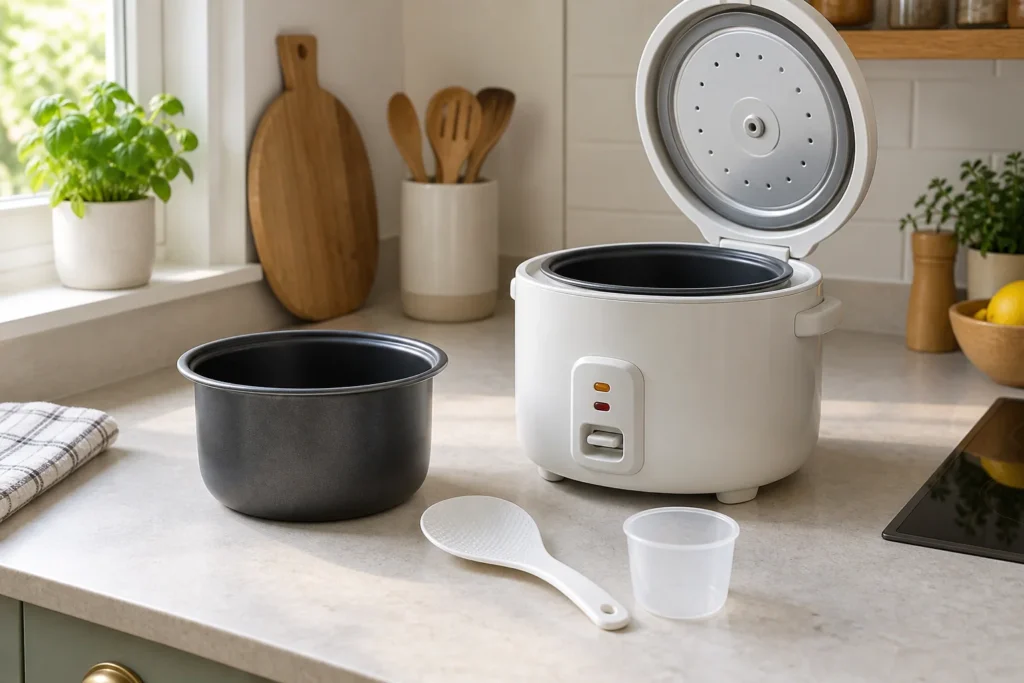
A fuzzy-logic rice cooker adjusts its cooking programme using sensor information, while a basic cooker usually offers a simpler cook-and-warm routine. Decide whether the additional programmes and controls help with the rice you actually eat. A more elaborate panel is not a substitute for correct measuring or a suitable batch size.
Image: AI-generated editorial illustration of generic equipment; not a photograph of a reviewed product.
Table of Contents
Understand the control difference
Yum Asia’s Kumo help page explains that its fuzzy-logic system assesses conditions during cooking and may show a moving-line display before a final countdown. The Russell Hobbs 27030 manual describes a simpler switch-led cooking sequence that changes to its warming state when rice is cooked.
These are examples of different control approaches, not proof that one appliance always produces better rice. Bowl shape, programme design, rice type and preparation also matter. Without comparative testing, avoid turning a control-system label into a claim about measured taste, texture or speed.
List the rice types you cook
If almost every meal uses the same white rice and quantity, a straightforward appliance may meet your needs. If you regularly alternate between brown rice, short-grain rice and other grains, check whether a model gives each a documented programme, quantity range and water guidance.
Programme names need interpretation. A button labelled mixed grain does not authorise any combination of grains, and a porridge programme may have a specific recipe style in mind. Read examples in the manual before counting each button as a useful extra function.
Once you have identified the right controls, our rice-cooker guide for beginners connects them with the preparation and measuring steps for a first batch.
Look at timing information
Some cookers estimate the remaining time only after assessing the batch. Others give a fixed or changing countdown. Choose a display you can live with, especially if you coordinate rice with a quickly cooked main dish. A moving indicator described as normal in the manual is different from an error code.
Compare the complete preparation routine, including any soaking or resting instructions. A fast programme can be useful when the maker supports your rice type, but it may have different quantity or texture guidance. Do not assume the quickest advertised mode is the best everyday setting.
| Your priority | Feature to examine |
|---|---|
| One familiar rice most days | Simple clear controls and the right minimum batch. |
| Several rice varieties | Documented programmes and distinct water guidance. |
| Knowing when to finish the main dish | Countdown behaviour and completion signals. |
| Setting a meal time | Whether the timer means start time or ready time, plus permitted ingredients. |
| Easy shared-household use | Readable labels and a routine others can repeat. |
For a practical example beyond rice, see how to cook quinoa in a rice cooker. The guide uses a documented manufacturer method, so a similar programme name on another cooker is a reason to check its own instructions.
Check the features around the electronics
A removable inner lid, accessible steam cap and replaceable bowl affect daily use regardless of control type. Check the cleaning instructions and how much space is needed to open the lid fully. A cooker that hides under a cupboard but cannot be opened there still needs a working position.
Look at the supplied cup, paddle and any steamer basket. A basket is useful only if its permitted food quantity and simultaneous-cooking rules suit you. A long programme list can distract from a small pot that does not cover your household’s normal meal.
Treat preset and keep-warm controls separately
Read whether a preset asks for a delay before cooking or a time when the meal should be ready. That distinction is easy to miss on a new panel. Use delayed cooking only for ingredients and circumstances permitted by the manufacturer and food-safety guidance.
A keep-warm button describes a function, not unlimited safe storage. Check the model’s conditions and plan how rice will be served or cooled promptly. Do not judge a cooker solely by the largest number of hours shown in marketing.
Choose the simplest system that covers your needs
Make a shortlist using three real tasks: your usual rice, a second variety you actually cook and the smallest portion you need. Check each against the manual. Then compare size, cleaning and controls through our rice cooker buying guide. Extra control is useful when it supports those tasks; a basic model is a reasonable choice when its documented routine already fits them.