
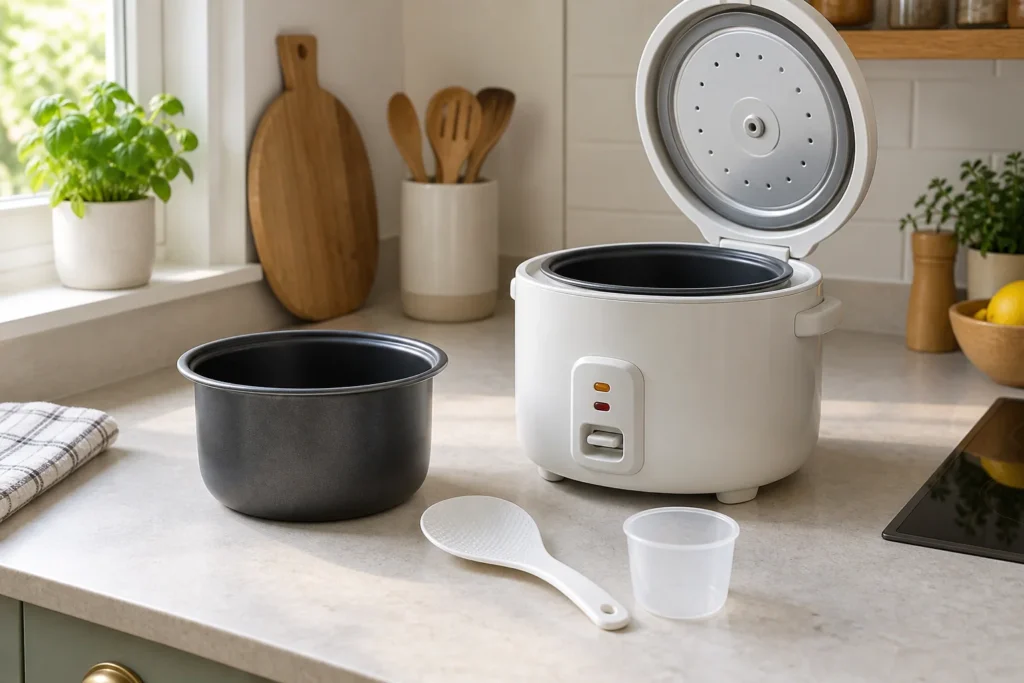
Use a rice cooker’s keep-warm function only within the maker’s instructions, and decide in advance whether the rice is for serving soon or for leftovers. A warming display is not the same as a storage plan. Once you stop actively keeping rice hot, prompt safe cooling becomes important.
Image: AI-generated editorial illustration of generic equipment; not a photograph of a reviewed product.
Table of Contents
Read what the warming function actually does
Check whether the cooker switches automatically to warming, which rice types it supports and any quantity or time restrictions. A maximum displayed duration does not mean every mixed dish can be left there for that long. Added meat, dairy or other ingredients may fall outside the function’s intended use.
Do not assume the bowl remains hot after a power cut, an unplugged lead or somebody pressing Cancel. In a shared kitchen, make the plan visible: serve at a known time or move the unused portion into a prompt cooling routine. Avoid leaving rice because nobody remembers who is responsible for it.
Separate texture preferences from food safety
Rice that becomes dry or discoloured during warming may be less pleasant, but appearance is not a reliable safety test. Likewise, rice that looks and smells normal can have been stored badly. Follow the manufacturer’s permitted use and official food-safety guidance rather than judging by a spoonful.
If you do not know how long rice has been left without effective hot holding, do not guess that reheating will correct it. The Food Standards Agency explains that spores can survive cooking and that storage conditions before reheating are central to the risk. Use a fresh batch when the history is uncertain.
Cool leftovers promptly
The FSA’s home food fact checker, updated in August 2026, advises chilling leftover rice as quickly as possible, ideally within one hour. Divide it into smaller portions to help cooling, and do not leave it in the rice cooker, steamer or pan to cool down.
Have clean suitable containers ready before the meal ends. Portion only what you intend to keep, using a clean utensil, and organise the fridge space in advance. A deep heap in the cooker should not be treated as a convenient cooling container while you finish the washing-up.
Refrigerate and reheat with a clear limit
The same FSA guidance says to keep cooked rice in the fridge for no more than one day before reheating, and to consume refrigerated rice within 24 hours. Reheat it only once and make sure it is steaming hot throughout. It may also be eaten cold when it has been cooled and stored correctly.
Label the container with when the rice was cooked, not merely when it was discovered in the cooker. Keep raw foods separate from ready-to-eat leftovers and follow the fridge’s safe-use guidance. Do not repeatedly remove the whole batch, warm it and put it back when you only need one portion.
| Plan for the rice | Action to organise |
|---|---|
| Serve shortly after cooking | Use the maker’s permitted hot-holding routine and serve with clean utensils. |
| Keep a leftover portion | Start rapid cooling promptly, then refrigerate within the safe routine. |
| Eat refrigerated rice | Use within24hours; if reheating, do so once until steaming throughout. |
| Save for later than the fridge limit | Follow the FSA’s separate freezing and defrosting instructions. |
| Unknown holding history | Do not rely on smell or another warming cycle to establish safety. |
Make freezing a deliberate choice
If you need rice for a later date, read the FSA’s freezing instructions before cooking rather than improvising once it has sat around. Use small portions and clear labels so you can defrost only what you need. The published guidance also explains reheating after defrosting; freezing is not a way to erase earlier poor storage.
Do not combine a newly cooked batch with older leftovers in the same container. Keeping batches distinct makes their timing and handling easier to track, particularly when several household members prepare lunches.
Choose a routine that reduces uncertainty
Cook a quantity that matches the meal, serve it promptly and set aside any planned leftovers for rapid cooling. That routine is easier to manage than using the longest possible keep-warm setting every day. If a cooker cannot support your intended holding conditions clearly, ask the manufacturer or plan to cook closer to serving time. Clean the emptied cooker after it has cooled and been disconnected.