
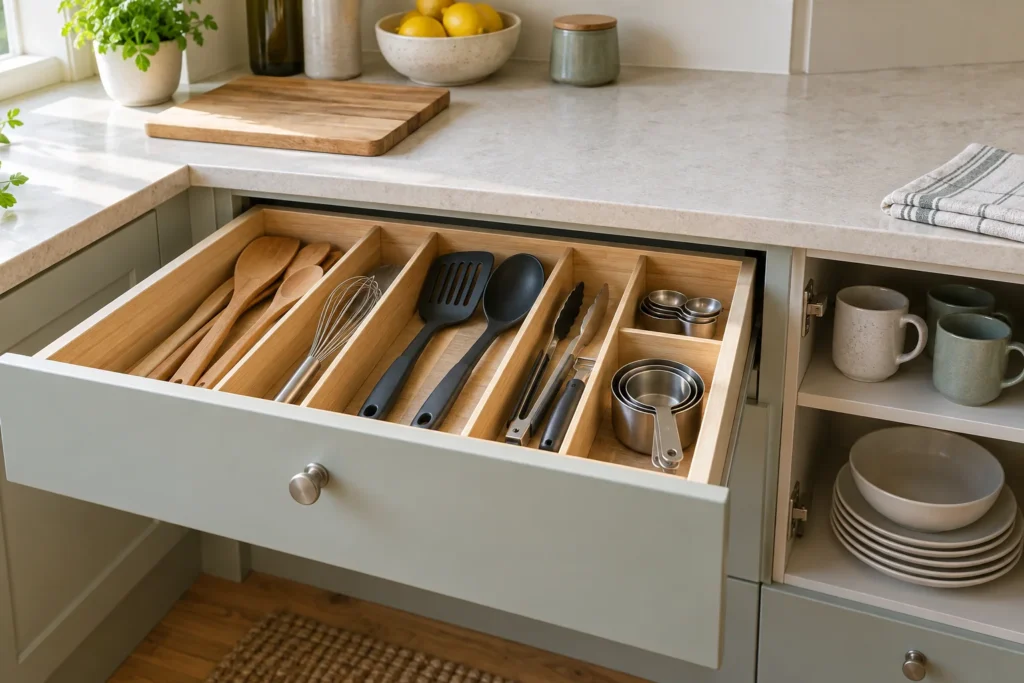
A small kitchen worktop can hold many objects and still offer very little space to prepare food. The useful measurement is the clear area available when you are actually cooking. Start with one ordinary preparation task and identify which objects help it, which obstruct it and which could live elsewhere.
Image: AI-generated editorial illustration of generic equipment; not a photograph of a reviewed product.
Table of Contents
Mark the preparation area you need
Choose a task you perform regularly, such as preparing vegetables for an evening meal. On an empty worktop, place the board and an empty bowl in the positions you would use. Add the relevant clean tools without starting to cut food. This planning exercise reveals the area needed for both the main task and its supporting items.
Notice where ingredients arrive and where prepared food goes next. A board surrounded by appliances may fit physically while leaving no convenient place for either. Aim for a clear sequence rather than one isolated patch that must serve every stage at once.
Sort countertop objects by use
List the objects that remain on the counter: appliances, jars, utensil pots and decorative pieces. Record how often each is used and where it is used. An appliance needed every morning has a different claim to accessible space from a gadget used a few times a year.
Do not move an appliance to a location that conflicts with its instructions, clearances or electrical requirements. Read its manual before changing the setup. The plan is to improve access and working room within those constraints, not to hide cables or equipment in a way that prevents proper use.
Compare grouped storage with clear surface
IKEA’s kitchen organisation range includes countertop and wall-storage options. Those categories provide possible tools, but buying an organiser is useful only if it frees the right space for your task.
A tray can make a group of supplies easier to move together, but it still occupies a footprint. A shelf may create another level while reducing access beneath it. Compare the complete movement and cleaning requirements of an accessory before adding it to a counter that is already crowded.
Keep the washing and preparation routes clear
Check whether the planned arrangement leaves access to the sink and a place for equipment awaiting washing. Avoid making the food-preparation area the default resting place for every object removed from another part of the kitchen.
Give frequently used utensils a convenient home that does not obstruct the board. If a drawer is nearby, a suitable divider may be more useful than another large utensil pot. If a pot works better, keep only the tools that earn that accessible position.
Test the layout with an ordinary meal plan
| Stage | Question |
|---|---|
| Gather ingredients | Where can they wait without covering the board? |
| Prepare food | Are the bowl and tools within the planned working area? |
| Move to cooking | Is the next surface or appliance accessible? |
| Clear up | Can used equipment reach the washing area? |
Make one or two changes and use them through a normal week. If an item repeatedly returns to the old position, investigate why. Its new home may be awkward to reach or separated from the task it serves.
A useful before-and-after record is a pair of simple sketches showing where the board, bowl and ordinary ingredients sit. Compare the number of objects that must be moved before preparation can begin. If the revised layout still requires relocating a kettle, several jars and a tray every evening, the main problem remains unresolved. Try changing one storage location rather than adding another layer of countertop shelving. This keeps the improvement tied to a repeated task and avoids measuring success by how many accessories fit on display.
Preserve the space you have reclaimed
Assign a home to new objects before leaving them on the counter. Our kitchen storage guide offers broader cupboard and drawer ideas. The worktop plan succeeds when the preparation area remains available for food, with the tools and appliances around it positioned for their actual jobs.