
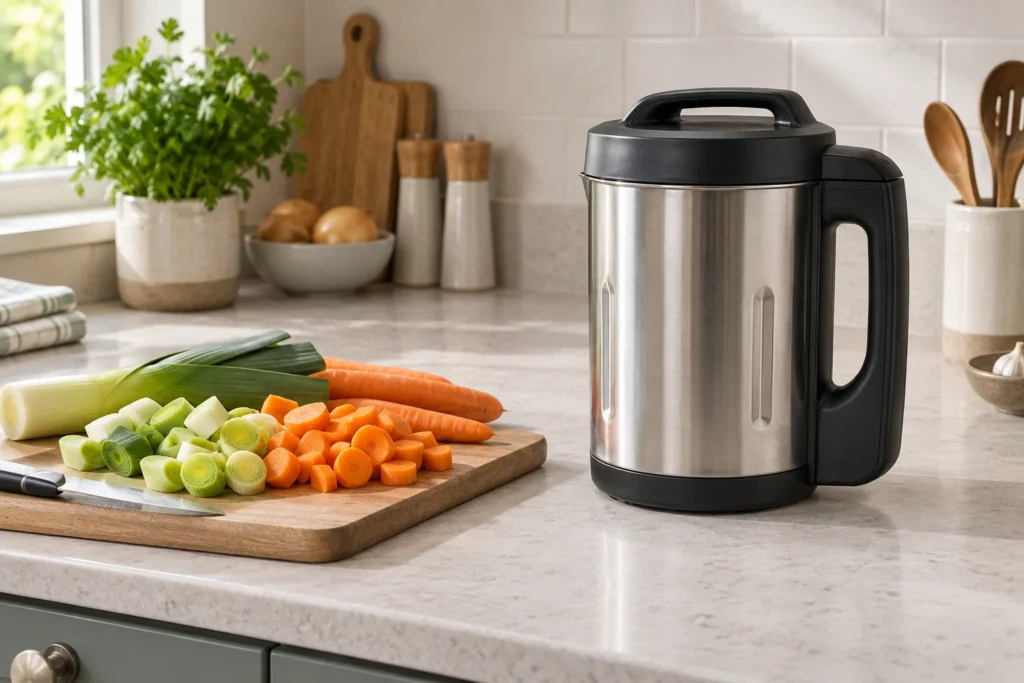
The difference between smooth and chunky soup programmes is more than the finished texture. The appliance may use different heating and blade sequences, and a chunky setting can leave the vegetables exactly the size you cut them. Choose the programme while preparing the ingredients, rather than after filling the jug.
Image: AI-generated editorial illustration of generic equipment; not a photograph of a reviewed product.
Table of Contents
Read what the blades actually do
Salter’s EK5118 instructions say its smooth programme heats and blends, while chunky heats without rotating the blade. Its separate Blend/Clean setting does not heat. That distinction matters if you expect a chunky programme to chop a whole carrot for you.
The Morphy Richards 501014 manual gives another example: smooth runs for 21 minutes with blending; chunky runs for 28 minutes without blending. Its additional blend function changes texture without adding heat. Those times belong to that model, so they should not be transferred to another machine.
Prepare for the texture you want
For chunky soup, the pieces you put in are the pieces you are asking the machine to cook. Cut them to the size specified in its recipe, aiming for a reasonably even batch. A huge piece and a thin sliver will not need the same cooking treatment. Do not assume the longer programme compensates for arbitrary chopping.
For smooth soup, preparation still matters. A blade must be able to circulate the mixture, and the heated programme must cook the ingredients. Blending is not a substitute for the right liquid level, permitted ingredient size or suitable recipe. Follow the soup programme’s limits rather than treating it like a cold smoothie jug.
| You want | Useful programme question | Preparation implication |
|---|---|---|
| A uniform vegetable soup | Does Smooth both heat and blend? | Use the recipe’s chop size and complete cooking cycle |
| Vegetables in broth | Does Chunky leave the blades stationary? | Cut pieces to their intended serving size |
| A partly smooth result | Is extra blending allowed after cooking? | Start with the approved cooked soup, then adjust cautiously |
| To warm yesterday’s soup | Is there a genuine reheat programme? | A texture-only Blend button is insufficient |
Our pumpkin soup guide keeps the ingredient preparation and programme together in a documented method. Read the named appliance scope before applying it to another machine with a similarly labelled soup setting.
Leave room for the recipe, not guesses
Keep the combined food and liquid between the appropriate marks. If you want a thicker soup, start with an approved thick recipe rather than packing the jug with extra potato. If you want more pieces, select ingredients that the programme is designed to cook in that form.
Soft vegetables, pasta and beans also create different textures from firm roots. Check whether each ingredient should be raw, precooked or added at a later authorised stage. “Chunky” is not permission to add any food to a basic vegetable recipe. Dried pulses and raw meat particularly need instructions appropriate to the exact appliance and recipe.
Change texture only after the cooking question is settled
When a fully cooked soup is too chunky, an approved blend function may let you reduce some of the pieces. Use the controls and maximum run time in your own manual. Keep the lid arranged exactly as required for hot blending, and never reach into a connected appliance.
If the vegetables are undercooked or the cycle was interrupted, pressing Blend is not the answer. A smoother appearance does not establish that food has been cooked safely. Deal with the incomplete cooking first using an appropriate cooking method; do not serve a questionable batch merely because it now looks creamy.
Choose a machine around your usual soup
A household that prefers broth with visible vegetables should prioritise a clear chunky programme, practical preparation instructions and suitable minimum capacity. Someone who wants consistently puréed vegetables may care more about the smooth cycle and the ability to adjust an already cooked texture.
Compare those capabilities in the soup-maker guide, then open the exact manual. Programme names are useful signposts, but the description of heating, blending and permitted ingredients tells you what dinner will actually involve.