
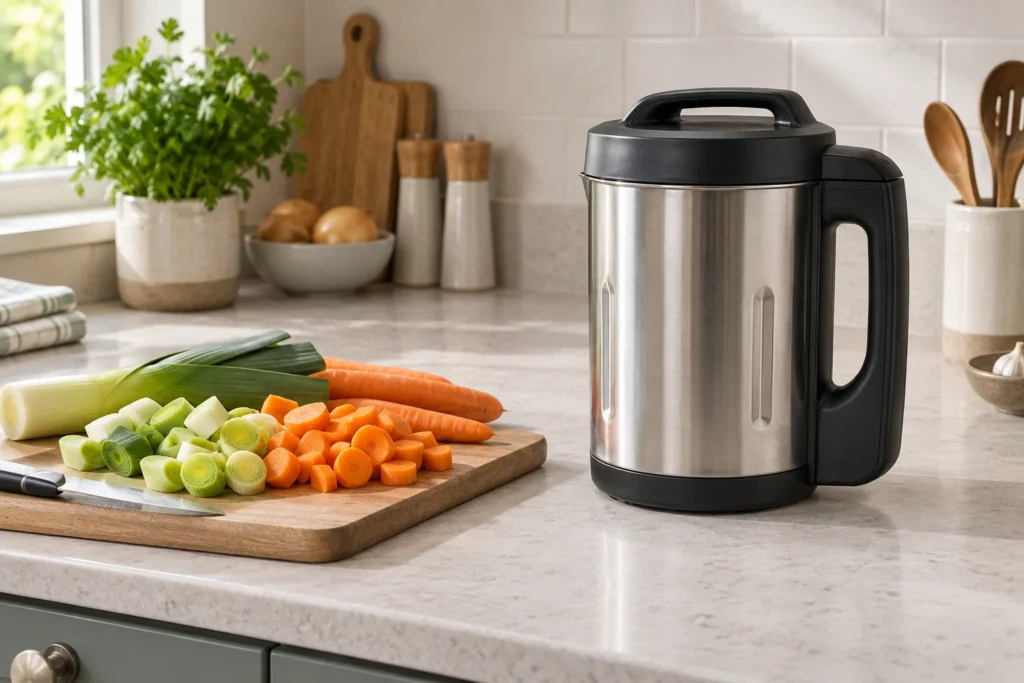
When a soup maker stops mid-cycle, record what happened before trying again. A dark display, an error code, a stopped blade and a tripped household circuit are different symptoms. Repeatedly pressing Start can lose that information and does not establish that the appliance is safe.
Image: AI-generated editorial illustration of generic equipment; not a photograph of a reviewed product. This guide draws on published manufacturer and UK safety guidance, not hands-on testing.
Table of Contents
Stop first, then describe the symptom
If there is smoke, a burning electrical smell, damaged wiring or a tripped circuit, stop using the appliance and disconnect it safely if you can. Do not open its casing or keep resetting the household protection to see whether it happens again. Contact the manufacturer or an appropriately qualified repair service. See Electrical Safety First’s kitchen guidance.
For a normal-looking cycle interruption, note the selected programme, elapsed time and any displayed code. Photograph the display if it is safe to do so. Record whether the machine was heating, blending or apparently resting. Check the manual to distinguish any programmed pause from an error or unexpected power loss.
Check the recipe and fill after safe cooling
Morphy Richards’ cut-out support page identifies thick mixtures, food residue and restricted circulation as possible triggers for its thermal protection. It also directs users to support for failure to restart after cooling, error codes or visible electrical damage. If stopping recurs, ask support which checks are authorised for your model. A restart alone is not proof that no fault exists.
Switch off, unplug and let the appliance cool before inspection. Compare the complete mixture with its MIN and MAX fill marks and the quantities in the recipe. Write down substitutions: extra potato, a thick purée or a different quantity of stock can be more informative than saying you made “vegetable soup”.
| Observation | Useful information to record | Appropriate next step |
|---|---|---|
| An error code appears | Exact code and programme | Read that model’s code guidance |
| Food residue is visible | Location and recipe ingredients | Use only the approved cleaning method |
| The mixture exceeded a mark | Food and liquid quantities | Correct future recipes; do not force operation |
| It stops repeatedly | Whether the same point and recipe recur | Contact support with the pattern |
| Household electrics trip | Appliance identity and visible condition | Stop use; arrange qualified advice |
Inspect only the parts intended for users
Look at the cooled food-contact surfaces, lid seating and accessible connections without dismantling electrical components. Check whether a seal or cover that is meant to be fitted has been left out. Use the manual’s assembly diagram rather than forcing the lid until the machine recognises it.
If food has caught on the heated surface, follow the manual and our guide to cleaning a soup maker. Do not scrape a coated base with metal, wet electrical contacts or add a chemical cleaner as an experiment. Let everything dry as directed before any manufacturer-authorised next step. Inspection should not introduce a new fault.
Treat unfinished soup as unfinished cooking
A partly completed programme does not guarantee that the ingredients have cooked properly. Do not use a cold blend setting to make the soup look finished or assume residual warmth will complete the process. Consider the ingredients, elapsed time and the Food Standards Agency’s cooking guidance before deciding whether it can be safely cooked by another method.
Keep troubleshooting separate from serving. If you cannot establish how the batch has been handled or whether cooking can safely be completed, do not serve it. A replacement lunch is less troublesome than trying to make an uncertain appliance and an uncertain batch solve each other.
Send support a useful record
Prepare the model and serial number, proof of purchase if available, the exact recipe quantities and a description of the symptom. Include the programme, code and whether this was the first batch or a repeat run. Provide photographs of visible residue or damage only after cooling and isolation.
Ask which checks are authorised for your exact model and whether continued use is appropriate. A water test described for another brand is not a universal diagnostic. If support recommends a specific procedure, follow its quantities and sequence without adding food, detergent or extra cycles. Keep the reply with the appliance manual for future reference.