
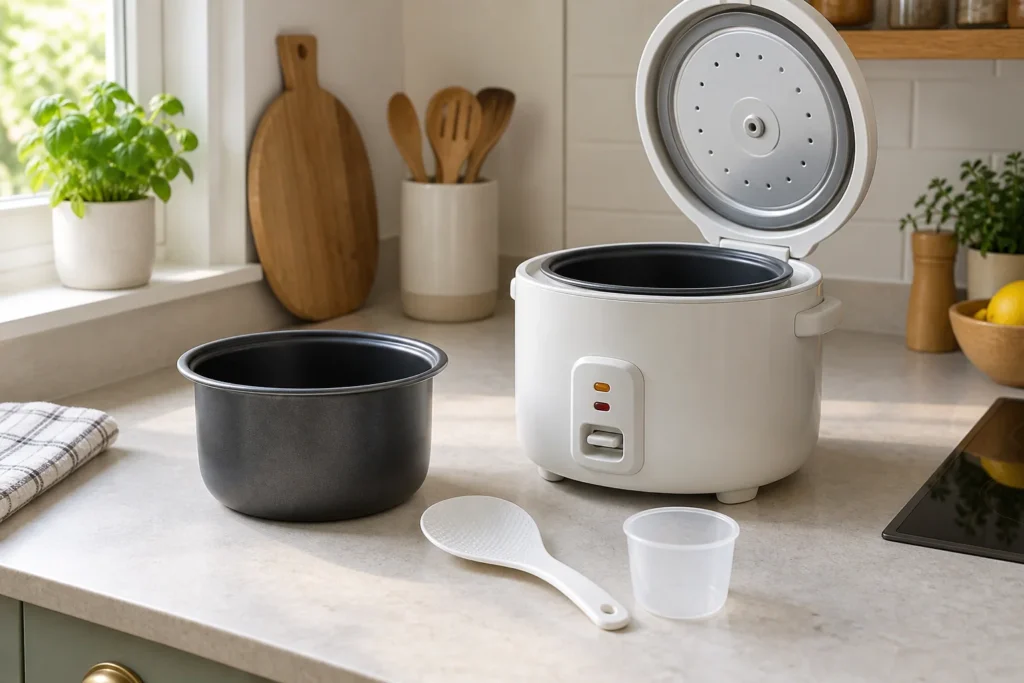
When rice sticks to the cooker, review the batch and the bowl before assuming the appliance needs replacing. The rice type, measure, water guidance, programme and pot condition can all be relevant. Separate a light crust described by the manufacturer from new scorching or damage that needs attention.
Image: AI-generated editorial illustration of generic equipment; not a photograph of a reviewed product.
Table of Contents
Describe the problem accurately
Was there a thin layer left behind, a hard burnt patch or rice that was dry throughout? Did the cooker finish normally, or did it stop with an error? These observations help you choose the right troubleshooting route. A photograph taken after safe cooling can be useful if the problem repeats.
Do not scrape aggressively while the bowl is hot. Serve what can be removed appropriately, then follow safe storage and cleaning guidance. If there is an electrical smell, damaged coating, deformation or abnormal operation, stop using the affected equipment and seek support.
Check the rice type and measure
Yum Asia’s scorching guidance tells owners to check suitable rice, the supplied cup, water level, rinsing and clean contact between the bowl and heating surface. It specifically excludes parboiled or easy-cook rice for its cookers. That restriction is model-family guidance, not a rule for every rice cooker sold in the UK.
Read the rice packet as well as the appliance manual. A bag labelled easy cook is not the same preparation as raw rice of a similar grain length. Keep the packet until you know the batch works, and note the exact programme used. Use the supplied measure consistently rather than a mug that looks approximately right.
Reconstruct the water addition
Confirm that you followed the correct rice-type scale and loading order. Did you add water to a line after adding rice, or use a separate ratio? Combining both methods can change the quantity unintentionally. Read the line with the bowl level and account for any rinse-and-drain step specified.
Do not make a large random water adjustment after one poor result. Return to the documented starting method, then follow the maker’s advice for small preference changes if appropriate. Altering rice type, water amount and programme together makes it difficult to identify which factor mattered.
| Observation | Check first |
|---|---|
| Dry rice with a stuck base | Correct measure, liquid and selected programme. |
| Problem began with a new bag | Rice type and packet preparation instructions. |
| Problem began after cleaning | Bowl seating, dry exterior and any damage. |
| Only a light crust on a basic cooker | Whether the manual describes that result as normal. |
| Repeated severe scorching | Manufacturer support after permitted checks. |
Inspect the cold bowl and its seating
With the cooker disconnected and cool, check for grains or residue under the bowl and on accessible seating surfaces. Follow the approved wipe-clean method and keep the electrical body dry. The bowl should sit as the manual describes without rocking or being forced into place.
Inspect the inside for coating damage and the rim or base for distortion. A pot dropped in the sink can change shape even when its top still looks familiar. Replace it only with a component explicitly approved for the model; a different material that happens to fit is not a safe shortcut.
Distinguish a crust from a fault
The Russell Hobbs 27030 manual notes that a layer of rice touching its bowl can sometimes form a crust. That observation belongs to that model’s cooking routine. It does not excuse a new burning smell or establish that every cooker should brown rice at the bottom.
Judge the result against the instructions and your own earlier normal batches. A change after replacing the bowl, switching programmes or cooking a much smaller quantity deserves a fresh check. Keep serving tools gentle and allow stuck residue to soften using the permitted cleaning method.
Decide what the next action should be
If the recipe was mismeasured, repeat the correct supported method once after confirming the cooker is sound. If a part is damaged or the same problem continues with documented quantities, ask the manufacturer. Supply the model, rice packet, cup quantity, water line and programme rather than only saying that the rice is bad.
A replacement cooker makes sense when your regular batch or rice type is outside the present model’s intended use. Our rice cooker guide can help compare formats, but diagnosis should come before shopping. A new appliance will still need the correct measure and programme.