Bakeware

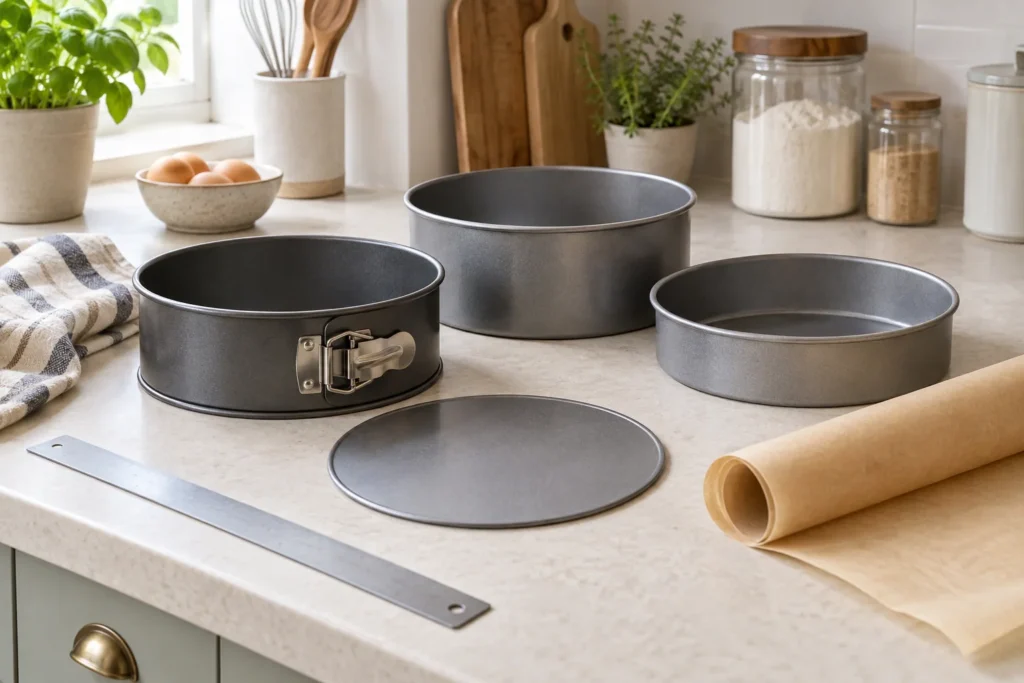
Round metal cake tins of different depths, a springform latch, a loose base and baking parchment.

Sandwich Cake Tins: Choosing Matching Tins for Layer Cakes

For a layer cake, choose sandwich tins as a matched working set. Check internal diameter, depth, construction and release design together. Two products labelled 20cm may still differ in height, wall shape or overall footprint, so the size on the front of the packaging is not the whole comparison.

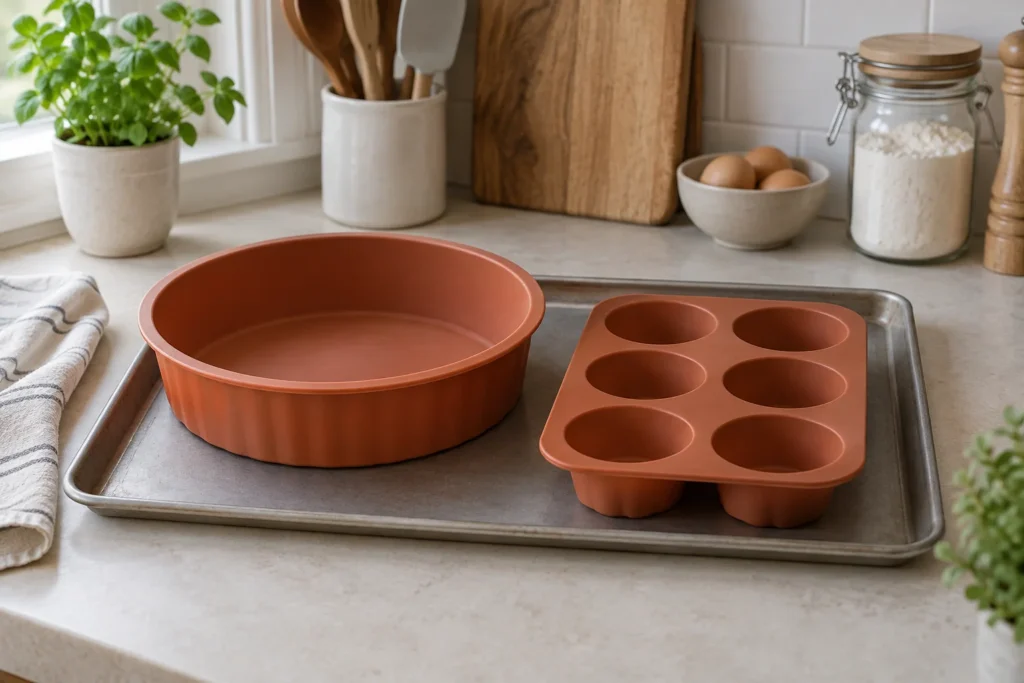
A round silicone cake mould and a silicone muffin tray supported on a metal baking sheet.

Silicone Cake Tins: Support, Heat Instructions and Release

A silicone cake tin needs to be assessed as a complete mould, including any rigid rim, handles or separate base. Check the exact product’s oven instructions and the recipe’s equipment requirements. The word silicone alone does not tell you how the mould should be supported, prepared or carried when it contains mixture.

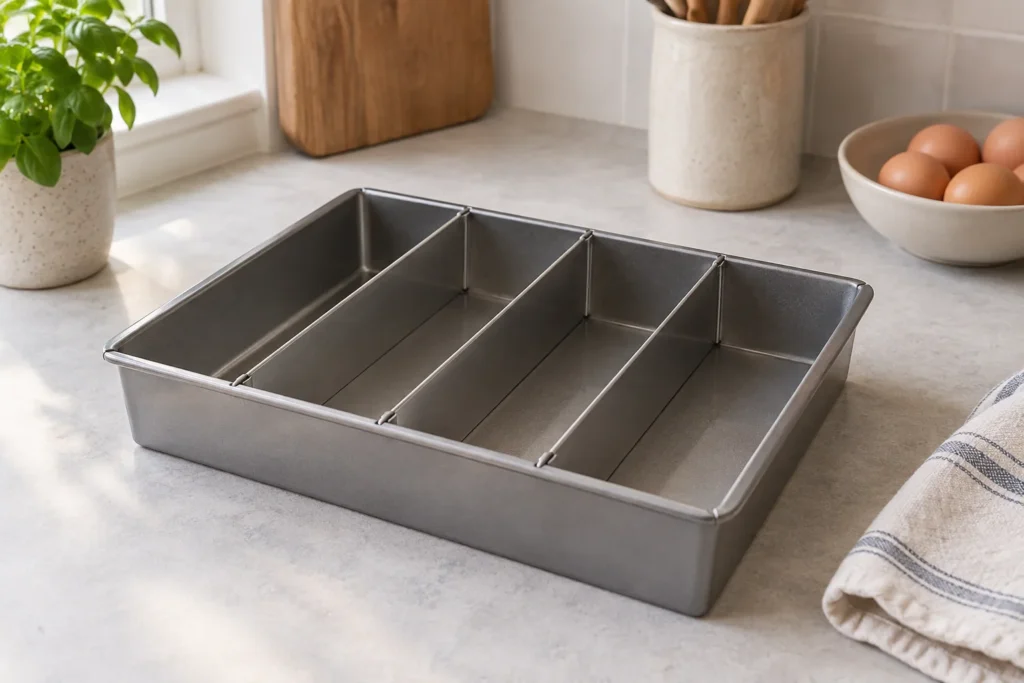
A rectangular Battenberg cake tin divided into four long compartments.

Battenberg Cake Tins: Dividers, Assembly and Even Portions

A Battenberg cake tin is useful when you want to bake separate strips that can be assembled into a chequered cake. Choose it by the channel arrangement and the recipe it supports. The important question is how the baked strips will fit together, rather than whether the tin simply carries the right cake name.

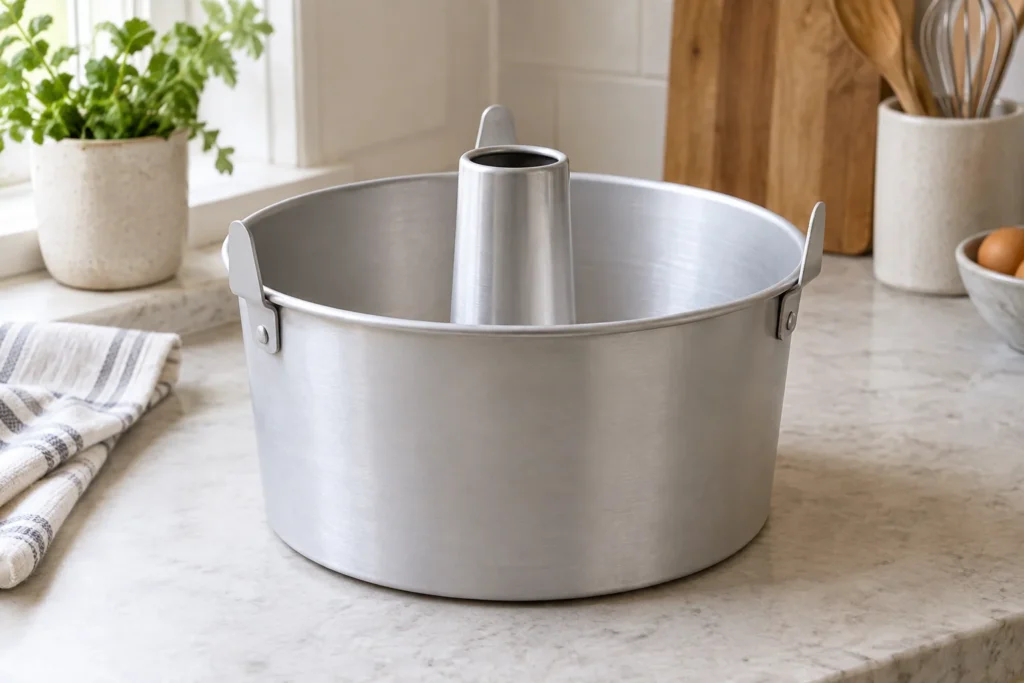
An aluminium tube cake tin with straight sides and raised rim supports.

Chiffon Cake Tins: Tube Shape, Surface and Cooling Instructions

A chiffon cake tin should be chosen from the recipe’s equipment instructions, particularly its required surface and cooling arrangement. Do not assume that every ring-shaped tin can replace it. A decorative Bundt mould and a plain tube tin may both have a hole in the middle while supporting different preparation and release methods.

Scroll to Top