
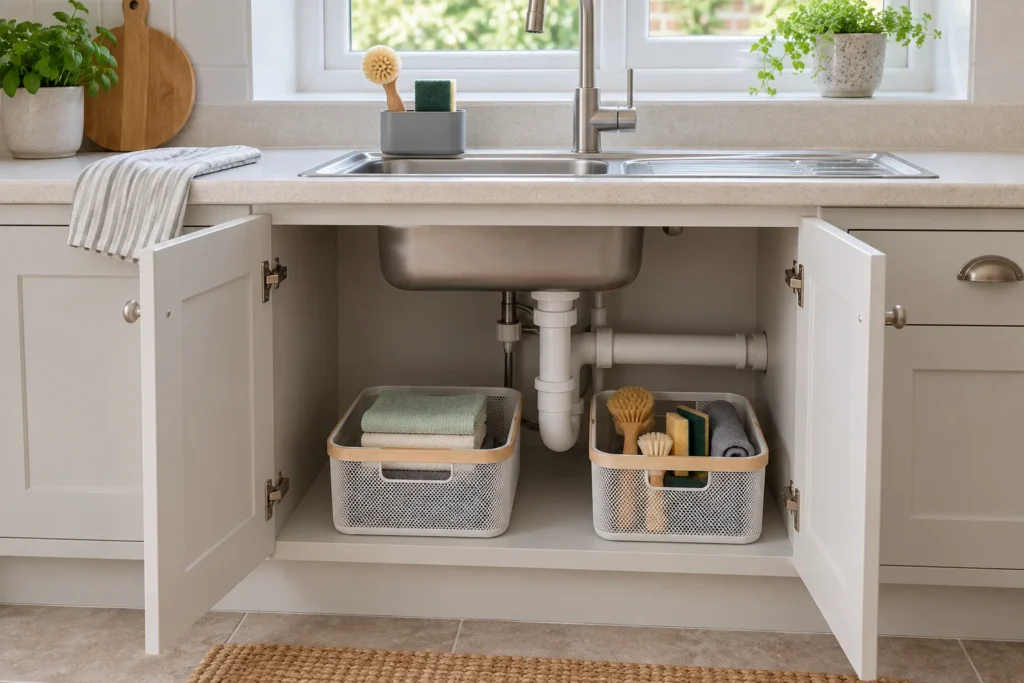
Under-Sink Kitchen Organisers: Measuring Around Pipes and Shut-Off Valves
Measure the usable pockets beneath a sink while keeping plumbing visible and service access clear.
Measure the usable pockets beneath a sink while keeping plumbing visible and service access clear.
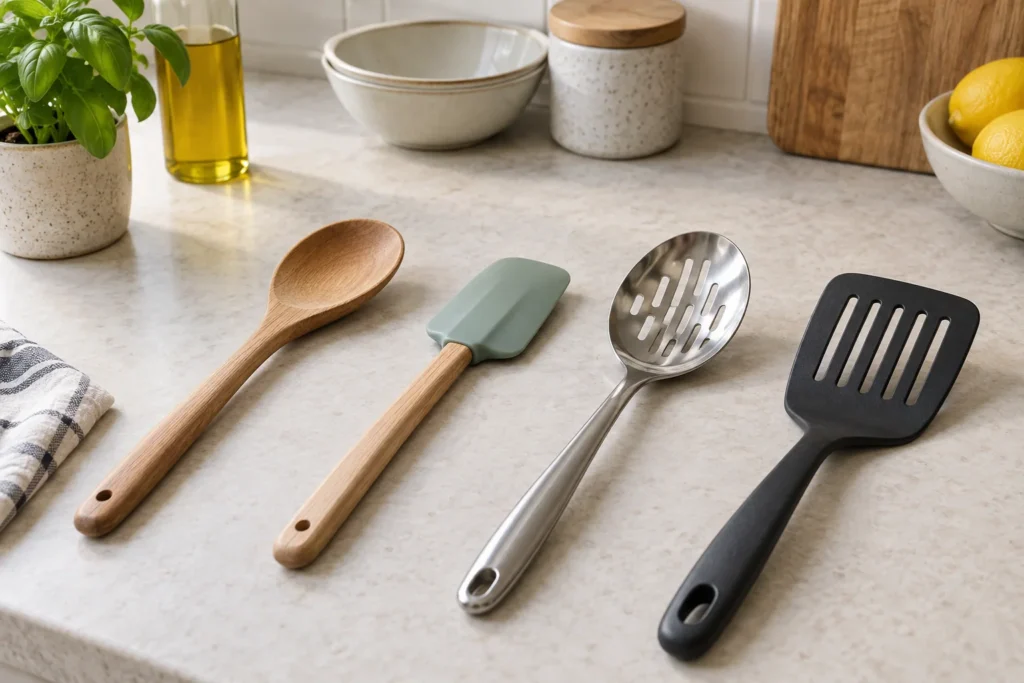
Build a baking utensil kit around a few recipes you want to repeat. Cakes, bread and pastry share some tools, but they do not need identical collections. Start with the measuring, mixing and scraping actions in your chosen recipes, then add shaping or finishing tools only when those methods require them.
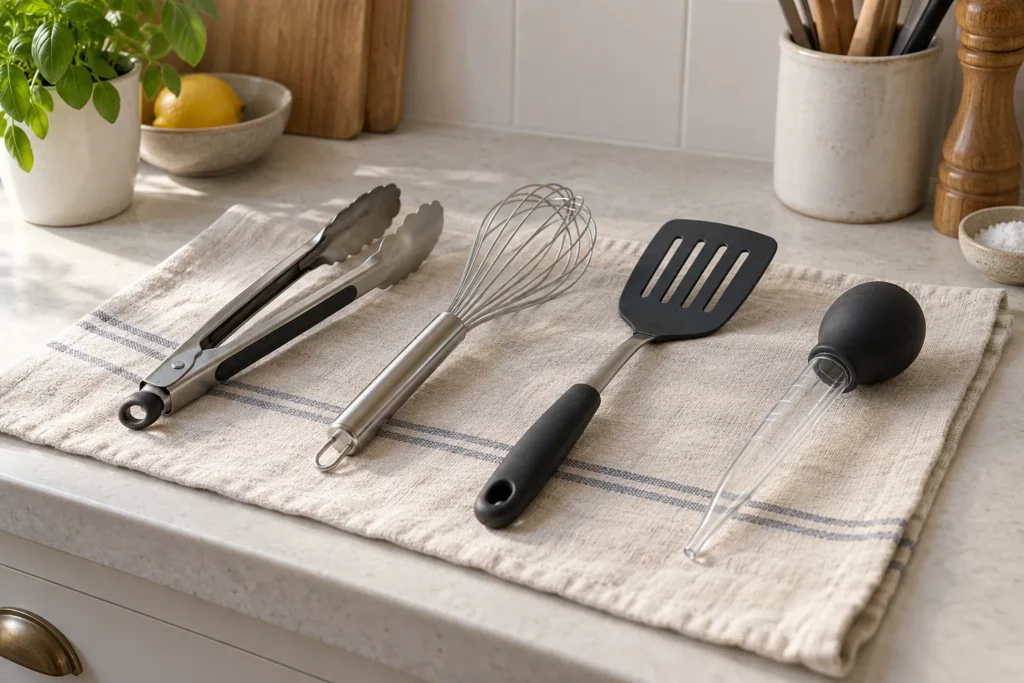
Choose a bulb baster when you need to draw up and transfer a suitable liquid; choose a basting or pastry brush when you need to spread a coating over a surface. They perform different actions, even when both are sold for basting. Start with the recipe’s method, then compare reach, control and how the tool will be cleaned.
A left-handed kitchen utensil is useful when its shape or controls solve a problem that appears in your normal left-handed movement. Many spoons and whisks are broadly symmetrical; some angled scrapers, pouring tools and mechanisms are not. Inspect the working geometry before assuming every item needs a separate left-handed version.
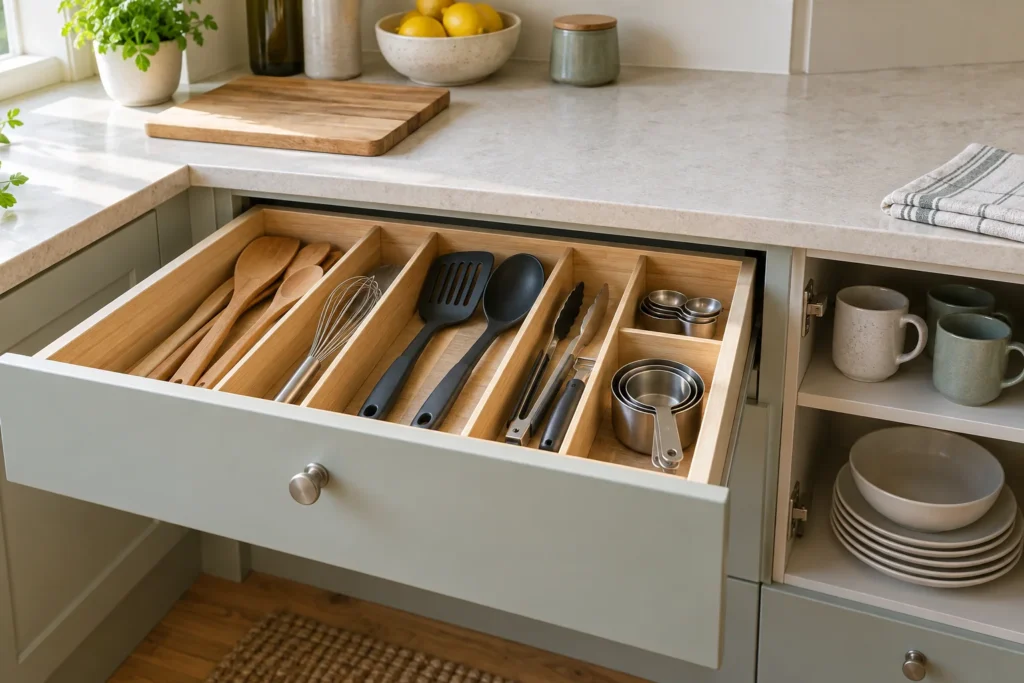
A drawer-layout method that measures the utensils as well as the empty drawer, including the space above bulky tool heads.
A turner supports food from underneath; a bowl scraper follows the vessel’s surface; a spreading spatula smooths a mixture across another surface. Shops and recipes sometimes use “spatula” for all three. Choose by the intended movement and the shape of the working edge, rather than relying on the name printed on the label.